Introduction
Building maintenance is the backbone of successful facility management, encompassing all activities required to keep commercial, residential, and institutional buildings operating safely, efficiently, and at peak performance. For building owners, facility managers, and property maintenance professionals, understanding and implementing comprehensive building maintenance strategies directly impacts tenant satisfaction, property value, operational costs, and regulatory compliance.
Effective building maintenance extends far beyond fixing broken equipment. It represents a systematic approach to preserving and enhancing building assets through preventive inspections, routine servicing, emergency repairs, and strategic upgrades. The scope includes critical building systems like HVAC, electrical, plumbing, structural components, fire protection, elevators, and building envelope maintenance.
This comprehensive guide explores building maintenance services, implementation strategies, maintenance planning, cost considerations, and best practices. Whether you manage a single office building or oversee a portfolio of commercial properties, you'll discover actionable insights to optimize your building maintenance operations and maximize return on investment.
What Is Building Maintenance?
Building maintenance is the continuous process of inspecting, servicing, repairing, and preserving all building systems and components to ensure safe, efficient, and reliable operation. It includes preventive, corrective, predictive, and emergency maintenance activities across HVAC, electrical, plumbing, structural, and other critical building systems.
Comprehensive Definition
Building maintenance encompasses all planned and unplanned activities required to keep a building's physical structure, systems, and equipment functioning properly throughout its lifecycle. This multidisciplinary practice combines regular inspections, scheduled servicing, repairs, replacements, and improvements to maintain building integrity, occupant comfort, safety compliance, and operational efficiency.
The scope of building maintenance extends from foundation to roof, including:
- Structural components (walls, floors, roofs, foundations, parking structures)
- Mechanical systems (HVAC, boilers, chillers, ventilation)
- Electrical systems (power distribution, lighting, emergency generators)
- Plumbing systems (water supply, drainage, sewage, fixtures)
- Fire protection systems (alarms, sprinklers, extinguishers, emergency lighting)
- Building envelope (windows, doors, insulation, weatherproofing)
- Vertical transportation (elevators, escalators, lifts)
- Exterior elements (landscaping, parking lots, sidewalks, signage)
Scope and Responsibilities
Building maintenance responsibilities vary based on building type, size, age, and occupancy. Typical responsibilities include:
Operational Maintenance: Daily tasks ensuring building systems operate continuously, including monitoring HVAC performance, checking emergency systems, responding to tenant requests, and maintaining cleanliness standards.
Preventive Maintenance: Scheduled inspections and servicing to prevent breakdowns, extend equipment life, and identify potential issues before they become costly problems.
Compliance Maintenance: Activities required to meet building codes, safety regulations, environmental standards, accessibility requirements, and insurance obligations.
Asset Preservation: Long-term strategies to protect building value through roof maintenance, structural repairs, system upgrades, and capital improvements.
Building Maintenance vs Facility Management
While often used interchangeably, building maintenance and facility management have distinct differences:
Facility Management is broader, encompassing building maintenance plus space planning, lease management, vendor coordination, sustainability initiatives, occupant services, and strategic planning. Facility managers oversee building maintenance teams but also handle business operations, financial planning, and organizational strategy.
Building maintenance is a critical subset of comprehensive facility management programs.
Types of Buildings Covered
Building maintenance principles apply across diverse property types:
- Commercial Office Buildings: Multi-tenant offices, corporate headquarters, coworking spaces
- Retail Properties: Shopping centers, standalone stores, mixed-use developments
- Industrial Facilities: Warehouses, manufacturing plants, distribution centers
- Residential Buildings: Apartment complexes, condominiums, senior living communities
- Institutional Facilities: Schools, hospitals, government buildings, universities
- Hospitality Properties: Hotels, resorts, conference centers
- Special Purpose Buildings: Museums, theaters, sports facilities, religious buildings
Each building type has unique maintenance requirements based on usage patterns, occupancy levels, system complexity, and regulatory standards.
AI-generated editorial illustration; not a customer photograph or product screenshot.
Types of Building Maintenance
Understanding different maintenance approaches enables facility managers to implement balanced, cost-effective strategies. The four primary building maintenance types serve distinct purposes within comprehensive maintenance programs.
Preventive Maintenance
Preventive maintenance involves scheduled inspections, servicing, and component replacements performed before equipment fails. This proactive approach prevents breakdowns, extends asset life, and reduces overall maintenance costs.
Key Activities:
- Regular HVAC filter changes and system inspections
- Lubrication of moving parts in motors and equipment
- Seasonal roof inspections and minor repairs
- Annual fire suppression system testing
- Quarterly elevator safety inspections
- Monthly generator load testing
- Periodic electrical panel thermography
- Routine plumbing fixture inspections
Corrective Maintenance
Corrective maintenance addresses issues discovered during inspections or reported by occupants. Unlike emergency repairs, corrective maintenance fixes problems that don't immediately threaten safety or operations but require timely resolution.
Key Activities:
- Repairing leaky faucets and running toilets
- Replacing burnt-out light fixtures
- Fixing minor roof leaks
- Repairing damaged flooring or carpeting
- Addressing temperature control issues
- Fixing broken door closers and hardware
- Repairing damaged drywall or paint
- Replacing malfunctioning sensors or controls
Benefits:
- Prevents minor issues from becoming major failures
- Maintains building appearance and functionality
- Supports tenant comfort and productivity
- Preserves property value
- Demonstrates responsive management
Predictive Maintenance
Predictive maintenance uses technology and data analysis to monitor equipment condition and predict failures before they occur. This advanced approach combines sensors, software analytics, and performance trending to optimize maintenance timing.
Technologies and Methods:
- Vibration Analysis: Detects bearing wear, misalignment, and imbalance in rotating equipment
- Thermography: Identifies overheating electrical connections and equipment
- Ultrasonic Testing: Discovers compressed air leaks, steam trap failures, and electrical arcing
- Oil Analysis: Monitors lubricant contamination and wear particles in mechanical systems
- Building Automation Systems (BAS): Track equipment runtime, performance trends, and efficiency metrics
- IoT Sensors: Provide real-time monitoring of temperature, pressure, flow, and other critical parameters
Emergency Maintenance
Emergency maintenance addresses urgent situations threatening safety, causing significant property damage, or severely disrupting operations. These unplanned repairs require immediate response regardless of time or cost.
Common Emergencies:
- Burst water pipes and major leaks
- HVAC system failures during extreme weather
- Electrical outages and power failures
- Elevator entrapments
- Fire system malfunctions
- Roof leaks during storms
- Gas leaks
- Sewage backups
- Structural damage
- Security system failures
Response Protocols:
- 24/7 emergency contact availability
- Prioritized response hierarchy
- On-call technician rotations
- Vendor emergency service agreements
- Emergency parts inventory
- Tenant communication procedures
- Documentation requirements
- Post-incident analysis
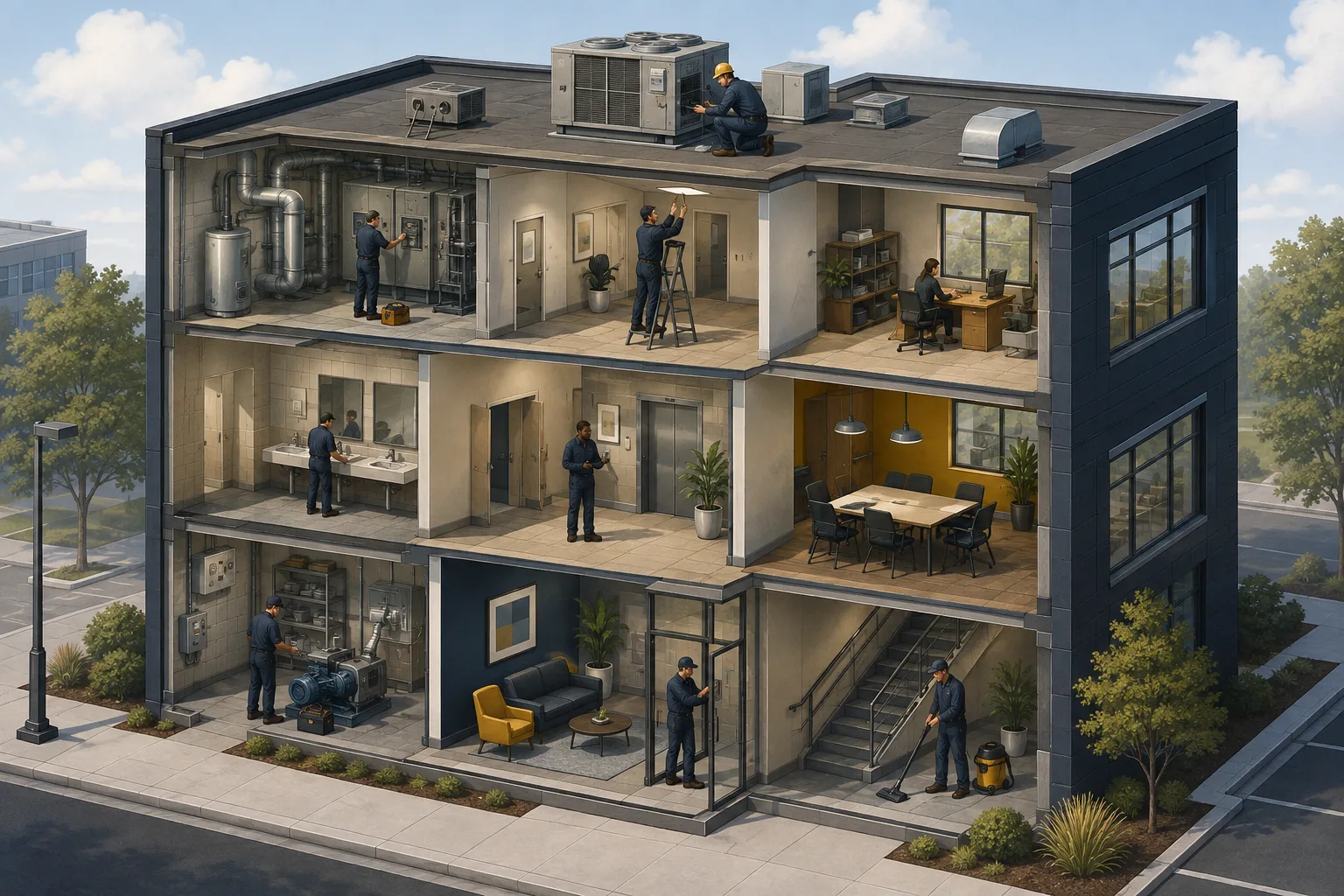
AI-generated editorial illustration; not a customer photograph or product screenshot.
Building Maintenance Services
Comprehensive building maintenance programs address all critical systems and components. Understanding each service area enables effective planning, budgeting, and vendor management.
HVAC Systems Maintenance
Heating Systems:
- Boiler inspections and cleaning
- Burner adjustments and combustion testing
- Heat exchanger inspection
- Expansion tank and pressure relief valve testing
- Piping and valve inspections
- Control system calibration
- Fuel system maintenance
Cooling Systems:
- Chiller maintenance and refrigerant management
- Cooling tower cleaning and water treatment
- Condenser and evaporator coil cleaning
- Compressor oil analysis
- Airflow measurement and balancing
Maintenance Frequency: Monthly inspections, quarterly servicing, annual comprehensive maintenance, with seasonal preparation for heating and cooling transitions.
Electrical Systems Maintenance
Electrical system maintenance ensures safe, reliable power distribution while preventing fires, equipment damage, and code violations.
Key Services:
- Panel and circuit breaker inspections
- Connection tightness verification
- Thermographic imaging to detect hot spots
- Lighting system maintenance and upgrades
- Emergency generator testing and servicing
- UPS battery testing and replacement
- Ground fault protection testing
- Surge protection inspection
- Exterior lighting and parking lot illumination
- Energy monitoring and power quality analysis
Safety Focus: Electrical maintenance prioritizes arc flash hazard assessment, proper lockout/tagout procedures, and compliance with National Electrical Code (NEC) requirements.
Maintenance Frequency: Monthly visual inspections, quarterly testing, annual thermography, generator monthly runtime testing with annual load bank testing.
Plumbing Systems Maintenance
Plumbing maintenance prevents water damage, ensures sanitary conditions, manages water consumption, and maintains occupant comfort.
Water Supply Systems:
- Pipe inspection for leaks and corrosion
- Pressure testing and regulation
- Backflow preventer testing (annual)
- Water heater maintenance and flushing
- Pump inspection and servicing
- Water quality testing
Drainage Systems:
- Drain cleaning and descaling
- Sewer line camera inspections
- Grease trap cleaning (restaurants)
- Sump pump testing
- Storm drain maintenance
- Roof drain clearing
Fixture Maintenance:
- Faucet repair and replacement
- Toilet repair (flappers, fill valves, seals)
- Touchless fixture sensor calibration
- Water conservation upgrades
Maintenance Frequency: Monthly inspections, quarterly drain maintenance, annual backflow testing, water heater flushing annually.
Structural Maintenance
Structural maintenance preserves building integrity, prevents deterioration, and protects occupants from structural failures.
Roof Systems:
- Membrane inspection for punctures, tears, and deterioration
- Flashing and penetration sealing
- Drainage system cleaning
- Structural deck inspection
- Moisture detection surveys
- Preventive coating applications
Building Envelope:
- Window and door seal inspection
- Caulking and weatherstripping replacement
- Masonry inspection and tuckpointing
- Concrete crack repair
- Expansion joint maintenance
- Waterproofing applications
Foundation and Structure:
- Foundation settlement monitoring
- Structural crack assessment
- Load-bearing capacity evaluation
- Parking structure inspection and repair
- Stairwell and railing maintenance
Fire Protection Systems
Critical Services:
- Fire alarm testing and inspection (quarterly)
- Sprinkler system inspection and flow testing (annual)
- Fire extinguisher inspection (monthly/annual)
- Fire pump testing (monthly/annual)
- Emergency lighting testing (monthly)
- Exit sign inspection
- Fire door and damper testing
- Kitchen hood suppression system maintenance
Maintenance Frequency: Monthly visual inspections, quarterly alarm testing, annual comprehensive inspections by certified technicians, 5-year sprinkler system internal inspections.
Elevators and Escalators
Elevator Maintenance:
- Monthly safety inspections
- Quarterly comprehensive servicing
- Annual load testing
- Rope and cable inspection
- Door mechanism adjustment
- Control system calibration
- Emergency communication testing
- Modernization assessments
Escalator Maintenance:
- Handrail and step chain inspection
- Comb plate and safety device testing
- Drive mechanism lubrication
- Brake system verification
- Step and riser repair
Regulatory Oversight: State and local jurisdictions require licensed inspectors, annual certifications, and strict compliance with ASME A17.1 safety standards.
Building Envelope Maintenance
The building envelope protects interiors from weather, controls energy loss, and maintains occupant comfort.
Windows and Doors:
- Seal and gasket replacement
- Hardware adjustment and lubrication
- Glass inspection and replacement
- Automatic door operator maintenance
- Revolving door servicing
Insulation and Air Barriers:
- Thermal imaging to detect gaps
- Insulation damage assessment
- Air infiltration testing
- Weather stripping replacement
Maintenance Frequency: Annual comprehensive inspection, semi-annual weatherproofing checks, immediate repair of damage.
Grounds and Landscaping
Exterior maintenance enhances curb appeal, ensures safety, and protects property value.
Services:
- Lawn maintenance and irrigation
- Tree and shrub care
- Seasonal planting
- Snow removal and ice management
- Parking lot maintenance and striping
- Sidewalk and walkway repair
- Exterior lighting
- Signage maintenance
- Waste management areas
Maintenance Frequency: Weekly during growing season, as-needed snow removal, quarterly parking lot inspections, annual pavement seal coating.
AI-generated editorial illustration; not a customer photograph or product screenshot.
Building Maintenance Plan
Creating a Comprehensive Plan
Step 1: Define Objectives and Scope Establish clear maintenance goals aligned with organizational priorities:
- Maximize equipment uptime and reliability
- Ensure occupant safety and comfort
- Maintain regulatory compliance
- Preserve and enhance property value
- Optimize maintenance costs
- Support sustainability goals
Step 2: Conduct Facility Assessment Perform a comprehensive building evaluation documenting current condition, identifying deferred maintenance, assessing system age and performance, and establishing baseline metrics.
Step 3: Develop Maintenance Strategies Determine the appropriate maintenance approach for each system and component based on criticality, age, condition, and failure consequences.
Asset Inventory
Create a detailed inventory of all building systems, equipment, and components requiring maintenance:
Critical Information:
- Equipment identification and location
- Manufacturer, model, and serial numbers
- Installation date and warranty status
- Maintenance history and service records
- Operating manuals and technical specifications
- Replacement cost and expected lifespan
- Criticality rating (critical, important, standard)
Organization Methods:
- Computerized Maintenance Management System (CMMS)
- Equipment numbering system
- Location-based categorization
- System-based grouping
- QR codes for mobile access
Scheduling Framework
Establish maintenance frequencies based on manufacturer recommendations, regulatory requirements, and operational experience:
Time-Based Schedules:
- Daily: System monitoring, basic inspections
- Weekly: Cleaning, minor adjustments
- Monthly: Equipment inspections, testing
- Quarterly: Comprehensive servicing
- Semi-Annual: Seasonal preparations
- Annual: Major inspections, certifications
- Multi-Year: Capital replacements, major overhauls
Condition-Based Schedules: Trigger maintenance based on equipment runtime hours, performance metrics, sensor readings, or predicted failure analysis rather than fixed intervals.
Resource Allocation
Determine staffing, contractor requirements, and resource needs:
In-House vs. Contractor Decision Factors:
- Technical expertise requirements
- Equipment specialization
- Workload volume and consistency
- Cost comparison
- Licensing and certification needs
- Emergency response requirements
Compliance Requirements
Integrate regulatory requirements into maintenance planning:
Maintain detailed documentation demonstrating compliance for insurance, liability protection, and regulatory audits.
Plan Template Overview
Essential Plan Components:
- Executive summary and objectives
- Building profile and asset inventory
- Maintenance strategies by system
- Detailed schedules and frequencies
- Staffing and contractor assignments
- Budget allocation and tracking
- Compliance calendar and requirements
- Emergency response procedures
- Performance metrics and KPIs
- Review and update schedule
Review and update the maintenance plan annually, incorporating lessons learned, system changes, and organizational priorities.

AI-generated editorial illustration; not a customer photograph or product screenshot.
Building Maintenance Checklist
Comprehensive Checklist by Frequency
| Frequency | Task Category | Specific Activities |
|---|---|---|
| DAILY | HVAC | Monitor BAS for alerts, verify temperature setpoints, check major equipment operation |
| Plumbing | Inspect for visible leaks, verify water pressure, check restrooms | |
| Electrical | Test emergency lighting, verify critical equipment operation | |
| Safety | Check fire extinguisher access, verify exit paths clear, inspect life safety systems | |
| Exterior | Walk parking areas, check entrance lighting, remove debris | |
| WEEKLY | HVAC | Inspect filters, check condensate drains, verify thermostat operation |
| Plumbing | Test faucets and fixtures, check water heater temperature | |
| Electrical | Inspect lighting operation, replace burnt bulbs | |
| Structural | Inspect high-traffic areas for damage, check doors and hardware | |
| Grounds | Mow lawns (seasonal), trim landscaping, clean walkways | |
| MONTHLY | HVAC | Replace filters, inspect belts and pulleys, lubricate motors |
| Plumbing | Clean drains, inspect pumps, test backflow preventers | |
| Electrical | Test emergency generators (runtime), inspect panels for heat | |
| Fire Safety | Inspect fire extinguishers, test emergency lighting (30 seconds) | |
| Elevators | Safety inspection, test emergency communication | |
| Exterior | Inspect parking lot, clean storm drains, check signage | |
| QUARTERLY | HVAC | Comprehensive system servicing, refrigerant level check, control calibration |
| Electrical | Thermographic imaging, detailed panel inspection | |
| Plumbing | Deep drain cleaning, sewer line inspection | |
| Fire Safety | Fire alarm testing, sprinkler valve inspection | |
| Structural | Roof inspection, envelope walkthrough | |
| Grounds | Fertilize lawns, seasonal planting, irrigation system check | |
| SEMI-ANNUAL | HVAC | Pre-season heating/cooling system preparation |
| Roof | Comprehensive membrane inspection (spring and fall) | |
| Windows | Clean windows, inspect seals and caulking | |
| Gutters | Clean and inspect drainage systems | |
| Exterior | Power wash building exterior, inspect paint condition | |
| ANNUAL | HVAC | Complete system inspection, duct cleaning (or per schedule) |
| Electrical | Load bank generator testing, UPS battery replacement | |
| Plumbing | Backflow preventer certification, water heater flush | |
| Fire Safety | Comprehensive sprinkler inspection, fire pump flow test | |
| Elevators | Load testing, annual safety certification | |
| Structural | Professional structural assessment, parking structure inspection | |
| Grounds | Tree inspection/trimming, pavement seal coating |
Weekly Tasks
HVAC Focus:
- Inspect air filters in critical areas
- Check for unusual equipment vibration or noise
- Verify condensate drain flow
- Monitor energy consumption trends
Plumbing Inspection:
- Test all fixtures in rotation
- Check for leaks under sinks and in mechanical rooms
- Verify water heater operation and temperature
- Inspect visible pipe conditions
Electrical:
- Replace burnt lighting in high-priority areas
- Test GFCI outlets
- Check panel room accessibility
- Verify emergency power indicators
Monthly Tasks
Equipment Servicing:
- HVAC filter replacement on monthly schedule
- Motor and bearing lubrication
- Belt tension and wear inspection
- Equipment runtime hour documentation
Building Walkthrough:
- Detailed inspection of all areas
- Photo documentation of issues
- Work order generation for identified needs
- Tenant communication about planned work
Quarterly Tasks
Seasonal Preparation:
- Pre-winter: Heating system preparation, freeze protection, roof inspection
- Pre-summer: Cooling system startup, irrigation activation, exterior cleaning
- Transition seasons: HVAC changeover, filter replacement, control adjustment
System Servicing:
- Comprehensive HVAC maintenance by certified technicians
- Fire alarm testing and documentation
- Electrical thermography
- Plumbing system deep cleaning
Annual Inspections
Capital Planning:
- Equipment condition assessment
- Remaining useful life estimates
- Replacement budget forecasting
- Energy efficiency opportunities
Seasonal Maintenance
Spring:
- HVAC cooling system startup
- Irrigation system activation
- Exterior painting touch-ups
- Roof inspection after winter
- Window cleaning
- Parking lot repairs
Summer:
- Intensive grounds maintenance
- Exterior building cleaning
- Parking lot seal coating
- Preventive roof maintenance
Fall:
- Heating system preparation
- Gutter cleaning
- Tree trimming
- Irrigation system winterization
- Roof preparation for winter
- Weather stripping replacement
Winter:
- Snow removal and ice management
- Freeze protection verification
- Heating system monitoring
- Emergency preparedness checks
Building Maintenance Software
Modern building maintenance software, also known as Computerized Maintenance Management Systems (CMMS), transforms reactive maintenance approaches into proactive, data-driven programs that reduce costs, improve efficiency, and extend asset life.
Benefits and ROI
Strategic Advantages:
- Data-driven decision making for capital planning
- Improved regulatory compliance and audit readiness
- Enhanced tenant satisfaction through faster response
- Better vendor management and accountability
- Detailed cost tracking by system, building, or department
Key Features
Work Order Management:
- Digital work order creation from multiple channels (tenant portal, phone, email, mobile)
- Automated assignment based on trade, priority, or technician availability
- Real-time status tracking and updates
- Labor, parts, and cost capture
- Photo documentation
- Tenant communication and feedback
- Service level agreement (SLA) monitoring
Preventive Maintenance Scheduling:
- Equipment-based maintenance task libraries
- Automated work order generation on time or meter-based triggers
- Calendar visualization and resource planning
- Task completion verification and documentation
- Parts kitting and procurement automation
- Compliance reminder notifications
Asset Tracking:
- Comprehensive equipment inventory with specifications
- Warranty and service contract management
- Maintenance history and cost tracking
- QR code integration for mobile asset access
- Remaining useful life calculation
- Capital planning support through condition assessment
- Document storage for manuals, drawings, and certifications
Reporting and Analytics:
- Maintenance cost analysis by building, system, or equipment
- Work order completion metrics and SLA performance
- Preventive maintenance compliance rates
- Downtime tracking and trends
- Technician productivity analysis
- Budget variance reporting
- Energy consumption trending
Mobile Capabilities:
- Smartphone/tablet apps for technicians in the field
- Offline work order access
- Photo and video capture
- Digital signature collection
- Real-time status updates
- QR code scanning for asset identification
- GPS-enabled time tracking
Implementation Considerations
Selection Criteria:
- Ease of use and technician adoption
- Mobile functionality
- Integration with existing systems (BAS, accounting, tenant portal)
- Scalability for growing portfolios
- Vendor stability and support quality
- Cost structure (subscription vs. perpetual license)
- Cloud-based vs. on-premise deployment
Implementation Best Practices:
- Start with asset inventory and data migration
- Configure workflows matching existing processes
- Train all users thoroughly before go-live
- Begin with work order management, then add preventive maintenance
- Establish data quality standards and accountability
- Review and optimize regularly based on usage data
For detailed guidance on selecting and implementing building maintenance software, see our comprehensive [Building Maintenance Software Guide].
AI-generated editorial illustration; not a customer photograph or product screenshot.
Cost Considerations
Understanding building maintenance costs enables accurate budgeting, justifies preventive maintenance investment, and supports data-driven decision making.
Deferred Maintenance Consequences
Best Practices
Implementing building maintenance best practices optimizes outcomes, reduces costs, improves tenant satisfaction, and enhances property value.
Preventive Maintenance Scheduling
Prioritize High-Impact Activities: Focus preventive maintenance on systems with:
- High failure consequences (life safety, critical operations)
- Expensive emergency repair costs
- Energy consumption impact
- Regulatory compliance requirements
- High replacement costs
Balance Frequency and Value: Avoid over-maintenance, which wastes resources, and under-maintenance, which increases failures. Use manufacturer recommendations as starting points, then optimize based on operating conditions, equipment age, and failure history.
Seasonal Planning: Align maintenance with seasonal demands:
- Service cooling systems before summer heat
- Prepare heating systems before winter cold
- Perform roof maintenance during dry seasons
- Schedule disruptive work during low-occupancy periods
Leverage Technology: Implement CMMS or building maintenance software to automate scheduling, track completion, document compliance, and analyze effectiveness.
Documentation Standards
Comprehensive Record Keeping: Maintain detailed records for:
- Work order history with descriptions, labor, and parts
- Equipment service records and inspection results
- Regulatory compliance certifications
- Warranty documentation and claims
- Energy consumption and performance trends
- Capital improvement history
Digital Documentation: Transition from paper-based to digital systems enabling searchability, backup/disaster recovery, mobile field access, analytics, and audit trail compliance.
Photo Documentation: Capture before/after photos of repairs, condition assessment images, and proof of completion for liability protection and tenant communication.
Vendor Management
Qualified Contractor Selection: Evaluate vendors on:
- Technical expertise and certifications
- Insurance coverage (general liability, workers compensation)
- Licensing and regulatory compliance
- References and track record
- Pricing competitiveness and transparency
- Response time commitments
- Quality assurance processes
Service Level Agreements: Establish clear SLAs defining:
- Response time requirements by priority level
- Availability commitments (24/7 emergency, business hours)
- Performance standards and quality metrics
- Pricing structures and rate schedules
- Warranty periods for repairs
- Reporting and documentation requirements
Performance Monitoring: Regularly review vendor performance on quality, responsiveness, cost-effectiveness, compliance, and tenant satisfaction, addressing issues promptly and changing vendors when performance consistently falls short.
Energy Efficiency
Performance Monitoring: Track energy consumption by system, identify anomalies indicating maintenance needs, benchmark against similar buildings, and set reduction targets with maintenance support.
Tenant Communication
Transparency: Share preventive maintenance schedules, explain necessity and benefits of disruptive work, provide building system education, and maintain accessible communication channels.
Emergency Preparedness
Response Protocols: Develop documented procedures for:
- Emergency contact escalation
- System shutdown procedures
- Temporary life safety measures
- Tenant notification and evacuation
- Contractor mobilization
- Post-incident assessment
Training and Drills: Train maintenance staff on emergency procedures, conduct periodic drills, maintain emergency equipment readiness, and review/update protocols annually.
Parts and Equipment Inventory: Stock critical spare parts for emergency repairs, maintain relationships with 24/7 suppliers, have backup equipment available (pumps, generators, heaters), and pre-negotiate emergency service rates with contractors.
For additional guidance, see our related resources on [Preventive Maintenance] and [Facility Maintenance].
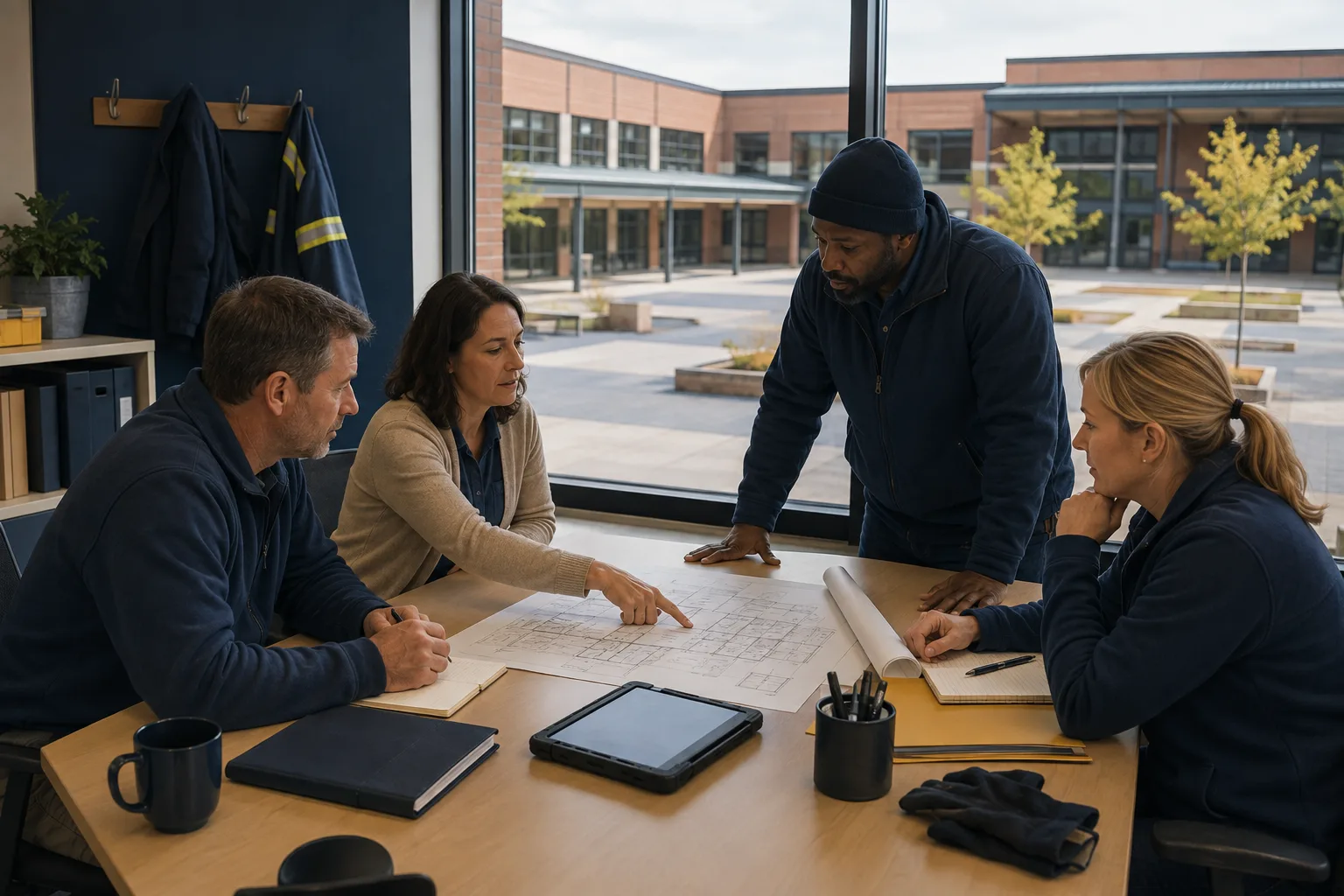
AI-generated editorial illustration; not a customer photograph or product screenshot.
FAQ Section
What is building maintenance?
Building maintenance is the ongoing process of inspecting, servicing, repairing, and preserving all building systems, structures, and components to ensure safe, efficient, and reliable operation. It encompasses preventive maintenance (scheduled servicing), corrective maintenance (planned repairs), predictive maintenance (condition-based intervention), and emergency maintenance (urgent unplanned repairs). Building maintenance covers HVAC, electrical, plumbing, structural, fire protection, elevators, building envelope, and grounds keeping to maintain building functionality, occupant safety, regulatory compliance, and property value.
What does building maintenance include?
Building maintenance includes comprehensive care of all building systems and components:
- HVAC systems: Heating, cooling, and ventilation equipment servicing
- Electrical systems: Power distribution, lighting, emergency systems, and generators
- Plumbing systems: Water supply, drainage, sewage, and fixtures
- Structural components: Roofs, walls, foundations, parking structures
- Fire protection: Alarms, sprinklers, extinguishers, emergency lighting
- Elevators and escalators: Safety inspections, servicing, and testing
- Building envelope: Windows, doors, insulation, weatherproofing
- Exterior elements: Landscaping, parking lots, sidewalks, lighting
Maintenance activities range from daily monitoring and inspections to monthly servicing, quarterly comprehensive maintenance, annual certifications, and multi-year capital replacements.
What's the difference between building maintenance and facility management?
Facility management is a broader discipline encompassing building maintenance plus strategic planning, space management, lease administration, vendor coordination, budgeting, sustainability programs, occupant services, and organizational support. Facility managers oversee building maintenance teams while also handling business operations, financial planning, tenant relations, and alignment with organizational goals.
How often should building maintenance be done?
Building maintenance frequency varies by system and activity:
- Daily: System monitoring, safety inspections, basic checks
- Weekly: Filter checks, minor servicing, grounds maintenance
- Monthly: Equipment inspections, generator testing, fire extinguisher checks, preventive maintenance tasks
- Quarterly: Comprehensive system servicing, fire alarm testing, seasonal preparations
- Semi-annually: HVAC seasonal changeovers, roof inspections (spring/fall)
- Annually: Major inspections, regulatory compliance certifications (elevators, backflow preventers, fire systems), comprehensive equipment servicing
Do I need building maintenance software?
For smaller buildings with simple systems, minimal compliance requirements, and few work orders, spreadsheet-based tracking may suffice. However, as complexity grows, dedicated building maintenance software provides significant operational and financial advantages.
Conclusion
Building maintenance represents far more than fixing broken equipment—it's a strategic discipline that preserves property value, ensures occupant safety, optimizes operational efficiency, and supports organizational success. The comprehensive approach outlined in this guide demonstrates how balancing preventive, corrective, predictive, and emergency maintenance creates resilient, high-performing buildings.
Effective building maintenance requires systematic planning through comprehensive maintenance plans, consistent execution using detailed checklists, appropriate resource allocation balancing in-house staff and qualified contractors, technology leverage through building maintenance software, and continuous improvement driven by data analysis and performance monitoring.
For building owners, facility managers, and property maintenance professionals, implementing the strategies, checklists, and best practices detailed in this guide will transform maintenance from a reactive cost center into a proactive value driver. Whether managing a single property or overseeing an extensive portfolio, comprehensive building maintenance excellence begins with commitment to systematic processes, investment in appropriate resources, and recognition that every maintenance dollar spent wisely returns multiples in preserved value and operational performance.
Start building your maintenance excellence program today by conducting a comprehensive facility assessment, developing a detailed maintenance plan, implementing systematic checklists, and considering building maintenance software to optimize your operations and maximize your property investment.
Related Resources:
- [Building Maintenance Software Guide] - Comprehensive CMMS selection and implementation guide
- [Preventive Maintenance] - Detailed preventive maintenance strategies and best practices
- [Facility Maintenance] - Complete facility maintenance management framework