When equipment breaks down unexpectedly or begins showing signs of failure, organizations turn to corrective maintenance to restore functionality and prevent extended downtime. This reactive approach to asset management remains one of the most common maintenance strategies across industries, from manufacturing plants to commercial facilities.
What is corrective maintenance? Corrective maintenance is the process of repairing or restoring equipment after a failure has occurred or been identified. This maintenance approach involves fixing broken assets, replacing failed components, or addressing performance issues to return equipment to normal operating conditions.
While preventive maintenance focuses on preventing failures before they happen, corrective maintenance responds to problems after they've been detected. Understanding when and how to implement corrective maintenance effectively can help organizations balance maintenance costs, minimize downtime, and extend asset lifecycles.
In this comprehensive guide, you'll learn everything about corrective maintenance including its definition, types, real-world examples, benefits and drawbacks, how it compares to other maintenance strategies, and best practices for implementation. Whether you're managing a small facility or overseeing enterprise-level operations, this article will help you determine when corrective maintenance makes strategic sense for your organization.
What is Corrective Maintenance? Definition and Meaning
Corrective maintenance refers to maintenance tasks performed to identify, isolate, and rectify a fault so that the failed equipment, machine, or system can be restored to operational condition. The corrective maintenance meaning encompasses all repair activities undertaken after a problem has been discovered, whether through equipment failure, performance degradation, or routine inspections.
The Core Concept of Corrective Maintenance
At its foundation, corrective maintenance is a reactive maintenance strategy. Unlike preventive or predictive approaches that attempt to forestall equipment failures, corrective maintenance accepts that some assets will fail and focuses on efficient repair and restoration when problems occur. This approach acknowledges that not all equipment failures can or should be prevented through proactive measures.
The corrective maintenance process begins when equipment malfunctions, breaks down completely, or exhibits abnormal performance that affects operations. Maintenance teams then diagnose the problem, determine the necessary repairs, procure required parts, execute the fix, and verify that the equipment returns to proper working order.
Corrective Maintenance vs Reactive Maintenance
Many maintenance professionals use the terms "corrective maintenance" and "reactive maintenance" interchangeably, but there's a subtle distinction worth noting. Reactive maintenance specifically refers to unplanned repairs performed immediately after unexpected failure. Corrective maintenance, however, is a broader category that includes both:
- Unplanned corrective maintenance: Emergency repairs after unexpected failures (true reactive maintenance)
- Planned corrective maintenance: Scheduled repairs for known issues that don't require immediate attention
This distinction is crucial because it reveals that corrective maintenance isn't always a crisis response. Organizations can strategically choose to address certain known defects on a planned basis rather than immediately, allowing for better resource allocation and scheduling.
When Corrective Action is Required
Corrective maintenance becomes necessary in several scenarios:
- Complete equipment failure: When an asset stops functioning entirely
- Performance degradation: When equipment operates but produces substandard output
- Safety concerns: When continuing operation poses risks to personnel or property
- Quality issues: When equipment defects affect product or service quality
- Inspection findings: When routine checks reveal problems requiring attention
- Regulatory compliance: When issues could lead to violations if not addressed
The Role in Maintenance Strategy
While modern maintenance philosophies often emphasize preventive and predictive approaches, corrective maintenance remains an essential component of any comprehensive maintenance strategy. For certain assets—particularly those with low failure consequences, inexpensive repair costs, or minimal impact on operations—corrective maintenance may actually be the most cost-effective approach.
The key is understanding that corrective maintenance shouldn't be the default approach for critical assets, but rather a deliberate strategic choice for specific equipment types. Organizations with mature maintenance programs typically employ a balanced mix of corrective, preventive, and predictive maintenance based on asset criticality and failure consequences.

AI-generated editorial illustration; not a customer photograph or product screenshot.
Types of Corrective Maintenance: Planned vs Unplanned
Corrective maintenance falls into two distinct categories that differ significantly in planning, execution, and organizational impact. Understanding these types helps maintenance managers develop appropriate response strategies and resource allocation plans.
Planned Corrective Maintenance (Deferred Maintenance)
Planned corrective maintenance, also called deferred corrective maintenance, occurs when maintenance teams discover a problem but deliberately choose to schedule repairs for a later date rather than addressing it immediately. This approach allows organizations to plan resources, coordinate with operations, and minimize disruption.
How Planned Corrective Maintenance Works:
When inspections, condition monitoring, or equipment operators identify an issue that doesn't require immediate action, the maintenance team evaluates the situation and determines:
- Whether the equipment can continue operating safely
- The optimal timing for repairs
- Required resources (parts, tools, personnel)
- Coordination needs with production schedules
- Budget availability and authorization
Benefits of Planned Corrective Maintenance:
Planned Corrective Maintenance Examples:
- A vibration sensor detects bearing wear in a motor that can safely run for two more weeks until the next scheduled shutdown
- Paint peeling from a storage tank exterior that's scheduled for repainting during the annual maintenance window
- A worn conveyor belt that's monitored and replaced during the upcoming three-day facility closure
- An air compressor showing early signs of degradation that's scheduled for overhaul next month
- Office HVAC making unusual noises that's scheduled for inspection during weekend operations
Unplanned Corrective Maintenance (Emergency Maintenance)
Unplanned corrective maintenance, often called emergency or breakdown maintenance, occurs when equipment fails unexpectedly and requires immediate attention to restore operations. This reactive approach involves responding to problems as they arise without advance preparation.
Characteristics of Unplanned Corrective Maintenance:
- Occurs without warning or preparation
- Requires immediate response to restore functionality
- Often involves urgency and time pressure
- May require emergency procurement of parts
- Typically involves higher costs and stress levels
- Can disrupt production schedules and operations
Challenges of Unplanned Corrective Maintenance:
Unplanned Corrective Maintenance Examples:
- A critical production machine bearing seizes suddenly, halting the assembly line
- A warehouse forklift's hydraulic system fails unexpectedly during peak operations
- A commercial building's main water line bursts, requiring immediate repair
- A server crashes due to hard drive failure, necessitating emergency data recovery
- A delivery truck's transmission fails on route, requiring emergency towing and repair
Comparison: Planned vs Unplanned Corrective Maintenance
The strategic goal for most organizations is to shift from unplanned to planned corrective maintenance whenever possible. By identifying issues early through inspections and condition monitoring, maintenance teams can convert potential emergencies into planned repairs, dramatically reducing costs and operational disruption.
Corrective Maintenance Examples Across Industries
Corrective maintenance applications vary widely across different sectors, but the fundamental principle remains the same: fixing problems after they occur. Here are real-world examples demonstrating how corrective maintenance works in various operational contexts.
Manufacturing Equipment Examples
Manufacturing environments provide numerous corrective maintenance scenarios affecting production efficiency and output quality:
-
CNC Machine Spindle Replacement: A computer numerical control machine's spindle begins making grinding noises and showing reduced precision. Maintenance technicians diagnose a worn bearing assembly and replace the entire spindle unit to restore machining accuracy.
-
Conveyor Belt Repair: A production line conveyor belt tears during operation, stopping material flow. The maintenance team shuts down the line, removes the damaged section, and installs a replacement belt segment to resume operations.
-
Robotic Arm Actuator Replacement: An automated welding robot's arm stops responding due to a failed servo motor. Technicians replace the actuator and recalibrate the robot to restore functionality.
-
Hydraulic Press Seal Replacement: A hydraulic press develops a fluid leak from degraded seals. The maintenance team drains the system, replaces the seals, refills the hydraulic fluid, and tests the press before returning it to service.
HVAC System Examples
Commercial and industrial facilities rely on climate control systems that frequently require corrective maintenance:
-
Compressor Failure Repair: An office building's air conditioning compressor fails during summer, leaving the building uncomfortably warm. HVAC technicians diagnose a seized compressor motor and replace the unit to restore cooling capacity.
-
Boiler Tube Leak Repair: A facility's heating boiler develops a tube leak that reduces pressure and heating efficiency. Maintenance personnel identify the leaking tube, drain the system, replace or seal the tube, and restart the boiler.
-
Air Handler Motor Replacement: An air handling unit's blower motor burns out, stopping air circulation in a building section. Technicians install a replacement motor and restore airflow.
-
Refrigerant Line Repair: A refrigeration unit loses cooling capacity due to a refrigerant leak. Technicians locate the leak, repair the damaged line, recharge the system, and verify proper operation.
Fleet and Vehicle Examples
Transportation and fleet operations encounter regular corrective maintenance needs:
-
Engine Overhaul: A delivery truck experiences engine performance issues diagnosed as worn piston rings and cylinder scoring. The vehicle undergoes a complete engine rebuild or replacement to restore reliable operation.
-
Transmission Replacement: A forklift's transmission fails, preventing movement. The maintenance shop removes and replaces the transmission assembly to return the vehicle to service.
-
Brake System Repair: A company vehicle develops brake fade and squealing. Technicians discover worn brake pads and warped rotors, replacing both components to restore safe braking performance.
-
Electrical System Diagnosis and Repair: A fleet vehicle experiences intermittent starting problems. Electricians trace the issue to a faulty starter relay, replace the component, and verify proper starting operation.
Facility Maintenance Examples
Buildings and facilities require ongoing corrective maintenance to maintain functionality:
-
Plumbing System Repairs: A restroom develops a pipe leak behind a wall. Maintenance personnel open the wall, replace the corroded pipe section, repair the wall, and test for proper water flow and drainage.
-
Roof Leak Repair: Heavy rain reveals a roof leak causing ceiling damage. Roofing contractors locate the compromised area, replace damaged roofing materials, and verify waterproof integrity.
-
Electrical Panel Replacement: A circuit breaker panel begins tripping frequently and showing signs of overheating. Electricians diagnose the panel as outdated and replace it with a modern unit meeting current codes.
-
Door Lock Replacement: An entrance door's electronic lock mechanism fails, preventing proper access control. Locksmiths replace the lock assembly and reprogram access credentials.
IT Infrastructure Examples
Technology environments require corrective maintenance to maintain system availability:
-
Server Hard Drive Replacement: A data center monitoring system alerts to hard drive failure in a RAID array. IT personnel replace the failed drive and allow the array to rebuild, restoring full redundancy.
-
Network Switch Repair: A network switch fails, disrupting connectivity for an entire department. Network administrators replace the faulty switch and restore network access.
-
Database Corruption Recovery: A database becomes corrupted due to unexpected power loss. Database administrators restore from backup, apply transaction logs, and verify data integrity.
-
Printer Maintenance: An office printer experiences paper jams and print quality issues. Technicians replace worn rollers, clean print heads, and calibrate the unit to restore proper printing.
These examples demonstrate that corrective maintenance applies universally across industries and asset types. The specific techniques and components differ, but the fundamental approach—responding to failures by diagnosing and fixing problems—remains consistent.
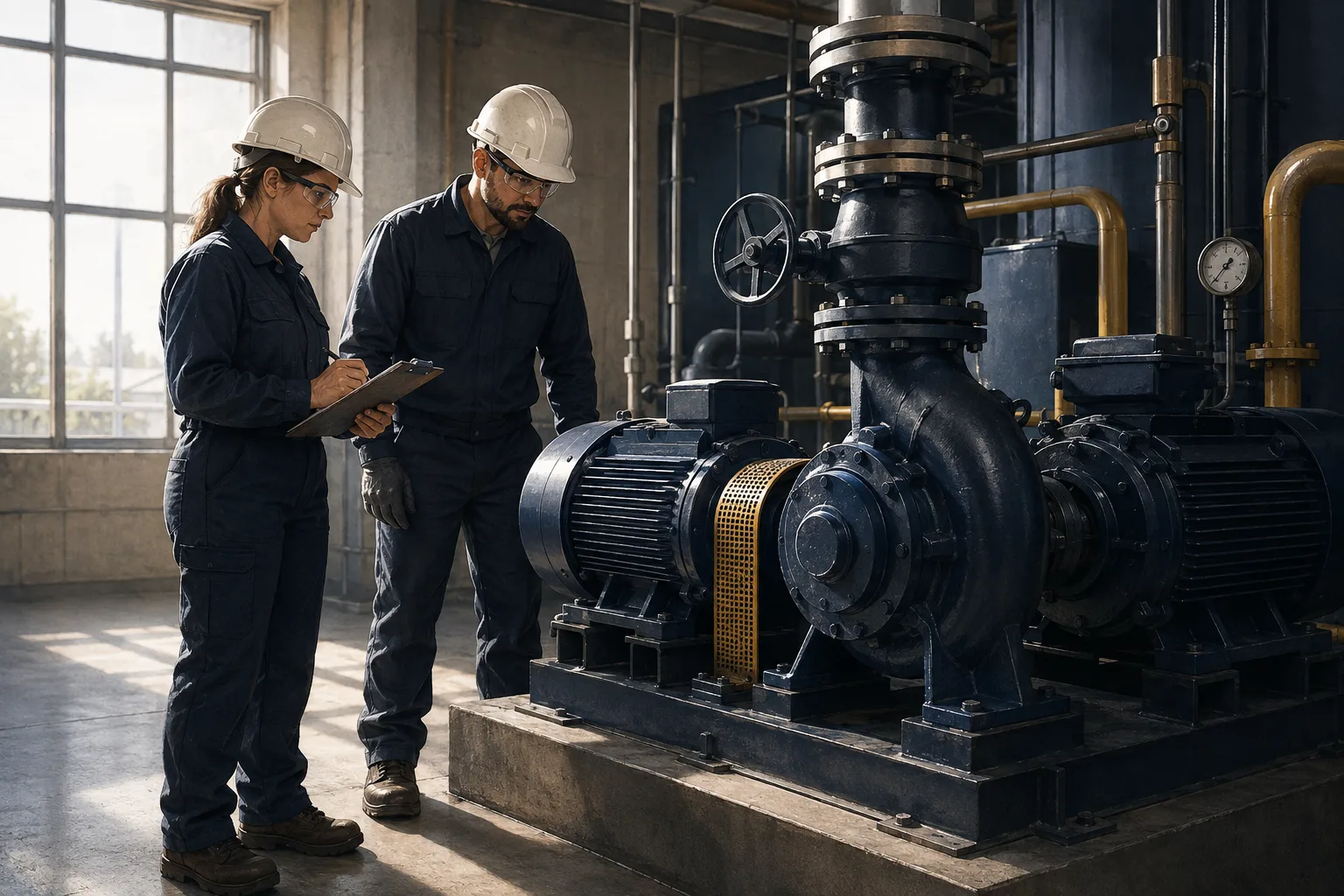
AI-generated editorial illustration; not a customer photograph or product screenshot.
Corrective Maintenance vs Preventive Maintenance
Understanding the relationship between corrective and preventive maintenance is essential for developing an effective maintenance strategy. While these approaches differ fundamentally in philosophy and execution, most organizations benefit from using both strategically.
Key Differences Between Corrective and Preventive Maintenance
Timing and Approach:
- Preventive Maintenance: Performed on a scheduled basis before failures occur, based on time intervals, usage metrics, or manufacturer recommendations
- Corrective Maintenance: Performed after a failure occurs or is identified, responding to actual problems rather than preventing potential ones
Philosophy:
- Preventive Maintenance: Proactive approach assuming regular servicing prevents failures and extends asset life
- Corrective Maintenance: Reactive approach accepting that some failures will occur and focusing on efficient restoration
Planning and Execution:
- Preventive Maintenance: Planned well in advance with scheduled resources, parts inventory, and coordinated downtime
- Corrective Maintenance: May be planned (deferred repairs) or unplanned (emergency response), depending on failure circumstances
Activities Involved:
- Preventive Maintenance: Inspections, cleaning, lubrication, adjustments, component replacement based on schedules
- Corrective Maintenance: Diagnosis, repair, component replacement, testing, and restoration after failure
Cost Comparison: Which is More Economical?
The cost equation between preventive and corrective maintenance isn't straightforward and depends heavily on asset characteristics:
When Preventive Maintenance Costs Less:
When Corrective Maintenance Costs Less:
For non-critical assets with low failure impact, corrective maintenance often makes financial sense:
- Eliminates costs of regular preventive tasks that may be unnecessary
- Avoids replacing components that still have useful life remaining
- Reduces maintenance labor for assets that rarely fail
- Simplifies maintenance programs with fewer scheduled tasks
When to Use Each Approach
Use Preventive Maintenance When:
- Asset failure causes significant production losses or safety risks
- Equipment is critical to operations with no backup or redundancy
- Failure consequences exceed prevention costs substantially
- Manufacturer recommendations specify regular maintenance intervals
- Regulatory requirements mandate regular inspections or servicing
- Predictable wear patterns make intervention timing clear
- Equipment operates in harsh conditions accelerating degradation
Use Corrective Maintenance When:
- Asset failure has minimal operational impact
- Repair costs are lower than prevention costs
- Equipment has redundant backups available
- Asset value is low, nearing end of life
- Failure patterns are random and unpredictable
- Prevention activities don't significantly extend asset life
- The run-to-failure strategy makes economic sense
Balancing Both Approaches: The Strategic Mix
Sophisticated maintenance programs rarely rely exclusively on one approach. Instead, they segment assets and apply the most appropriate strategy to each category:
This tiered approach, often called Reliability-Centered Maintenance (RCM), optimizes resource allocation by matching maintenance intensity to asset importance. By applying rigorous preventive maintenance only where it delivers clear value and accepting corrective maintenance for less critical assets, organizations achieve better overall cost-effectiveness than using either approach universally.
For more detailed information on preventive maintenance strategies and implementation, see our comprehensive [Preventive Maintenance Guide].
Strategic Considerations for Maintenance Managers
When deciding between preventive and corrective maintenance approaches:
- Calculate failure consequences: Consider downtime costs, safety risks, quality impacts, and repair expenses
- Assess asset criticality: Determine which equipment failures most significantly affect operations
- Analyze failure patterns: Some assets fail randomly while others show predictable degradation
- Consider resource availability: Preventive maintenance requires dedicated planning and resources
- Evaluate total cost of ownership: Include prevention costs, repair costs, and downtime impacts
- Review historical data: Past failure rates and costs inform future strategy decisions
- Align with business objectives: Maintenance strategy should support overall operational goals
The corrective versus preventive maintenance decision isn't an either-or choice but rather a strategic optimization problem requiring thoughtful analysis of your specific operational context.
AI-generated editorial illustration; not a customer photograph or product screenshot.
Benefits of Corrective Maintenance
Despite the modern emphasis on preventive and predictive approaches, corrective maintenance offers legitimate advantages that make it the optimal strategy for certain assets and operational contexts.
Lower Upfront Costs
Corrective maintenance requires minimal upfront investment compared to comprehensive preventive programs:
- No scheduled maintenance labor costs: Maintenance personnel only work on assets when problems occur, not on regular preventive schedules
- Reduced parts inventory: Organizations don't need extensive spare parts inventory for preventive replacements
- Minimal planning overhead: No need for maintenance scheduling software, condition monitoring systems, or extensive documentation
- Lower administrative burden: Fewer work orders, inspection records, and maintenance logs to manage
For small organizations with limited budgets or non-critical equipment, these cost savings can be substantial and may outweigh the risks of unexpected failures.
Simplicity and Ease of Implementation
The straightforward nature of corrective maintenance makes it easy to understand and execute:
- Clear trigger for action: Maintenance occurs when something breaks or malfunctions—no complex algorithms or condition thresholds to interpret
- Minimal training requirements: Technicians focus on repair skills rather than complex predictive diagnostics
- Simple processes: The workflow is straightforward—identify problem, diagnose cause, fix issue, return to service
- Easy to communicate: Operations personnel and management easily understand the "fix it when it breaks" approach
This simplicity is particularly valuable for organizations with limited maintenance expertise or those managing diverse equipment types that would require extensive knowledge for comprehensive preventive programs.
When Corrective Maintenance Makes Strategic Sense
Corrective maintenance is genuinely the optimal approach in several scenarios:
Low-Consequence Failures: When equipment failure causes minimal disruption, safety risk, or financial impact, the cost of prevention often exceeds the cost of occasional repairs. Office equipment like printers, copiers, or desktop computers typically falls into this category.
Inexpensive Assets: For equipment with low replacement or repair costs, spending on regular preventive maintenance provides little value. Simple hand tools, basic electrical appliances, or inexpensive facility equipment often costs more to maintain preventively than to replace when broken.
Unpredictable Failure Patterns: Some assets fail randomly without warning signs or predictable degradation patterns. For these items, preventive maintenance provides little benefit because failures cannot be reliably prevented through regular servicing.
End-of-Life Equipment: Assets nearing retirement or scheduled for replacement don't justify preventive maintenance investment. A run-to-failure approach maximizes the remaining value without spending unnecessarily on prolonging life.
The Run-to-Failure Strategy
For appropriate assets, deliberately implementing a run-to-failure strategy supported by corrective maintenance can optimize total maintenance costs. This approach accepts that equipment will eventually fail and prepares for efficient restoration rather than attempting prevention.
Key Elements of Effective Run-to-Failure:
- Strategic asset selection: Carefully choose which equipment receives this treatment based on failure consequences
- Spare parts availability: Maintain critical replacement components for fast restoration
- Quick response capability: Ensure maintenance resources can respond promptly when failures occur
- Documentation: Track failure patterns to identify any equipment requiring strategy changes
- Backup planning: Consider redundancy or workarounds for operational continuity
When implemented thoughtfully rather than by default, corrective maintenance and run-to-failure strategies can be legitimate, cost-effective approaches for appropriate asset categories.
Drawbacks and Risks of Corrective Maintenance
While corrective maintenance offers advantages for certain situations, relying too heavily on this reactive approach—particularly for critical assets—creates significant operational, financial, and safety risks.
Unexpected Downtime and Production Impact
The most significant drawback of corrective maintenance is unplanned downtime that disrupts operations:
- Production stoppages: Manufacturing lines halt when critical equipment fails unexpectedly
- Schedule disruptions: Service commitments and delivery deadlines may be missed
- Customer dissatisfaction: Downtime can affect product quality, delivery times, and service levels
- Cascading effects: One equipment failure can impact dependent systems or processes
- Revenue losses: Extended downtime directly reduces production output and sales
Higher Long-Term Costs
While corrective maintenance reduces upfront costs, the total cost of ownership often exceeds preventive approaches:
Safety Concerns and Hazards
Corrective maintenance creates several safety risks for personnel and facilities:
- Unexpected failures: Equipment breaking down suddenly can injure operators or nearby workers
- Rushed repairs: Emergency response under time pressure increases accident potential
- Catastrophic failures: Some equipment failures create fire, explosion, or environmental hazards
- Improper procedures: Quick fixes may skip safety protocols or proper lockout/tagout procedures
- Fatigue factors: Emergency repairs during off-hours involve tired personnel more prone to mistakes
Industries with significant safety considerations—chemical processing, oil and gas, utilities—cannot afford to rely heavily on corrective maintenance for critical safety systems.
Quality and Reliability Issues
Reactive maintenance approaches can negatively impact product and service quality:
- Degraded performance: Equipment often operates below specification before complete failure
- Quality defects: Worn or failing equipment produces substandard output
- Inconsistency: Variable equipment condition leads to inconsistent product quality
- Waste and rework: Defective output must be scrapped or reworked, increasing costs
- Customer complaints: Quality issues erode customer satisfaction and reputation
When to Avoid Corrective Maintenance
Corrective maintenance is inappropriate and potentially dangerous for:
Critical Safety Systems: Fire suppression equipment, emergency lighting, safety interlocks, pressure relief valves, and other safety-critical assets must receive preventive maintenance regardless of cost considerations.
High-Consequence Assets: Equipment whose failure causes major production losses, safety risks, environmental damage, or regulatory violations requires proactive maintenance strategies.
Mission-Critical Operations: Systems essential to core business functions—data centers, production bottlenecks, customer-facing services—cannot rely on reactive approaches.
Regulated Equipment: Assets subject to regulatory inspection and maintenance requirements must follow prescribed preventive schedules regardless of failure frequency.
High-Value Assets: Expensive equipment with significant capital investment justifies preventive maintenance to protect the investment and maximize return.
The key insight is that corrective maintenance should be a deliberate strategic choice for appropriate assets, not a default approach applied universally due to resource constraints or maintenance immaturity. Understanding when corrective maintenance creates unacceptable risk is as important as recognizing where it provides value.
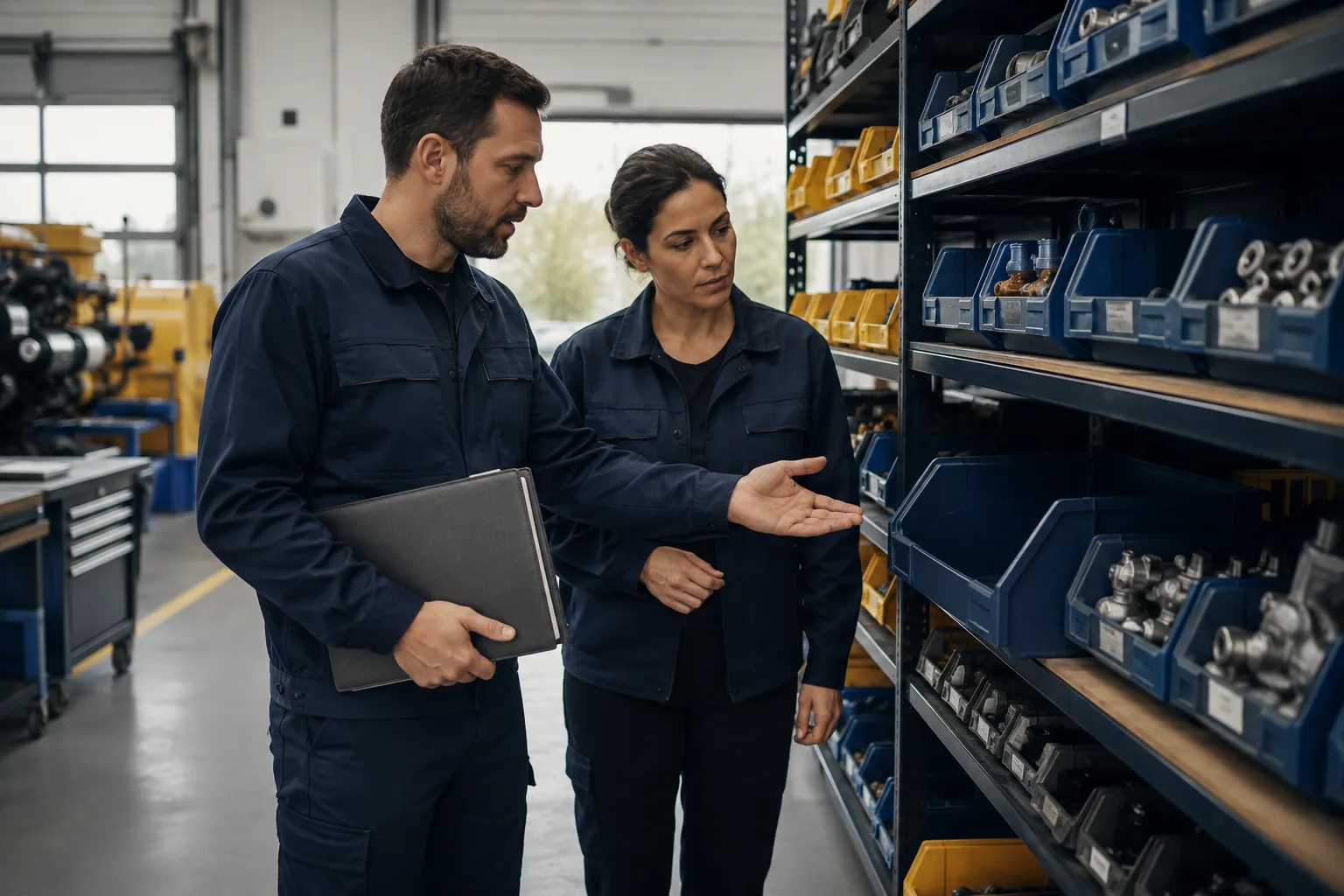
AI-generated editorial illustration; not a customer photograph or product screenshot.
Corrective Maintenance Process: Step-by-Step
Executing corrective maintenance effectively requires a systematic process that moves from failure detection through repair completion and documentation. Following standardized procedures ensures consistent quality, proper documentation, and continuous improvement.
Failure Detection and Reporting
The corrective maintenance process begins when someone identifies an equipment problem:
- Operator notification: Equipment operators notice malfunctions, abnormal sounds, or performance issues
- Automated alerts: Monitoring systems generate alarms for threshold violations or equipment faults
- Inspection findings: Routine inspections reveal developing problems requiring correction
- Customer complaints: Quality issues or service problems point to equipment defects
- Performance monitoring: Production metrics indicate equipment underperformance
The person discovering the issue reports it through established channels—maintenance request systems, work order forms, computerized maintenance management systems (CMMS), or direct communication with maintenance personnel.
Work Order Creation and Prioritization
Once reported, the maintenance department creates a formal work order documenting the issue:
Work Order Information:
- Equipment identification and location
- Problem description and symptoms
- Date and time of failure or discovery
- Impact on operations (downtime, safety, quality)
- Priority level based on criticality
- Required resources (estimated skills, parts, tools)
Priority Classification:
- Emergency (P1): Immediate response—safety hazards or critical production impact
- Urgent (P2): Same-day response—significant operational impact
- High (P3): 1-3 day response—moderate impact on operations
- Medium (P4): 1-2 week response—minimal operational impact
- Low (P5): Scheduled at convenience—no operational impact
Proper prioritization ensures critical issues receive immediate attention while less urgent problems are scheduled appropriately.
Diagnosis and Root Cause Analysis
Before attempting repairs, technicians must accurately diagnose the problem:
Diagnostic Activities:
- Visual inspection to assess obvious damage or wear
- Equipment testing to reproduce the failure or verify symptoms
- System checks to identify affected components or circuits
- Measurement and testing using diagnostic equipment
- Historical review of previous failures or maintenance records
- Consultation of equipment manuals or technical documentation
Root Cause Analysis: For recurring or significant failures, technicians should identify the underlying cause rather than just addressing symptoms:
- Why did the failure occur?
- What conditions contributed to the problem?
- Were there warning signs that were missed?
- Can similar failures be prevented in the future?
Thorough diagnosis prevents wasted effort fixing the wrong component and ensures the actual problem gets resolved.
Repair Planning and Resource Allocation
Based on the diagnosis, maintenance personnel plan the repair approach:
- Repair strategy selection: Fix in place, remove for shop repair, or replace entire unit
- Parts procurement: Order or retrieve necessary replacement components
- Tool and equipment needs: Identify required tools, lifting equipment, safety gear
- Personnel assignment: Allocate technicians with appropriate skills and certifications
- Scheduling: Coordinate repair timing with operations to minimize disruption
- Safety planning: Identify hazards and required safety procedures (lockout/tagout, confined space, etc.)
For unplanned corrective maintenance, this planning occurs rapidly. For planned corrective maintenance, thorough preparation optimizes the repair process.
Repair Execution and Restoration
Qualified technicians perform the actual repair work following established procedures:
Safety Procedures:
- Implement lockout/tagout (LOTO) to de-energize equipment
- Use appropriate personal protective equipment (PPE)
- Follow confined space or elevated work procedures if applicable
- Communicate with operations about equipment status
Repair Activities:
- Disassemble equipment to access failed components
- Remove and replace defective parts
- Clean, adjust, or calibrate as needed
- Reassemble equipment properly
- Verify all connections, fasteners, and safety devices
- Remove lockout/tagout and prepare for testing
Throughout the repair process, technicians should document their actions, findings, and any deviations from standard procedures.
Testing and Verification
Before returning equipment to service, technicians must verify proper operation:
- Functional testing: Operate equipment through normal cycles to verify functionality
- Performance verification: Confirm equipment meets specifications (speed, pressure, temperature, output quality)
- Safety checks: Verify all safety devices, interlocks, and guards function properly
- Run-in period: Monitor equipment during initial operation to detect any issues
- Quality checks: Verify product or output meets quality standards
Testing may reveal additional problems requiring further diagnosis and repair, repeating the process until the equipment operates correctly.
Documentation and Closeout
Proper documentation completes the corrective maintenance process:
Work Order Documentation:
- Problem found and diagnostic findings
- Root cause identification
- Parts used and labor hours expended
- Repair procedures performed
- Test results and verification
- Recommendations for preventing recurrence
- Total downtime and costs incurred
System Updates:
- Update CMMS or maintenance management system
- Record costs for budget tracking and analysis
- Update equipment history and failure records
- Modify preventive maintenance schedules if needed
- Add to spare parts consumption tracking
Communication:
- Notify operations that equipment is available
- Brief operators on any changes or precautions
- Report to management on critical or costly repairs
- Share lessons learned with maintenance team
Root Cause Analysis and Continuous Improvement
For significant or recurring failures, conduct thorough root cause analysis:
- Analyze why the failure occurred
- Identify contributing factors and conditions
- Determine if preventive measures could prevent recurrence
- Evaluate whether the maintenance strategy should change
- Implement improvements to prevent similar issues
This final step transforms corrective maintenance from purely reactive response into a learning opportunity that improves overall reliability.
Following this systematic process ensures corrective maintenance activities are executed safely, efficiently, and contribute to continuous improvement rather than just addressing immediate problems.

AI-generated editorial illustration; not a customer photograph or product screenshot.
Corrective Maintenance Best Practices
Implementing corrective maintenance effectively requires more than just fixing broken equipment. These best practices help organizations optimize their reactive maintenance approach while minimizing costs and operational disruption.
Strategic Implementation: When to Use Corrective Maintenance
Apply corrective maintenance strategically rather than as a universal default:
Asset Criticality Assessment:
- Categorize assets by operational importance and failure consequences
- Reserve corrective-only approaches for non-critical, low-consequence equipment
- Implement hybrid strategies (preventive + corrective) for important assets
- Apply rigorous preventive/predictive maintenance to critical equipment
Economic Analysis:
- Calculate total cost of ownership including prevention, repairs, and downtime
- Compare preventive versus corrective costs for each asset category
- Identify the break-even point where prevention becomes economical
- Re-evaluate strategies periodically as conditions change
Failure Pattern Recognition:
- Track failure history to identify patterns and trends
- Assets with random failures may suit corrective approaches
- Equipment showing predictable degradation benefits from preventive maintenance
- Adjust strategies based on actual failure data rather than assumptions
Documentation Requirements and Knowledge Management
Thorough documentation transforms reactive maintenance into organizational learning:
Essential Documentation:
- Detailed failure descriptions including symptoms and conditions
- Root cause analysis findings for significant failures
- Parts used, labor hours, and total costs
- Repair procedures and any deviations from standards
- Test results and performance verification
- Recommendations for preventing recurrence
Knowledge Capture:
- Create standardized work order templates capturing critical information
- Photograph conditions before, during, and after repairs
- Record technician observations and insights
- Build troubleshooting guides from repeated issues
- Share lessons learned across the maintenance team
Analysis and Trending:
- Track failure frequency by equipment type and location
- Identify recurring problems warranting strategy changes
- Calculate downtime and cost trends over time
- Use data to justify preventive maintenance program investments
- Support equipment replacement decisions with failure history
Spare Parts Management for Responsive Repairs
Efficient corrective maintenance requires having the right parts available when needed:
Strategic Inventory:
- Stock critical spare parts for high-consequence equipment failures
- Maintain consumables for common corrective repairs
- Balance inventory costs against downtime risks
- Establish minimum/maximum stock levels based on failure frequency
- Consider vendor-managed inventory for expensive items
Supplier Relationships:
- Develop relationships with reliable parts suppliers
- Negotiate expedited shipping arrangements for emergencies
- Identify alternative sources for critical components
- Clarify warranty and return policies
- Maintain supplier contact information in accessible locations
Inventory Management:
- Implement inventory tracking systems (manual or computerized)
- Conduct regular inventory audits to prevent stockouts
- Track parts consumption patterns to optimize stocking levels
- Remove obsolete inventory for discontinued equipment
- Coordinate spare parts with equipment upgrades and replacements
Response Time Optimization
Minimizing the time from failure to restoration reduces operational impact:
Rapid Response Systems:
- Establish clear reporting procedures for equipment failures
- Implement 24/7 maintenance contact methods for critical assets
- Create prioritization criteria ensuring appropriate response urgency
- Pre-assign on-call technicians for emergency response
- Reduce approval delays for emergency repairs
Diagnostic Efficiency:
- Train technicians in systematic troubleshooting methodologies
- Provide diagnostic tools and testing equipment
- Maintain equipment documentation in accessible locations
- Create troubleshooting guides for common problems
- Use remote diagnostics when technology permits
Repair Process Efficiency:
- Pre-stage tools and equipment for common repairs
- Develop standard repair procedures for frequent issues
- Cross-train technicians to increase available resources
- Consider predictive/preventive maintenance to reduce emergency workload
- Coordinate with operations to minimize access delays
Cost Tracking and Financial Management
Understanding the true cost of corrective maintenance supports better decision-making:
Comprehensive Cost Capture:
- Direct labor costs (regular time and overtime premiums)
- Parts and materials expenses
- Equipment rental or specialized tool costs
- Contractor or vendor charges
- Production downtime costs (lost output, idle labor, missed deliveries)
- Quality costs (scrap, rework, customer complaints)
Cost Analysis:
- Calculate cost per repair by equipment type
- Compare emergency versus planned corrective maintenance costs
- Trend costs over time to identify problematic equipment
- Benchmark costs against industry standards
- Use cost data to justify maintenance strategy changes
Budget Planning:
- Allocate contingency funds for unexpected corrective maintenance
- Track actual versus budgeted corrective maintenance spending
- Identify seasonal or cyclical variations in repair needs
- Plan capital replacement based on increasing corrective costs
- Balance preventive maintenance investment against corrective costs
Communication and Coordination
Effective corrective maintenance requires coordination across multiple stakeholders:
Operations Communication:
- Notify operations immediately of equipment availability changes
- Provide realistic estimates for repair completion
- Communicate any operational precautions after repairs
- Solicit operator input on equipment performance issues
- Brief operators on changes made during repairs
Management Reporting:
- Provide timely notification of critical failures and impacts
- Report on major expenditures and budget implications
- Highlight recurring issues requiring strategic attention
- Present data supporting maintenance strategy decisions
- Communicate improvement initiatives and results
Team Coordination:
- Conduct regular maintenance team meetings to share knowledge
- Assign clear responsibility for work order management
- Coordinate multiple crafts (electrical, mechanical, etc.) for complex repairs
- Establish escalation procedures for challenging problems
- Recognize and reward effective problem-solving and improvement ideas
By implementing these best practices, organizations can transform corrective maintenance from a purely reactive activity into a strategic component of their overall maintenance program—one that balances costs, minimizes disruption, and contributes to continuous improvement.

AI-generated editorial illustration; not a customer photograph or product screenshot.
Frequently Asked Questions About Corrective Maintenance
What is corrective maintenance?
Corrective maintenance is maintenance performed to identify, isolate, and repair a fault so that failed equipment, machines, or systems can be restored to operational condition. It's a reactive maintenance approach that responds to problems after they've been detected through equipment failure, performance degradation, or routine inspections. Corrective maintenance includes both planned repairs for known issues that don't require immediate attention and unplanned emergency repairs after unexpected failures.
What are examples of corrective maintenance?
Common corrective maintenance examples include: replacing a failed motor bearing in a production machine, repairing a leaking hydraulic seal in a press, fixing a broken conveyor belt that stopped during operation, replacing a burned-out HVAC compressor, repairing a burst water pipe in a facility, replacing a failed hard drive in a server, overhauling a truck engine experiencing performance issues, and patching a roof leak discovered during inspection. These examples demonstrate repairs made after problems occurred rather than preventive maintenance performed to avoid failures.
When should you use corrective maintenance?
Use corrective maintenance strategically when: the asset has low criticality with minimal operational impact from failure, repair costs are lower than ongoing prevention costs, the equipment has redundant backups available, the asset value is low or nearing end of life, failure patterns are random and unpredictable making prevention difficult, or when the run-to-failure strategy makes economic sense. Avoid relying on corrective maintenance for critical safety systems, high-consequence assets where failures cause major losses, mission-critical operations, equipment subject to regulatory maintenance requirements, or high-value assets requiring protection of capital investment.
How does corrective maintenance relate to other maintenance strategies?
Corrective maintenance is one component of a comprehensive maintenance strategy that typically includes preventive maintenance (scheduled servicing to prevent failures), predictive maintenance (condition-based maintenance using monitoring data), and reliability-centered maintenance (strategic approach matching maintenance intensity to asset criticality). Mature maintenance programs use a balanced mix: rigorous preventive/predictive maintenance for critical assets, basic preventive maintenance with some corrective maintenance for important assets, and primarily corrective maintenance for non-critical assets. This tiered approach optimizes total maintenance costs while managing operational risks appropriately.
For more information on developing a comprehensive maintenance strategy incorporating corrective, preventive, and predictive approaches, see our guide on [Maintenance Strategies].
What role does technology play in corrective maintenance?
Technology significantly improves corrective maintenance effectiveness through: Computerized Maintenance Management Systems (CMMS) that track work orders, costs, and equipment history; mobile devices enabling technicians to access information and update records from the field; remote diagnostics allowing faster problem identification; automated failure notifications from connected equipment reducing detection time; spare parts tracking systems ensuring component availability; and data analytics identifying failure patterns and optimization opportunities. While corrective maintenance is inherently reactive, technology helps organizations respond faster, document better, and learn from failures to improve overall reliability.
Can corrective maintenance reduce overall maintenance costs?
Conclusion: Implementing Corrective Maintenance Strategically
Corrective maintenance remains an essential and legitimate component of comprehensive maintenance strategy when applied thoughtfully to appropriate assets. Rather than viewing reactive maintenance as a sign of program immaturity, successful organizations recognize that strategic implementation of corrective maintenance optimizes resource allocation and total maintenance costs.
The key insight is that corrective maintenance should be a deliberate choice, not a default approach. For non-critical assets with low failure consequences, minimal operational impact, and inexpensive repair costs, the run-to-failure approach supported by efficient corrective maintenance delivers better economic value than comprehensive preventive programs. Conversely, critical assets requiring high availability, safety-critical systems, and equipment with severe failure consequences demand proactive maintenance strategies regardless of cost.
Effective corrective maintenance execution requires systematic processes moving from failure detection through diagnosis, repair, testing, and documentation. Organizations that treat each corrective maintenance event as a learning opportunity—conducting root cause analysis, tracking failure patterns, and adjusting strategies based on data—transform reactive maintenance from crisis response into continuous improvement.
Whether you're developing a new maintenance program or optimizing an existing one, understanding when and how to implement corrective maintenance effectively provides a foundation for balanced, cost-effective asset management that supports your organization's operational objectives.
Ready to optimize your maintenance strategy? Evaluate your current asset inventory, categorize equipment by criticality, and determine which assets genuinely benefit from preventive approaches versus those where corrective maintenance makes strategic sense. Track your corrective maintenance costs, failure patterns, and downtime impacts to make data-driven decisions about your maintenance program evolution.
For additional resources on developing comprehensive maintenance strategies, explore our guides on [Preventive Maintenance], [Predictive Maintenance], and [Reliability-Centered Maintenance] to build a complete maintenance program tailored to your operational needs.