Skip to content
All guides

Maintenance guide

Facility Maintenance Guide: Services, Planning & Best Practices

Complete guide to facility maintenance. Learn about services, develop maintenance plans, implement best practices, and choose facility management software.

50 minute readBy PreventiveHQ Editorial TeamPublished 2026-06-16Content file updated 2026-06-1610,974 words
Editorial note: legacy articles are being re-reviewed for primary sources, dated claims and current product alignment. Verify safety, legal and regulatory requirements with the responsible authority before applying them.

Facility Maintenance: Complete Guide to Effective Facility Management

URL: /facility-maintenance-guide/


Introduction

Facility maintenance is the backbone of successful operations for organizations across every industry. Whether you manage a commercial office building, manufacturing plant, healthcare facility, educational campus, or retail space, effective facility maintenance ensures your building systems operate reliably, your occupants remain safe and comfortable, and your assets maintain their value over time.

The role of facility managers has evolved significantly in recent years. Today's facilities professionals are expected to balance competing priorities: minimizing operational costs while maximizing asset performance, ensuring regulatory compliance while improving sustainability, and maintaining business continuity while implementing innovative technologies. The stakes are higher than ever, with facility-related costs typically representing the second-largest expense for most organizations after personnel.

This comprehensive guide provides facility managers, building owners, and operations professionals with everything needed to develop and implement an effective facility maintenance program. We'll explore the fundamental types of maintenance strategies, examine the full spectrum of facility maintenance services, provide a framework for developing a robust maintenance plan, and share proven best practices for optimizing facility operations.

Whether you're developing your first facility maintenance plan or looking to enhance an existing program, this guide will equip you with practical insights, industry benchmarks, and strategic approaches to transform your facility maintenance from a reactive cost center into a proactive value driver for your organization.


What is Facility Maintenance?

Facility maintenance refers to the processes, procedures, and activities designed to keep building systems, equipment, and infrastructure operating efficiently, safely, and reliably. It encompasses preventive, corrective, predictive, and emergency maintenance activities across all physical assets within a facility.

Comprehensive Definition and Scope

Facility maintenance is a strategic discipline that combines technical expertise, operational planning, and resource management to preserve and enhance the built environment. It extends beyond simple repairs to encompass a holistic approach to managing physical assets throughout their entire lifecycle—from installation and commissioning through daily operations, periodic upgrades, and eventual replacement.

The scope of facility maintenance is remarkably broad, covering both the visible and hidden systems that make modern buildings functional. This includes mechanical systems like HVAC and boilers, electrical infrastructure from power distribution to emergency lighting, plumbing and water treatment systems, fire and life safety equipment, building automation and control systems, structural components, and the building envelope. Additionally, it encompasses grounds maintenance, parking facilities, interior finishes, and specialized equipment specific to the facility's purpose.

Facility Maintenance vs Building Maintenance

While often used interchangeably, facility maintenance and building maintenance have distinct meanings. Building maintenance focuses specifically on the physical structure and core building systems—the HVAC, electrical, plumbing, and structural elements that comprise the building itself. Facility maintenance takes a broader view, encompassing everything within building maintenance plus additional services that support the facility's operational mission.

Facility maintenance includes soft services such as janitorial and cleaning programs, landscaping and grounds care, pest control, security services, waste management, and even catering in some contexts. It considers the complete environment where people work, learn, heal, or conduct business. A building maintenance technician might repair an air handler, while a facility maintenance program ensures that repair fits within a comprehensive preventive maintenance schedule, budget allocation, regulatory compliance framework, and occupant comfort strategy.

Facility Maintenance vs Facility Management

The distinction between facility maintenance and facility management is equally important. Facility management is the overarching discipline that encompasses facility maintenance as one of several key functions. Facility management includes strategic planning and space management, lease administration and real estate portfolio decisions, workplace services and employee experience, sustainability and environmental programs, technology integration and smart building initiatives, and vendor and contractor management.

Facility maintenance is the operational execution arm of facility management—the hands-on work of maintaining physical assets. A facility manager sets strategic direction, allocates resources, measures performance against organizational goals, and ensures alignment with business objectives. The facility maintenance team executes the tactical work orders, preventive maintenance tasks, emergency repairs, and ongoing inspections that bring that strategy to life.

Key Responsibilities and Stakeholders

Effective facility maintenance requires collaboration among multiple stakeholders. Facility managers develop maintenance strategies and oversee program implementation. Maintenance technicians and engineers perform hands-on repairs and preventive maintenance tasks. Building operators monitor systems and respond to immediate needs. Vendors and contractors provide specialized services and expertise. Occupants and end-users report issues and participate in emergency procedures.

The key responsibilities span multiple domains: ensuring equipment reliability and uptime, maintaining safe and compliant environments, optimizing energy efficiency and sustainability, preserving asset value and extending equipment life, supporting business continuity and operational needs, managing maintenance budgets and controlling costs, documenting work activities and maintaining accurate records, and continuously improving processes and procedures.

Types of Facilities Requiring Maintenance Programs

Virtually every type of facility requires a structured maintenance program, though the specific requirements vary significantly by industry and building type. Commercial office buildings need programs focused on tenant comfort, common area presentation, and system reliability. Manufacturing and industrial facilities prioritize equipment uptime, safety compliance, and production support. Healthcare facilities face stringent regulatory requirements, infection control standards, and critical system redundancy needs.

Educational institutions balance limited budgets with extensive building portfolios and seasonal occupancy patterns. Retail and hospitality facilities emphasize customer experience, aesthetic maintenance, and high-availability requirements. Government and municipal buildings must navigate public accountability, regulatory compliance, and often aging infrastructure. Data centers require precision environmental control, redundant systems, and 24/7/365 reliability. Each facility type demands a tailored approach to maintenance that addresses its unique operational requirements, risk profile, and stakeholder expectations.
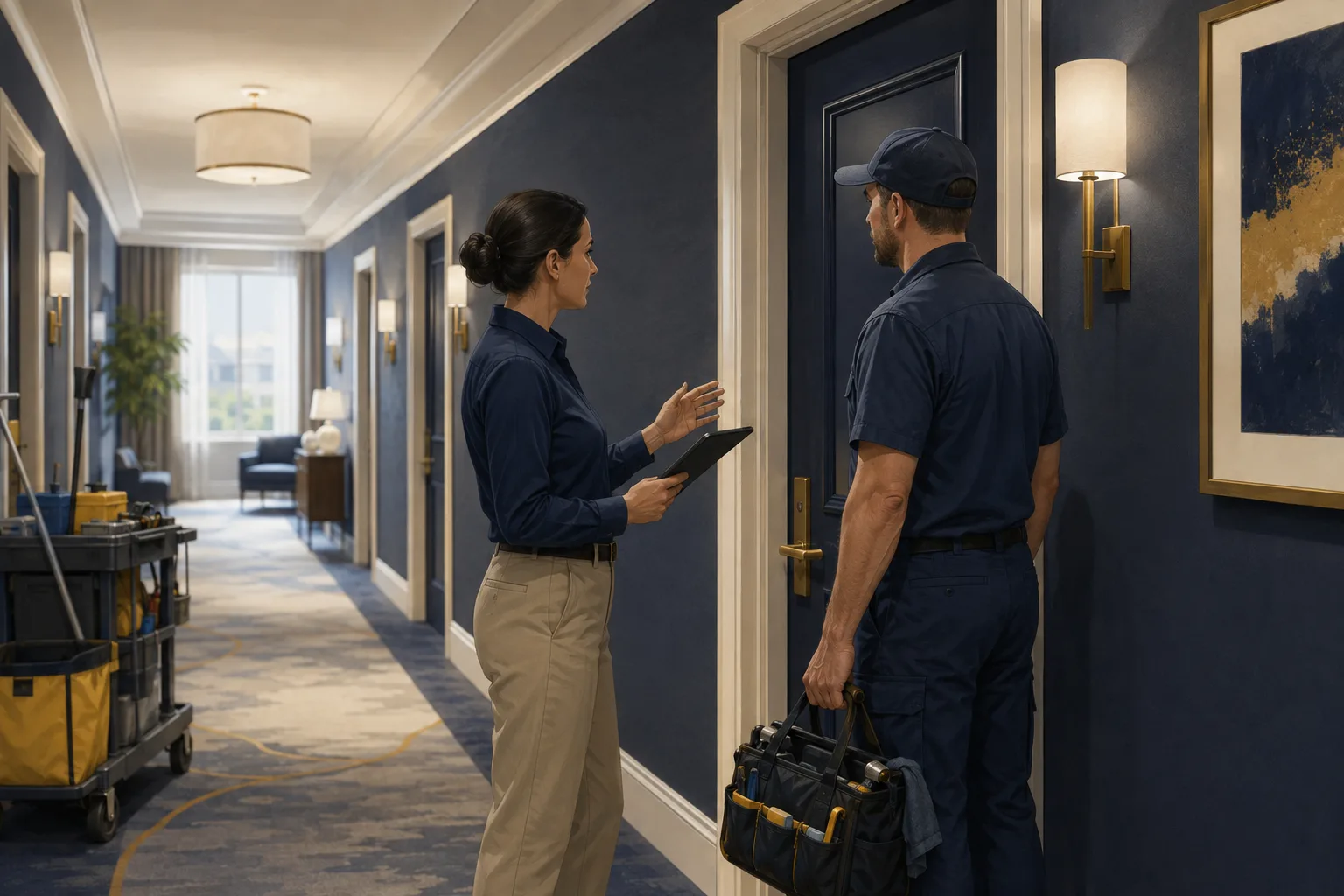

Types of Facility Maintenance

Understanding the different types of facility maintenance is essential for developing a balanced, effective maintenance strategy. Each maintenance type serves a specific purpose, and the most successful facility maintenance programs strategically combine multiple approaches to optimize performance, control costs, and minimize downtime.

Preventive Maintenance

Preventive maintenance (PM) is the foundation of proactive facility management. This planned, scheduled maintenance is performed on equipment and building systems at predetermined intervals to prevent failures, extend asset life, and maintain optimal performance. Rather than waiting for equipment to break down, preventive maintenance addresses potential issues before they result in costly failures or service interruptions.

Common preventive maintenance tasks include HVAC filter replacements and system inspections performed monthly or quarterly, lubrication of motors and mechanical components on regular schedules, electrical system inspections and thermal imaging scans, calibration of control systems and sensors, roof and building envelope inspections seasonal or bi-annual basis, fire safety system testing and inspection per code requirements, elevator and escalator servicing according to manufacturer specifications, and landscape and grounds care on weekly or monthly cycles.

The benefits of preventive maintenance are substantial and well-documented. Organizations with robust PM programs typically experience 12-18% lower maintenance costs compared to reactive approaches, 30-40% reduction in equipment downtime and service interruptions, 20-30% extended equipment lifespan through proper care and early intervention, improved energy efficiency as systems operate at design specifications, enhanced safety through early detection of potential hazards, better regulatory compliance through scheduled inspections and documentation, and more predictable maintenance budgets with fewer emergency expenditures.

The challenge with preventive maintenance lies in determining optimal service intervals. Too frequent maintenance wastes resources and may introduce unnecessary wear from excessive intervention. Insufficient maintenance allows problems to develop undetected. Best practice involves starting with manufacturer recommendations, then adjusting intervals based on actual equipment performance, operating conditions, criticality to operations, and historical failure data.

Corrective Maintenance

Corrective maintenance, also known as reactive maintenance, involves repairs performed after equipment failure or malfunction has occurred. When a system breaks down, corrective maintenance restores it to normal operating condition. While often viewed negatively compared to preventive approaches, corrective maintenance has its place in a balanced maintenance strategy.

Corrective maintenance encompasses both planned and unplanned activities. Planned corrective maintenance addresses known issues that don't require immediate attention—a component showing wear that can be scheduled for replacement during the next planned shutdown. Unplanned corrective maintenance responds to unexpected failures requiring immediate or urgent attention to restore operations.

Examples include repairing a failed motor or pump, fixing a leaking pipe or valve, replacing burned-out lighting fixtures, repairing damaged flooring or ceiling tiles, addressing HVAC system failures during extreme weather, fixing electrical circuit issues, and repairing malfunctioning door hardware or access control systems.

The primary advantage of corrective maintenance is efficient resource utilization—you only fix what's actually broken, avoiding maintenance costs on equipment still functioning adequately. For non-critical systems where failure doesn't significantly impact operations or safety, a run-to-failure approach may be the most cost-effective strategy.

However, corrective maintenance carries significant disadvantages. Unplanned failures typically cost 3-9 times more to repair than the same issue addressed through preventive maintenance. Equipment failures often occur at the worst possible times, disrupting operations and affecting occupants. Failed equipment may cause secondary damage to related systems. Emergency repairs require overtime labor and expedited parts delivery at premium costs. Reactive approaches provide no control over when failures occur, making budget planning difficult.

Most facilities should minimize reliance on corrective maintenance for critical systems while accepting it as an appropriate strategy for non-critical equipment where failure consequences are minimal.

Predictive Maintenance

Predictive maintenance (PdM) represents the cutting edge of maintenance strategy, using technology and data analytics to predict when equipment failure is likely to occur. Rather than following fixed preventive maintenance schedules or waiting for reactive failures, predictive maintenance monitors actual equipment condition to determine optimal maintenance timing.

Predictive maintenance employs various diagnostic technologies and techniques. Vibration analysis detects bearing wear, shaft misalignment, and imbalance in rotating equipment. Thermal imaging identifies hot spots indicating electrical connection problems, insulation defects, or mechanical friction. Oil analysis reveals contamination, wear particles, and fluid degradation in hydraulic and lubrication systems. Ultrasonic testing detects leaks, electrical arcing, and bearing defects. Motor circuit analysis evaluates electric motor health and efficiency. Building automation system (BAS) data analytics identify performance degradation and anomalous patterns.

The power of predictive maintenance lies in precision timing. Maintenance is performed based on actual equipment condition rather than arbitrary calendar intervals. This approach can reduce preventive maintenance costs by 20-25% by eliminating unnecessary service while simultaneously reducing equipment failures by 50-70% through early detection of developing problems.

Predictive maintenance works exceptionally well for critical, expensive equipment where failure carries high consequences. Centrifugal chillers, large motors and drives, critical pumps and compressors, boilers and pressure vessels, emergency generators, and elevators are prime candidates. The technology and expertise required for predictive maintenance programs represent significant initial investments, but the return on investment can be substantial for facilities with extensive critical equipment.

Implementation requires three key elements: appropriate diagnostic equipment and sensors, trained personnel who can interpret diagnostic data and identify abnormal conditions, and integration with computerized maintenance management systems (CMMS) to track trends and trigger work orders at optimal intervention points.

Emergency Maintenance

Emergency maintenance addresses critical failures requiring immediate response to protect life safety, prevent severe property damage, restore essential services, or comply with regulatory requirements. This highest-priority maintenance category demands rapid mobilization of resources regardless of time, day, or cost.

True emergencies include scenarios like fire alarm or suppression system failures, major water leaks or pipe bursts threatening flooding, electrical failures creating shock or fire hazards, HVAC failures during temperature extremes affecting vulnerable populations, elevator entrapments, gas leaks or hazardous material releases, security system failures compromising building safety, and structural damage compromising building integrity.

Emergency maintenance requires advance planning despite its unpredictable nature. Facilities must maintain emergency contact lists for internal staff and external contractors available 24/7, pre-negotiated service agreements with emergency response contractors, emergency parts inventories for critical systems, documented emergency response procedures and escalation protocols, backup systems and redundancy for critical services, and regular emergency response drills and training.

The costs of emergency maintenance extend beyond immediate repair expenses. After-hours labor typically costs 150-200% of regular rates. Expedited parts delivery commands significant premiums. Business interruption losses may dwarf actual repair costs. Occupant safety risks create potential liability. Reputational damage affects tenant satisfaction and retention.

The best approach to emergency maintenance is minimizing its occurrence through robust preventive and predictive maintenance programs that address issues before they reach critical status. However, even the best-maintained facilities will experience occasional emergencies, making preparedness essential.

Strategic Approach to Combining Maintenance Types

The most effective facility maintenance programs strategically blend all four maintenance types based on equipment criticality, failure consequences, and cost-benefit analysis. A typical strategic allocation might include 40-50% preventive maintenance forming the program foundation, 25-35% predictive maintenance for critical and expensive equipment, 15-25% corrective maintenance for non-critical systems where run-to-failure is acceptable, and 5-10% emergency maintenance representing unavoidable urgent failures.

This balanced approach optimizes the maintenance triangle of cost, reliability, and risk. Critical systems receive the highest investment in preventive and predictive approaches. Non-critical systems with low failure consequences may rely primarily on corrective maintenance. All systems benefit from emergency preparedness to manage unexpected failures when they do occur.
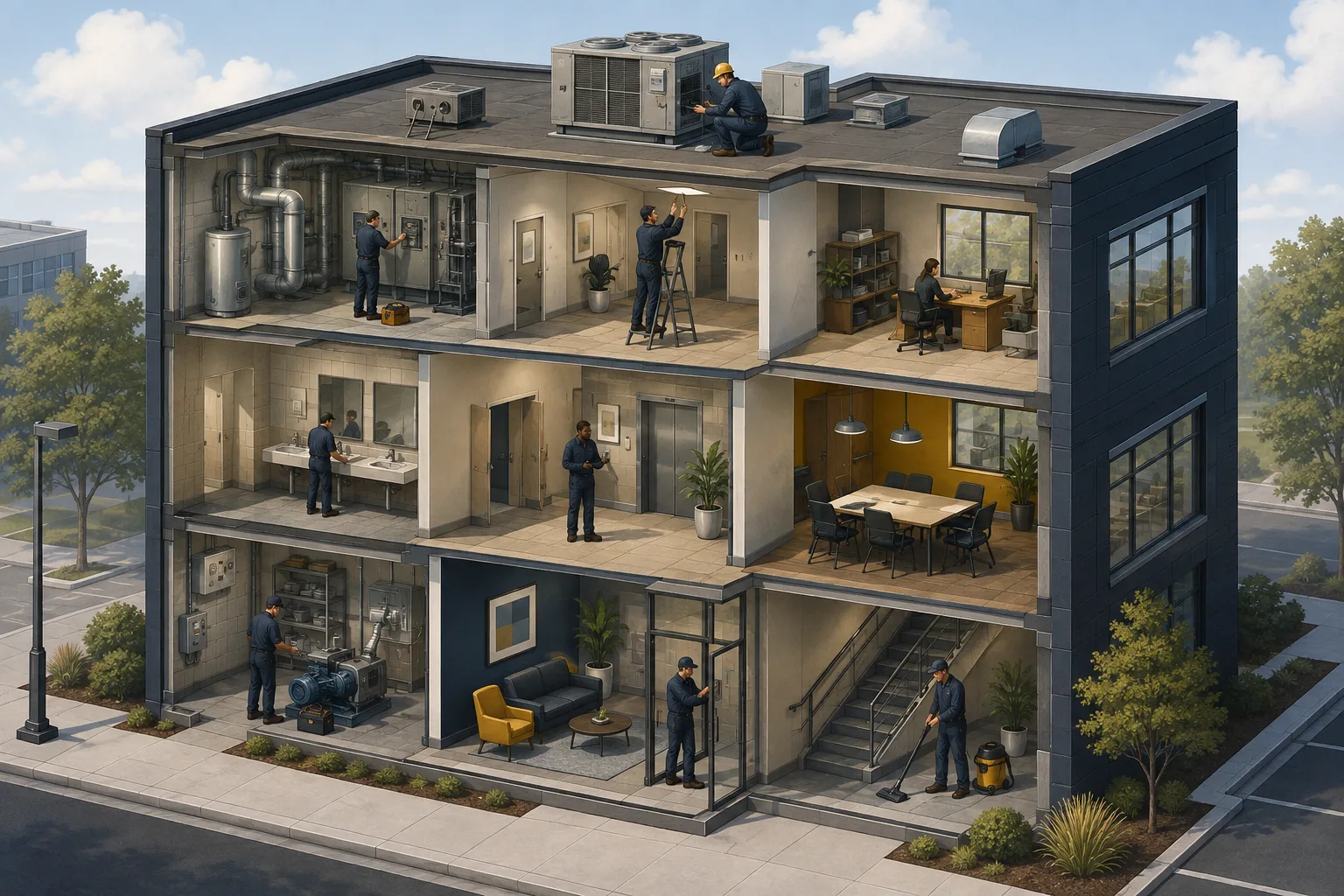

Hard Services vs Soft Services

Facility maintenance encompasses two broad service categories: hard services and soft services. Understanding this distinction is essential for structuring maintenance programs, allocating budgets, managing vendors, and ensuring comprehensive facility operations.

Hard Services: Technical Building Systems

Hard services refer to technical, engineering-focused maintenance activities related to physical building infrastructure and mechanical, electrical, and plumbing (MEP) systems. These services require specialized technical skills, certifications, and often regulatory compliance expertise.

HVAC Systems form the largest category of hard services in most facilities. This includes maintenance of air handling units and rooftop units, chillers and cooling towers, boilers and heating systems, variable air volume (VAV) boxes and terminal units, controls and building automation systems, ductwork and air distribution systems, and filters and air quality equipment. HVAC typically represents 40-50% of facility energy consumption and significantly impacts occupant comfort, making it a critical maintenance priority.

Electrical Systems maintenance ensures reliable, safe power distribution throughout the facility. Key components include main distribution panels and switchgear, circuit breakers and protective devices, transformers and power conditioning equipment, emergency generators and uninterruptible power supplies (UPS), lighting systems including interior, exterior, and emergency lighting, electrical motors and drives, and ground fault protection and surge suppression systems.

Plumbing and Water Systems maintenance addresses both potable water delivery and wastewater removal. Services include domestic water distribution piping and fixtures, water heaters and recirculation systems, backflow prevention and cross-connection control, sanitary and storm drainage systems, sump pumps and sewage ejectors, water treatment systems and filters, and irrigation systems for landscaped areas.

Fire and Life Safety Systems demand meticulous maintenance and documentation due to stringent code requirements. Critical systems include fire alarm and detection systems, fire sprinkler systems, emergency lighting and exit signs, fire extinguishers and fire suppression systems, smoke control and exhaust systems, fire doors and fire-rated assemblies, and emergency communication systems.

Building Automation Systems (BAS) have become increasingly sophisticated, integrating HVAC, lighting, security, and other systems into unified control platforms. Maintenance includes software updates and cybersecurity measures, sensor calibration and accuracy verification, control sequence optimization, user interface programming, data trending and analytics, and integration with other building systems.

Structural Maintenance preserves the building envelope and structural integrity. This encompasses roof systems and waterproofing, exterior walls and cladding, foundations and structural supports, windows and glazing systems, doors and hardware, and parking structures and loading docks.

Hard services typically represent 60-70% of total facility maintenance budgets and require licensed contractors, certified technicians, and specialized tools. They directly impact building safety, code compliance, and asset preservation, making them non-negotiable requirements for facility operations.

Soft Services: Non-Technical Support Services

Soft services encompass non-technical facility support activities focused on cleanliness, aesthetics, security, and occupant services. While not requiring engineering expertise, these services significantly impact occupant satisfaction, productivity, and the overall facility experience.

Cleaning and Janitorial Services maintain hygienic, presentable environments through daily cleaning of office spaces and common areas, restroom cleaning and consumable replenishment, floor care including vacuuming, mopping, and periodic deep cleaning, window washing, trash and recycling collection and disposal, carpet cleaning and upholstery maintenance, and high-touch surface disinfection (particularly important post-pandemic).

Landscaping and Grounds Maintenance preserves exterior aesthetics and functionality. Services include lawn mowing and edging, pruning and trimming of trees and shrubs, seasonal plantings and bed maintenance, irrigation system operation and adjustment, leaf and debris removal, snow removal and ice management in applicable climates, and parking lot sweeping and maintenance.

Pest Control prevents and addresses infestations through regular inspections and monitoring, preventive treatments and exclusion measures, responsive treatment when issues arise, and documentation for health and safety compliance.

Security Services may include staffed reception and access control, patrol and monitoring services, CCTV system monitoring, visitor management, and incident response and documentation.

Catering and Vending Services in some facilities provide break room management, vending machine stocking and maintenance, cafeteria operations, and coffee service programs.

Waste Management extends beyond basic trash collection to include recycling program management, composting programs, hazardous waste handling and disposal, and compactor and dumpster maintenance.

Soft services typically account for 30-40% of facility maintenance budgets. While individually less expensive than major hard services, collectively they significantly impact occupant perception of facility quality and management effectiveness.

Integrated Facility Management

Many organizations adopt integrated facility management (IFM) approaches that combine hard and soft services under unified management. IFM offers several advantages: single point of accountability for all facility services, coordinated scheduling reducing occupant disruption, unified reporting and performance metrics, potential cost savings through economies of scale, and simplified vendor management and contract administration.

IFM can be delivered through various models. Total facility management (TFM) outsources all hard and soft services to a single provider. Bundled services combine related service categories under one contract. Managing agent models employ a third party to coordinate multiple specialized vendors. Self-performed IFM uses in-house teams to deliver integrated services.

The choice between integrated and separate service delivery depends on facility size and complexity, availability of qualified IFM providers in your market, internal staff capabilities and bandwidth, cost-benefit analysis, and desired level of control and flexibility.

Outsourcing Considerations

Most facilities outsource at least some maintenance services, particularly specialized hard services requiring certifications and soft services representing non-core competencies. Key outsourcing decisions should consider technical expertise requirements and availability of qualified internal staff, cost comparison between in-house and contracted services including overhead, equipment, and liability, flexibility needs for scaling services up or down, quality control and performance monitoring capabilities, regulatory compliance and liability transfer considerations, and organizational culture and preference for direct control versus vendor management.

Best practices for outsourcing include clearly defining scope of work and performance expectations, establishing service level agreements (SLAs) with measurable metrics, implementing robust vendor management and oversight processes, maintaining appropriate in-house technical knowledge to effectively manage contractors, conducting periodic competitive bidding to ensure market-rate pricing, and retaining critical emergency response capabilities in-house or through guaranteed on-call agreements.


Facility Maintenance Services: Comprehensive Overview

Effective facility maintenance programs encompass a wide range of specialized services, each requiring specific expertise, equipment, and maintenance approaches. Understanding the full scope of facility maintenance services enables facility managers to develop comprehensive maintenance plans that address all building systems and infrastructure.

Mechanical Systems Maintenance

Mechanical systems form the heart of modern facility operations, providing heating, cooling, ventilation, and various process functions. These complex systems require regular maintenance to ensure efficiency, reliability, and longevity.

HVAC maintenance represents the most extensive mechanical service category. Regular tasks include monthly or quarterly filter changes, seasonal system startups and shutdowns, annual refrigerant charge verification and leak testing, belt inspection and tension adjustment, bearing lubrication on motors and fans, coil cleaning to maintain heat transfer efficiency, condensate drain cleaning to prevent overflow, control calibration to ensure accurate temperature and humidity control, economizer testing and adjustment, and ductwork inspection and sealing.

Boiler and heating system maintenance ensures safe, efficient operation during heating season. Critical activities include annual inspections before heating season, combustion analysis and efficiency testing, burner cleaning and adjustment, safety control testing including high limit and low water cutoff devices, pressure relief valve testing, water treatment to prevent scaling and corrosion, insulation inspection and repair, and flue and venting system inspection.

Chiller maintenance preserves cooling capacity and efficiency. Services include refrigerant level monitoring and leak detection, oil analysis on compressors, condenser and evaporator tube cleaning, control system calibration, starter and electrical connection inspection, vibration analysis on rotating components, water treatment for condenser water systems, and seasonal startup and shutdown procedures.

Pump and motor maintenance applies across various systems. Regular services include coupling alignment verification, vibration analysis, bearing inspection and lubrication, seal inspection and replacement, motor winding insulation testing, electrical connection tightening, and performance testing including flow, pressure, and power consumption.

Mechanical system maintenance should follow manufacturer recommendations but may require adjustment based on operating conditions, equipment age, and criticality. Systems operating in harsh environments or critical applications need more frequent attention than those in controlled conditions or non-critical roles.

Electrical Systems Maintenance

Electrical system maintenance ensures safe, reliable power distribution while preventing potentially catastrophic failures. Many electrical maintenance tasks require licensed electricians due to shock and arc flash hazards.

Power distribution system maintenance includes annual thermographic inspections to detect hot connections before failure, torque verification on bolted connections, ground resistance testing, breaker and fuse inspection and replacement, transformer oil testing, battery testing and replacement for UPS and emergency systems, transfer switch testing for emergency generators, and electrical panel cleaning and debris removal.

Lighting system maintenance improves energy efficiency and occupant comfort. Services include lamp and ballast replacement on failure or relamping schedules, fixture cleaning to maintain light output, occupancy and daylight sensor calibration, photocell testing and adjustment, emergency lighting monthly function testing and annual battery discharge testing, and LED driver replacement as needed.

Generator maintenance ensures emergency power availability when needed most. Regular services include weekly or monthly exercise runs under load, oil and filter changes per manufacturer schedules, coolant system inspection and service, battery testing and maintenance, fuel quality testing and polishing, transfer switch testing, and annual load bank testing to verify full capacity.

Electrical safety programs should include arc flash hazard analysis and labeling, lockout/tagout procedures and training, personal protective equipment (PPE) requirements, and electrical safety audits.

Many facilities perform visual inspections and basic maintenance in-house while outsourcing thermographic surveys, transformer testing, and emergency generator load bank testing to specialized contractors with necessary equipment and expertise.

Plumbing and Water Systems

Plumbing maintenance prevents leaks, ensures water quality, and maintains adequate pressure and flow throughout the facility.

Domestic water system maintenance includes backflow preventer annual testing and certification, water heater inspection and flushing, pressure reducing valve testing and adjustment, temperature and pressure relief valve testing, fixture repair and replacement, pipe insulation inspection and repair, and leak detection and repair programs.

Drainage system maintenance prevents backups and water damage through periodic drain cleaning to remove buildup, grease trap cleaning in food service facilities, roof drain inspection and cleaning, sump pump testing and maintenance, ejector pump inspection and service, and camera inspection of drain lines when issues arise.

Water treatment systems require filter changes, softener regeneration and salt replenishment, reverse osmosis membrane replacement, UV disinfection lamp replacement, chemical feed system calibration, and water quality testing.

Plumbing emergencies like major leaks require immediate response. Facilities should maintain emergency contacts, know main shutoff locations, and keep basic repair supplies on hand for common issues.

Fire and Life Safety Systems

Fire and life safety system maintenance is heavily regulated, with specific testing frequencies and documentation requirements defined by NFPA codes, local fire codes, and insurance requirements.

Fire alarm system maintenance follows NFPA 72 requirements including monthly visual and functional testing, quarterly supervisory signal testing, annual sensitivity testing of smoke detectors, functional testing of all initiating devices, battery capacity testing, and documentation in permanent records.

Fire sprinkler system maintenance per NFPA 25 includes weekly valve inspection and position verification, quarterly main drain flow test, annual full system inspection, five-year internal pipe obstruction investigation, sprinkler head inspection and replacement, backflow preventer testing, and fire pump testing and maintenance.

Fire extinguisher maintenance requires monthly visual inspections, annual professional maintenance and inspection, hydrostatic testing at prescribed intervals, and immediate replacement or recharge after any use.

Many jurisdictions require licensed fire protection contractors to perform testing and certify compliance. Facilities must maintain meticulous documentation as evidence of regulatory compliance and for insurance purposes.

Building Automation Systems

Modern building automation systems (BAS) integrate HVAC, lighting, security, and other systems into unified digital platforms. These sophisticated systems require ongoing maintenance to realize their full value.

BAS maintenance includes software updates and security patches, sensor calibration and accuracy verification, control sequence optimization based on occupancy and weather patterns, alarm review and threshold adjustment, database cleanup and archiving, user training on system features, graphics updates reflecting building changes, and integration maintenance with connected systems.

Cybersecurity has become critical for BAS connected to enterprise networks or the internet. Facilities should implement network segmentation, password management and access controls, vulnerability scanning and remediation, and incident response procedures.

Regular performance reviews identify optimization opportunities like scheduling adjustments, setpoint optimization, dead band tuning, and equipment staging improvements that reduce energy consumption while maintaining comfort.

Structural and Architectural Maintenance

Building envelope and structural maintenance preserves asset value and prevents water intrusion, the leading cause of building deterioration.

Roof maintenance prevents leaks and extends roof life through twice-annual inspections, drain and gutter cleaning, membrane repair, flashing inspection and sealing, ballast stone reset, penetration sealing, and roof asset condition documentation.

Exterior maintenance includes caulking and sealant renewal, masonry tuckpointing and repair, window and glazing system maintenance, door adjustment and weather stripping replacement, and exterior painting and coating application.

Interior maintenance addresses flooring repair and replacement, ceiling tile replacement, wall repair and painting, door and hardware adjustment, and millwork refinishing.

Building envelope failures often manifest as interior water damage, requiring rapid response to identify the source and prevent further deterioration.

Grounds and Exterior Maintenance

Exterior maintenance preserves curb appeal, ensures safety, and protects parking and hardscape infrastructure.

Landscape maintenance includes mowing and edging, pruning and trimming, mulching and edging bed areas, irrigation system operation and adjustment, seasonal plantings, fertilization and pest control, and leaf and debris removal.

Hardscape maintenance addresses parking lot crack sealing and sealcoating, pavement striping, sidewalk repair, fence and gate maintenance, exterior lighting, and stormwater system cleaning.

Winter maintenance in applicable climates includes snow plowing and removal, ice melt application, entrance mat programs, and roof snow load monitoring.

Service Frequency and Requirements

Maintenance frequencies vary based on equipment type, criticality, regulatory requirements, and operating conditions. Generally:

  • Daily: Monitoring of critical systems, basic housekeeping, rounds and visual inspections
  • Weekly: Equipment exercise runs, detailed inspections of critical systems
  • Monthly: Filter changes, lubrication, functional testing, safety system testing
  • Quarterly: Detailed inspections, seasonal system transitions
  • Annually: Comprehensive preventive maintenance, regulatory compliance testing
  • Multi-year: Major component overhauls, system replacements

Facility managers should document all maintenance frequencies in a comprehensive preventive maintenance schedule, preferably managed through a CMMS that automatically generates work orders at appropriate intervals.


Developing an Effective Facility Maintenance Plan

A comprehensive facility maintenance plan serves as the strategic roadmap for managing all building systems, equipment, and infrastructure. This documented framework ensures consistent, efficient maintenance delivery while supporting organizational objectives and regulatory compliance.

Assessment and Inventory

Developing an effective maintenance plan begins with thoroughly understanding what you're maintaining. Conduct a complete facility audit documenting all building systems, equipment, and infrastructure. Create a comprehensive asset inventory including equipment type and description, manufacturer and model information, installation date and expected useful life, location within the facility, criticality rating to operations, maintenance requirements and frequencies, and parts and supplies needed for service.

This asset inventory becomes the foundation for all maintenance planning. Modern facilities use computerized maintenance management systems (CMMS) to maintain digital asset registers with equipment specifications, maintenance history, and automated work order generation. For facilities without CMMS, spreadsheets or databases can provide basic inventory management.

Assess current maintenance practices to identify gaps and opportunities. Review historical maintenance records and costs, analyze equipment failure patterns and downtime, identify recurring problems requiring attention, evaluate current preventive maintenance coverage, assess staff skills and capacity, and review vendor performance and contract efficiency.

This assessment provides baseline data for measuring improvement and identifies immediate priorities for maintenance plan development.

Goals and Objectives

Define clear, measurable goals for your maintenance program aligned with organizational objectives. Common facility maintenance goals include maximizing equipment uptime and reliability with specific availability targets, controlling and reducing maintenance costs while improving service delivery, extending asset life and protecting capital investment, ensuring regulatory compliance and passing all inspections, improving energy efficiency and reducing utility costs, enhancing occupant comfort and satisfaction, supporting sustainability and environmental objectives, and maintaining safe working and occupied environments with zero serious incidents.

Translate broad goals into specific, measurable objectives. Rather than "reduce costs," specify "reduce emergency maintenance costs by 25% through enhanced preventive maintenance program." Instead of "improve reliability," define "achieve 99.5% availability for critical HVAC systems during occupied hours."

These concrete objectives drive decision-making throughout plan development and provide benchmarks for measuring program success.

Maintenance Schedules

The maintenance schedule forms the operational core of your facility maintenance plan, defining what maintenance tasks occur, at what frequency, and who performs them.

Develop preventive maintenance schedules for all equipment and systems based on manufacturer recommendations, regulatory requirements, equipment criticality and failure consequences, operating conditions and utilization, historical performance data, and cost-benefit analysis of service frequency.

Create detailed preventive maintenance procedures for each task specifying steps to complete the work, safety precautions and PPE requirements, tools and materials needed, inspection points and acceptance criteria, documentation requirements, and estimated time to complete.

Organize preventive maintenance into logical routes that minimize travel time and allow technicians to complete multiple related tasks during single site visits. Group tasks by skill set required, allowing assignment to appropriately qualified personnel.

Balance maintenance scheduling to avoid overloading specific periods while ensuring critical tasks receive priority regardless of schedule convenience. Many facilities use calendar-based scheduling (first Monday of each month) for simplicity, while others implement meter-based or run-time scheduling tied to actual equipment usage for more precise maintenance timing.

Resource Planning

Determine staffing requirements based on maintenance workload analysis. Calculate total preventive maintenance hours, estimate corrective maintenance demand based on historical data, account for emergency response capability requirements, add project work and improvements, and include administrative time for planning, documentation, and coordination.

Compare required hours against available staff capacity to identify gaps requiring additional hiring or outsourcing. Consider skill mix requirements, ensuring adequate expertise across electrical, mechanical, plumbing, controls, and other specialties.

Plan for tools, equipment, and technology needs including diagnostic and testing equipment, hand and power tools, personal protective equipment, vehicles and transportation, mobile devices and communication systems, and CMMS or maintenance management software.

Develop parts and materials strategies balancing inventory carrying costs against emergency procurement premiums. Maintain critical spare parts for equipment with long lead times or high failure consequences. Establish vendor relationships for rapid procurement of common items. Consider vendor-managed inventory programs for high-volume consumables.

Budget Allocation

Develop comprehensive maintenance budgets accounting for all program elements. Labor costs include internal staff compensation and benefits, overtime and premium time allowances, training and development, and outsourced labor and contractors.

Materials and supplies encompass preventive maintenance consumables like filters and lubricants, repair parts and components, tools and equipment purchases, uniforms and PPE, and office supplies and administrative costs.

Service contracts cover elevator and escalator maintenance, fire alarm monitoring and inspection, HVAC service agreements, landscape and grounds maintenance, janitorial and cleaning services, pest control, and specialized testing and certification services.

Utilities and operations include energy costs, water and sewer, waste removal, and communications. Capital improvements and replacements budget for major equipment replacement, system upgrades and modernization, energy efficiency improvements, and building envelope repairs.

Allocate budget across preventive, corrective, predictive, and emergency maintenance categories. Industry benchmarks suggest 40-50% for preventive maintenance, 25-35% for corrective maintenance, 10-15% for predictive maintenance, and 5-10% held in reserve for emergencies.

Benchmark costs against industry standards typically expressed as cost per square foot, varying by facility type, age, and location. Commercial office buildings typically range $2.50-4.50 per square foot annually. Manufacturing facilities range $4.00-7.00 per square foot. Healthcare facilities typically require $8.00-12.00 per square foot. Educational facilities average $3.50-5.50 per square foot.

Key Performance Indicators and Metrics

Define KPIs to measure maintenance program effectiveness and drive continuous improvement. Common facility maintenance metrics include:

Equipment Performance Metrics track equipment uptime percentage, mean time between failures (MTBF), mean time to repair (MTTR), and preventive maintenance compliance rate.

Cost Metrics measure maintenance cost per square foot, emergency maintenance as percentage of total maintenance cost, preventive maintenance cost vs corrective maintenance cost ratio, and cost avoidance from preventive maintenance.

Work Management Metrics include work order completion rate, average time to complete work orders, preventive maintenance vs corrective work order ratio, backlog measured in hours or weeks, and schedule compliance percentage.

Safety and Compliance Metrics track safety incidents and near misses, regulatory inspection results and citations, overdue regulatory testing and inspections, and training completion rates.

Occupant Satisfaction Metrics measure service request response time, occupant satisfaction survey results, complaint volume and trends, and space temperature and comfort metrics.

Establish baseline measurements for all KPIs, set improvement targets, and review performance regularly. Use metrics to identify problems early, celebrate successes, justify resource requests, and guide continuous improvement efforts.

Compliance Integration

Integrate regulatory compliance requirements throughout your maintenance plan. Different facility types face varying compliance obligations. Healthcare facilities must meet Joint Commission standards, CMS regulations, and strict infection control protocols. Educational institutions navigate fire marshal requirements, health department inspections, and student safety mandates. Manufacturing facilities address OSHA requirements, EPA regulations, and industry-specific safety standards.

Create compliance calendars listing all required inspections, testing, and certifications with due dates. Assign responsibility for each compliance requirement. Integrate compliance tasks into preventive maintenance schedules. Establish documentation and record-keeping procedures meeting regulatory requirements. Implement tracking systems to ensure no required compliance activities are missed.

Many facilities face penalties, fines, or operational shutdowns for compliance failures. Building compliance into routine maintenance processes reduces risk and ensures required activities receive appropriate attention.

Plan Documentation and Templates

Document your facility maintenance plan comprehensively to ensure consistent execution and facilitate training. Essential plan components include executive summary outlining plan purpose and scope, facility inventory and asset register, maintenance schedules and procedures, resource allocation and staffing plans, budget and cost management approach, KPIs and performance measurement framework, compliance requirements and schedule, vendor management and contract administration, emergency response procedures, and roles and responsibilities matrix.

Create standardized templates for preventive maintenance procedures, work order forms, inspection checklists, equipment history records, and performance reports. Templates ensure consistency, facilitate training, and simplify documentation.

Review and update your maintenance plan annually to incorporate facility changes, equipment additions or retirements, lessons learned from the previous year, budget adjustments, and updated regulatory requirements. Treat your maintenance plan as a living document that evolves with your facility and organization.
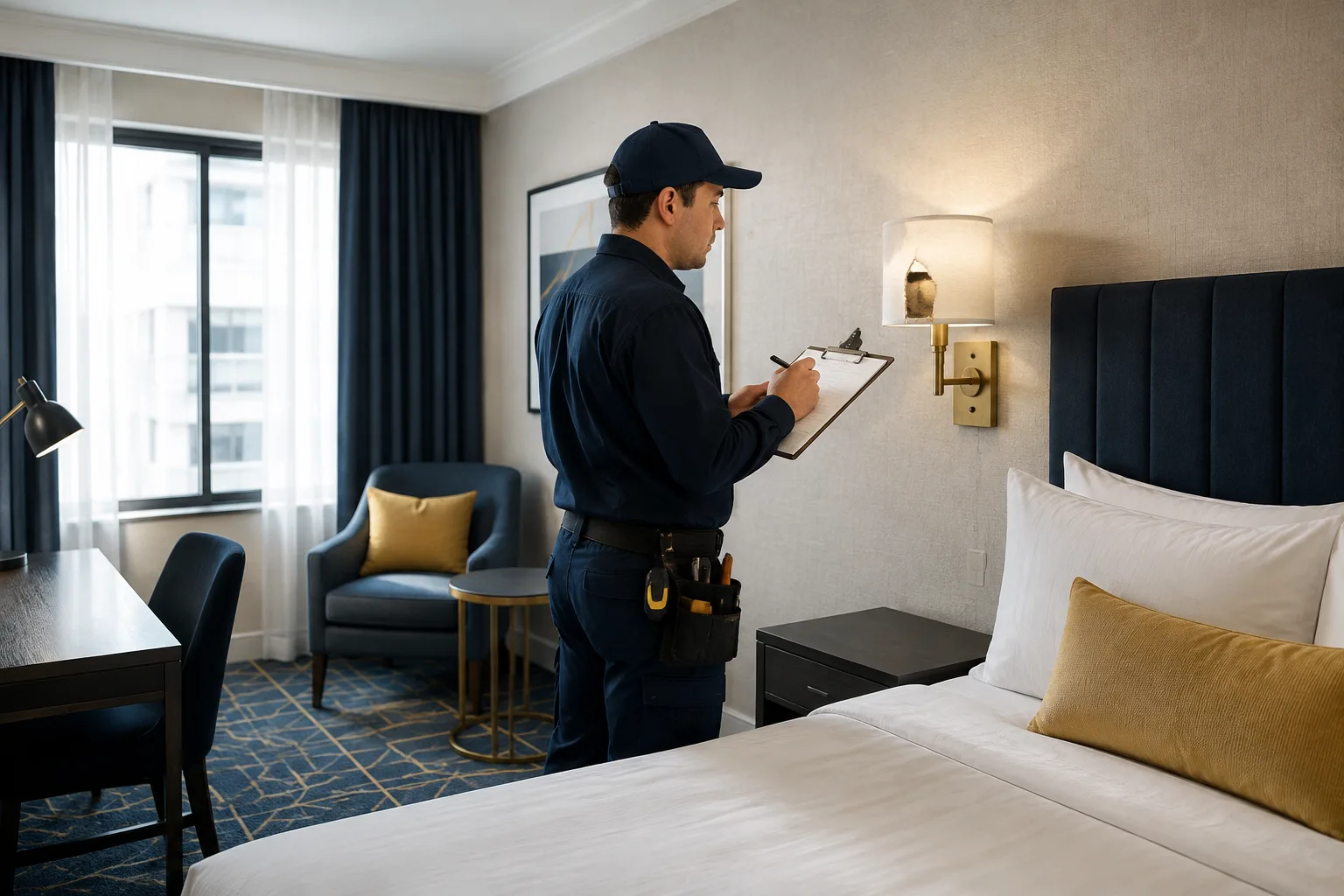

Facility Maintenance Best Practices

Implementing proven best practices elevates facility maintenance from reactive firefighting to strategic asset management. These approaches optimize performance, control costs, and deliver measurable value to organizations.

Preventive Maintenance Focus

Prioritize preventive maintenance as the foundation of facility operations. While it may seem expensive to maintain functioning equipment, the economics strongly favor prevention. Studies consistently show preventive maintenance delivers 5:1 to 10:1 return on investment through reduced failures, extended equipment life, lower energy costs, and minimized downtime.

Start by ensuring comprehensive preventive maintenance coverage for critical systems where failure significantly impacts operations, occupant safety, or regulatory compliance. Expand coverage systematically to additional equipment based on cost-benefit analysis. Target 80-90% of maintenance resources toward preventive and predictive activities with only 10-20% spent on reactive repairs.

Track preventive maintenance compliance rates religiously. When scheduled PM tasks are deferred or skipped, equipment reliability suffers and costs increase. Investigate and address root causes when PM compliance falls below 90%, whether due to inadequate staffing, competing priorities, or scheduling issues.

CMMS and Software Utilization

Leverage technology to transform maintenance management from paper-based chaos to data-driven excellence. Modern CMMS platforms automate preventive maintenance work order generation, track equipment history and maintenance costs, manage parts inventory and procurement, schedule and assign work efficiently, enable mobile access for field technicians, generate performance reports and analytics, and integrate with building automation and enterprise systems.

Select CMMS solutions appropriate to facility size and complexity. Small facilities with basic needs may succeed with simple, affordable cloud-based platforms. Large, complex facilities benefit from enterprise solutions with advanced analytics, mobile functionality, and system integration capabilities.

Successful CMMS implementation requires adequate data migration and setup, comprehensive user training, ongoing data quality management, and regular utilization of reporting and analytics capabilities. Many facilities purchase CMMS but fail to realize benefits due to inadequate implementation or user adoption.

For more detailed guidance on selecting and implementing facility maintenance software, see our comprehensive [Facility Maintenance Software Guide].

Documentation Standards

Maintain meticulous documentation of all maintenance activities. Comprehensive records enable trend analysis identifying recurring problems, inform equipment replacement decisions, demonstrate regulatory compliance, support warranty claims and litigation, transfer knowledge when personnel change, and benchmark costs and performance.

Establish documentation standards specifying required information for work orders, inspection records, equipment files, compliance certifications, and incident reports. Ensure technicians understand documentation expectations and have tools to capture information efficiently—mobile CMMS apps, digital cameras, and voice recording can simplify field documentation.

Implement quality control processes to verify documentation completeness and accuracy. Periodically audit maintenance records to identify gaps and reinforce standards.

Vendor Management

Develop strategic relationships with reliable contractors and service providers. For outsourced services, implement structured vendor management including clear scope of work and performance expectations in contracts, service level agreements defining response times and quality standards, regular performance reviews and scorecarding, safety qualification and verification processes, competitive bidding periodically to ensure market-rate pricing, and relationship management fostering partnership rather than adversarial dynamics.

Pre-qualify vendors before emergencies arise. Maintain relationships with backup vendors for critical services to ensure availability during peak demand or if primary vendors disappoint. Negotiate favorable terms in advance rather than during emergency situations when leverage is minimal.

For self-performed maintenance, invest in technician training and development to maintain and enhance internal capabilities. Balance in-house expertise with strategic outsourcing based on technical complexity, frequency of need, and cost-effectiveness.

Energy Efficiency and Sustainability

Integrate energy efficiency into maintenance practices. Well-maintained equipment operates more efficiently than neglected systems. Regular filter changes, coil cleaning, refrigerant charge optimization, combustion tuning, and control calibration can reduce energy consumption 10-20% while improving comfort and reliability.

Implement building automation system optimization identifying scheduling improvements, setpoint optimization, dead band adjustments, and equipment staging refinements that reduce energy waste. Commission or retrocommission buildings periodically to restore design performance.

Pursue sustainability objectives through maintenance practices including transition to high-efficiency equipment during replacement cycles, LED lighting retrofits, water conservation measures, refrigerant management minimizing emissions, renewable energy system maintenance for solar or other installations, and waste reduction through recycling and proper disposal.

Many sustainability improvements deliver rapid payback through reduced utility costs while advancing corporate environmental commitments.

Safety Protocols

Prioritize safety in all maintenance activities. Implement comprehensive safety programs including lockout/tagout procedures for equipment isolation, confined space entry protocols, fall protection requirements, electrical safety including arc flash protection, chemical safety and hazard communication, personal protective equipment requirements, and incident reporting and investigation procedures.

Provide regular safety training for all maintenance personnel. Conduct safety audits identifying and correcting hazards. Investigate all incidents and near misses to prevent recurrence. Measure and track safety performance through leading indicators like safety observations and training completion and lagging indicators like incident rates and lost-time accidents.

Recognize that maintenance work often involves inherent hazards. Proper safety practices protect personnel while reducing organizational liability and workers' compensation costs.

Communication Strategies

Establish effective communication processes among maintenance teams, facility managers, occupants, and organizational leadership. Implement structured approaches including regular maintenance team meetings for coordination, work planning, and problem-solving, standard operating procedures ensuring consistent approaches, communication protocols defining how and when to escalate issues, occupant notification systems for planned maintenance activities and disruptions, and reporting frameworks keeping leadership informed of performance, issues, and needs.

Use technology to enhance communication. Mobile devices enable real-time updates from the field. CMMS platforms provide visibility into work status and completion. Digital dashboards communicate performance metrics to stakeholders. Service request portals allow occupants to report issues and track resolution.

Effective communication reduces surprises, manages expectations, demonstrates value, and builds support for maintenance programs and resource requests.


Facility Maintenance Software and Technology

Technology has transformed facility maintenance from clipboard-based reactive repair to data-driven strategic asset management. Modern facility maintenance software provides the digital infrastructure enabling efficient operations, informed decision-making, and measurable performance improvement.

Benefits of CMMS for Facilities

Computerized Maintenance Management Systems (CMMS) deliver substantial benefits across all aspects of facility operations. These specialized platforms automate preventive maintenance by generating work orders automatically at scheduled intervals, ensuring no required maintenance is overlooked. Asset management capabilities track equipment specifications, warranty information, maintenance history, and lifecycle costs in centralized databases accessible to all stakeholders.

Work order management provides structured processes for requesting, prioritizing, assigning, tracking, and completing maintenance work. Mobile functionality enables technicians to receive assignments, access procedures and equipment history, document work performed, and update work order status from the field without returning to the office.

Inventory management tracks parts and supplies, automates reorder points, manages vendor information, and associates parts with specific equipment to streamline procurement. Labor management records technician time, tracks productivity, manages schedules and assignments, and calculates labor costs by equipment, system, or building.

Perhaps most importantly, modern CMMS platforms provide analytics and reporting transforming maintenance data into actionable insights. Facilities can analyze failure trends, identify recurring problems, benchmark costs against industry standards, measure KPI performance, demonstrate regulatory compliance, and justify resource requests with data-driven evidence.

The cumulative impact typically includes 20-30% reduction in equipment downtime, 20-25% decrease in maintenance costs, 15-20% extended equipment life, improved regulatory compliance, enhanced occupant satisfaction, and better resource utilization.

Key Features for Facility Maintenance

When evaluating facility maintenance software, prioritize capabilities specifically supporting facility operations. Essential features include comprehensive asset management supporting hierarchical equipment structures (buildings > floors > systems > equipment), equipment specifications and documentation, preventive maintenance scheduling and work order generation, equipment history and cost tracking, and asset lifecycle management.

Work order management should support multiple work request sources, priority-based assignment and scheduling, mobile access for field technicians, approval workflows for significant work, and detailed time and material tracking. Integration capabilities connecting CMMS with building automation systems, enterprise asset management systems, financial and procurement systems, and IoT sensors and predictive maintenance tools extend functionality and eliminate duplicate data entry.

Space management features help larger facilities track and manage floor plans and space allocation, occupancy and utilization data, room scheduling and reservations, furniture and asset inventory, and move management.

Energy management integration enables tracking utility consumption by building or system, identifying anomalies indicating equipment problems, measuring energy savings from improvements, and supporting sustainability reporting.

Mobile apps must provide full work order functionality in the field, offline capability when network access is unavailable, photo and video documentation capture, barcode or QR code scanning for equipment identification, and digital signature capture for approvals.

Work Order Management

Effective work order management provides structure and accountability for maintenance activities. CMMS platforms support complete work order lifecycle from request through completion and analysis.

Work requests originate from multiple sources including automated preventive maintenance schedules, occupant service requests via portal or phone, operator rounds identifying issues, building automation system alarms, emergency calls, and planned projects. The system captures requestor information, problem description, location, priority, and any other relevant details.

Work planning and scheduling functionality allows maintenance supervisors to review requests, assign appropriate priority, schedule work based on technician availability and skills, coordinate access to spaces, order necessary parts, and batch related work for efficiency.

Technicians receive assignments via mobile devices, access equipment information and procedures, document work performed and parts used, note observations and recommendations, and close work orders with completion details. Rich documentation capabilities including photos, time stamps, and detailed notes create comprehensive equipment histories supporting future maintenance decisions.

Analytics leverage work order data to identify high-failure equipment requiring replacement or engineering attention, chronic problems requiring root cause analysis, cost trends by building, system, or equipment type, technician productivity and utilization, backlog accumulation indicating inadequate resources, and opportunities for preventive maintenance optimization.

Asset Tracking and Space Management

Comprehensive asset tracking maintains equipment inventories, specifications, warranties, maintenance requirements, and cost histories. Modern systems use barcode or QR code labels enabling rapid equipment identification and access to information via mobile devices.

Asset hierarchies organize equipment logically from campus to building to floor to system to individual components. This structure supports rolled-up reporting showing total costs and performance by any level—system, building, or entire portfolio.

Space management functionality helps facilities track and optimize space utilization. Features include floor plans with space allocation, occupancy tracking and management, room scheduling and reservations, furniture and equipment inventory by space, and move management workflows. For large facilities managing complex space portfolios, integrated space management eliminates separate systems and provides unified asset and space visibility.

Reporting and Analytics

Modern facility maintenance software transforms raw data into actionable intelligence through dashboards, reports, and analytics. Standard reports include preventive maintenance compliance showing scheduled vs completed PM, work order analysis by type, priority, building, system, and status, equipment cost reports identifying high-cost assets, parts usage and inventory reports supporting procurement decisions, technician productivity and time utilization, safety incidents and trends, regulatory compliance documentation, and energy consumption and cost tracking.

Dashboards provide real-time visibility into key metrics including open work orders by priority and age, PM compliance percentage, equipment availability and uptime, maintenance cost trends, backlog measured in hours, safety performance, and occupant satisfaction scores.

Advanced analytics identify trends and patterns invisible in individual work orders. Predictive analytics leverage historical data to forecast equipment failures, identify optimal replacement timing, and recommend preventive maintenance interval adjustments. Benchmarking compares facility performance against industry standards or between buildings in a portfolio.

For comprehensive information on evaluating, selecting, and implementing facility maintenance software, see our detailed [Facility Maintenance Software Guide].


Facility Maintenance Cost Management

Controlling maintenance costs while maintaining high service levels represents a perpetual challenge for facility managers. Effective cost management requires understanding typical expenditures, implementing cost reduction strategies, and measuring return on investment for maintenance programs.

Budgeting Guidelines and Industry Benchmarks

Facility maintenance budgets vary significantly based on facility type, age, location, and condition. Industry benchmarks provide useful starting points for budget development, typically expressed as annual cost per square foot.

Commercial office buildings generally require $2.50-4.50 per square foot annually for maintenance, with newer Class A buildings at the lower end and older Class B/C buildings requiring higher investment. Industrial and manufacturing facilities typically budget $4.00-7.00 per square foot reflecting more intensive equipment usage and specialized systems. Healthcare facilities face the highest maintenance costs at $8.00-12.00 per square foot due to stringent regulatory requirements, critical systems, and 24/7 operations.

Educational facilities average $3.50-5.50 per square foot, though deferred maintenance in aging school buildings often pushes actual needs higher. Retail facilities range from $3.00-6.00 per square foot depending on store format and hours. Hospitality facilities require $4.00-8.00 per square foot reflecting intensive use and guest experience expectations.

These benchmarks represent total maintenance expenditures including labor, materials, contracted services, and utilities allocated to facilities. They typically exclude capital improvements and major renovations, though definitions vary across organizations.

Budget allocation across maintenance categories typically follows a 40/30/20/10 model: 40% for preventive maintenance including scheduled PM tasks, inspections, and routine servicing; 30% for corrective maintenance addressing failures and repairs; 20% for improvements, upgrades, and minor projects; and 10% held in contingency reserve for emergencies and unforeseen requirements.

Facility age significantly impacts maintenance costs. Buildings in their first five years require minimal maintenance beyond preventive tasks. Equipment reaching mid-life (10-15 years) requires increased maintenance and periodic component replacement. Aging facilities (20+ years) face escalating maintenance costs and major system replacement needs. Facilities should plan for maintenance costs increasing 3-5% annually for inflation plus additional increases as equipment ages.

Preventive vs Reactive Cost Analysis

The economic case for preventive maintenance is compelling. Studies consistently demonstrate that preventive maintenance costs approximately one-fifth to one-third the cost of reactive repairs for the same equipment issue.

Consider an HVAC air handler requiring bearing replacement. Preventive maintenance identifies bearing wear through vibration analysis or inspection. The repair can be scheduled during normal hours with parts ordered at standard pricing. Total cost might include $200 in parts, 3 hours of regular-time labor at $75/hour ($225), and minimal business impact, totaling $425.

The same failure addressed reactively occurs unexpectedly during occupied hours in extreme weather. The emergency repair requires overtime labor at premium rates, expedited parts delivery, potential occupant discomfort and complaints, and possible secondary damage. Costs escalate to $200 in parts, $100 expedited shipping, 4 hours of overtime labor at $110/hour ($440), and estimated $500 in business disruption, totaling $1,240—nearly three times the preventive cost.

Multiply this difference across hundreds of equipment items and thousands of potential failures, and the cumulative impact becomes substantial. Facilities with mature preventive maintenance programs typically spend 70-80% of maintenance budgets on preventive activities with only 20-30% on reactive repairs. Reactive-focused facilities invert this ratio, spending 60-70% on emergency repairs with minimal prevention.

The transition from reactive to preventive approaches requires initial investment establishing preventive maintenance schedules and procedures, potential short-term resource increases to address backlog while building PM program, and technology investment in CMMS platforms. However, most facilities achieve payback within 12-24 months through reduced emergency repairs, extended equipment life, improved energy efficiency, and decreased downtime.

Cost Reduction Strategies

Facility managers can implement multiple strategies to control and reduce maintenance costs without compromising service quality.

Energy efficiency improvements often provide the fastest payback. Regular maintenance improving HVAC efficiency, lighting upgrades to LEDs, building automation system optimization, weather sealing and insulation improvements, and water conservation measures can reduce utility costs 15-30% while improving equipment reliability and occupant comfort.

Vendor contract optimization reduces procurement costs through periodic competitive bidding ensuring market-rate pricing, negotiating volume discounts for multiple buildings or services, performance-based contracts aligning vendor incentives with facility goals, and strategic bundling of related services with single providers to gain economies of scale.

Inventory management improvements reduce carrying costs while ensuring parts availability through just-in-time approaches for non-critical items, vendor-managed inventory for high-volume consumables, standardization on common equipment reducing spare parts variety, and kitting of parts for common preventive maintenance tasks.

Staff productivity improvements maximize internal labor through mobile technology reducing administrative time, preventive maintenance route optimization minimizing travel, improved planning and scheduling reducing delays, skills training enabling technicians to handle broader work scope, and appropriate task delegation freeing skilled trades for complex work.

Strategic outsourcing decisions optimize cost and quality through careful analysis of true in-house costs including overhead, core competency focus retaining critical skills internally, competitive bidding maintaining market awareness, and insourcing of frequently needed services when cost-effective.

Data-driven decision making improves resource allocation through failure analysis identifying chronic problems requiring engineering solutions, cost analysis highlighting high-cost equipment requiring replacement, PM optimization adjusting intervals based on actual equipment performance, and performance benchmarking identifying improvement opportunities.

Preventive maintenance optimization fine-tunes program efficiency by eliminating unnecessary tasks lacking value, adjusting frequencies based on equipment condition and history, condition-based maintenance for appropriate equipment, and predictive maintenance for critical, expensive equipment.

ROI Measurement and Justification

Measuring return on investment from maintenance programs demonstrates value and justifies resource requests. Calculate ROI for specific initiatives including preventive maintenance program implementation, CMMS software investment, energy efficiency improvements, predictive maintenance program development, and staff training and development.

ROI calculations compare total costs including initial investment, ongoing operating costs, and implementation costs against quantified benefits such as reduced emergency repairs and downtime, extended equipment life and deferred replacements, energy cost savings, reduced insurance premiums from improved safety, avoided regulatory fines and penalties, and improved occupant satisfaction and retention.

For example, implementing a comprehensive CMMS might require $50,000 initial investment in software, implementation, and training plus $15,000 annual software fees. Benefits over five years include $200,000 in reduced emergency maintenance, $150,000 in extended equipment life, $100,000 in energy savings, and $50,000 in improved labor productivity, totaling $500,000. With total costs of $125,000, the net benefit is $375,000 over five years, yielding ROI of 300% or payback in less than 18 months.

Document costs and benefits comprehensively. Quantify hard savings like reduced costs and soft benefits such as improved satisfaction, reduced risk, and enhanced reputation. Present ROI analyses in business terms facility and organizational leadership understand, connecting maintenance investments to broader business objectives like operational excellence, risk management, sustainability goals, and asset preservation.

Successful facility managers position maintenance not as an unavoidable expense but as a strategic investment delivering measurable returns through improved reliability, controlled costs, extended asset life, and enhanced organizational performance.


Frequently Asked Questions About Facility Maintenance

What is facility maintenance?

Facility maintenance is the comprehensive discipline of maintaining, repairing, and optimizing building systems, equipment, and infrastructure to ensure safe, efficient, and reliable facility operations. It encompasses preventive maintenance performed on scheduled intervals to prevent failures, corrective maintenance addressing equipment breakdowns and malfunctions, predictive maintenance using technology to anticipate and prevent failures, and emergency maintenance responding to critical issues requiring immediate attention.

Facility maintenance covers both hard services including mechanical, electrical, plumbing, HVAC, fire safety, and structural systems, and soft services such as cleaning, landscaping, security, and occupant support services. The primary goals are maximizing equipment uptime and reliability, ensuring occupant safety and comfort, maintaining regulatory compliance, controlling operational costs, extending asset life and protecting capital investment, and supporting organizational mission and objectives.

Effective facility maintenance requires strategic planning through comprehensive maintenance plans, skilled personnel including technicians, engineers, and contractors, appropriate tools and technology like CMMS platforms, adequate budget allocation typically 2-8% of facility replacement value annually, and documented procedures ensuring consistent execution. Facility maintenance applies to virtually all building types including commercial offices, industrial and manufacturing facilities, healthcare institutions, educational campuses, retail stores, hospitality properties, government buildings, and data centers.

What does a facility maintenance person do?

Facility maintenance personnel perform a wide range of technical and operational tasks maintaining building systems and equipment. Their responsibilities vary based on role, specialization, and facility type but generally include executing preventive maintenance tasks according to scheduled work orders, performing inspections and tests to verify proper equipment operation, responding to corrective maintenance work orders addressing equipment failures, troubleshooting problems to identify root causes and solutions, and responding to emergency situations requiring immediate attention.

Specific technical tasks might include HVAC maintenance such as filter changes, system inspections, and control adjustments; electrical work including lighting repair, circuit troubleshooting, and safety testing; plumbing repairs addressing leaks, clogs, and fixture problems; building automation system monitoring and adjustment; fire safety system testing and inspection; and structural repairs to floors, walls, ceilings, and building envelope.

Beyond technical work, facility maintenance personnel document completed work in work order systems, maintain equipment history records, manage parts and materials inventory, communicate with occupants about service requests and maintenance activities, coordinate with contractors providing specialized services, participate in training to maintain and enhance skills, and follow safety protocols including lockout/tagout and PPE requirements.

Facility maintenance positions range from generalist maintenance technicians handling diverse responsibilities across multiple trades to specialized positions like HVAC technicians, electricians, plumbers, controls technicians, and groundskeepers focusing on specific systems or services. Supervisory roles like maintenance supervisors and facility managers plan work, manage personnel, oversee contractors, and ensure program effectiveness.

What's the difference between facility maintenance and facility management?

Facility maintenance and facility management are related but distinct disciplines with different scopes and responsibilities. Facility maintenance is the operational execution of maintaining building systems and equipment—the hands-on technical work of inspecting, repairing, and servicing physical assets. Facility management is the strategic oversight discipline encompassing facility maintenance plus broader responsibilities including space planning and management, real estate portfolio decisions, workplace services and employee experience, sustainability programs, technology and innovation initiatives, and vendor and contract management.

Facility maintenance focuses on tactical execution including performing preventive and corrective maintenance tasks, responding to equipment failures and emergencies, maintaining regulatory compliance for building systems, documenting maintenance activities and equipment history, and managing parts inventory and procurement. Facility management addresses strategic planning such as developing facility strategies aligned with organizational goals, allocating resources and budgets across multiple functions, measuring performance and driving continuous improvement, managing relationships with stakeholders and vendors, and supporting business objectives through optimized facility operations.

The relationship is hierarchical with facility management providing strategic direction and facility maintenance executing that strategy operationally. A facility manager develops a preventive maintenance strategy and allocates budget resources. The facility maintenance team executes scheduled preventive maintenance tasks and documents results. The facility manager analyzes performance data, adjusts the strategy, and reports to organizational leadership. Facility maintenance delivers the technical expertise, while facility management provides the strategic framework.

In smaller organizations, these roles may be combined with facility managers handling both strategic and operational responsibilities. Larger organizations typically separate facility management leadership from facility maintenance execution, creating specialized roles for each function. Understanding this distinction helps organizations structure teams appropriately, define clear responsibilities, and ensure both strategic direction and operational excellence.

What are hard and soft services in facility maintenance?

Hard services and soft services represent two distinct categories of facility maintenance with different technical requirements, skill sets, and vendor relationships. Hard services are technical, engineering-focused maintenance activities related to building infrastructure and mechanical, electrical, and plumbing systems. These services require specialized technical skills, certifications, and regulatory compliance expertise. Hard services include HVAC systems maintenance and repair, electrical system service and safety testing, plumbing and water system maintenance, fire and life safety system inspection and testing, building automation and control systems, elevator and escalator maintenance, emergency generator service, and structural and building envelope repairs.

Hard services typically represent 60-70% of facility maintenance budgets and directly impact building safety, code compliance, and asset preservation. They often require licensed contractors, certified technicians, and specialized diagnostic equipment. Failures in hard services systems can have serious consequences including safety hazards, regulatory violations, significant property damage, and business interruption.

Soft services are non-technical facility support activities focused on cleanliness, aesthetics, security, and occupant services. These services support facility operations and occupant experience but don't require engineering expertise. Soft services include janitorial and cleaning programs, landscaping and grounds maintenance, pest control services, security services and monitoring, waste management and recycling, window washing, catering and vending services, and reception and mail services.

Soft services typically account for 30-40% of facility maintenance budgets. While less technically complex than hard services, they significantly impact occupant satisfaction, facility appearance, and perceived quality of facility management. Many facilities outsource soft services to specialized contractors allowing internal staff to focus on more technical hard services.

Integrated facility management (IFM) approaches combine hard and soft services under unified management, providing single-point accountability, coordinated service delivery, and potential cost efficiencies. The choice between integrated and separate service delivery depends on facility size, complexity, available vendors, internal capabilities, and management preferences.

How much does facility maintenance cost?

Facility maintenance costs vary significantly based on building type, size, age, location, condition, and complexity. Industry benchmarks typically express costs as annual expenditure per square foot, providing useful planning guidance while recognizing that individual facilities may differ substantially.

Commercial office buildings generally require $2.50-4.50 per square foot annually, with Class A buildings in good condition at the lower end and older Class B/C buildings requiring higher investment. A 100,000 square foot office building might budget $300,000-450,000 annually for comprehensive facility maintenance.

Industrial and manufacturing facilities typically cost $4.00-7.00 per square foot reflecting specialized equipment, intensive operations, and safety requirements. Healthcare facilities face the highest maintenance costs at $8.00-12.00 per square foot due to stringent regulations, critical systems, and continuous operations. Educational facilities average $3.50-5.50 per square foot, though deferred maintenance often creates additional needs. Retail facilities range $3.00-6.00 per square foot, and hospitality properties require $4.00-8.00 per square foot.

These costs typically include internal labor and benefits, contracted services and outsourcing, preventive maintenance materials and supplies, corrective maintenance and repairs, utility costs allocated to facilities, tools and equipment, CMMS software and technology, and regulatory compliance testing. They usually exclude capital improvements, major renovations, and significant equipment replacement, though definitions vary.

Several factors drive costs higher or lower than benchmarks. Facility age is significant—newer buildings require less maintenance while aging facilities face increasing costs and system replacements. Equipment condition and maintenance history affect costs, with well-maintained equipment costing less than neglected assets. Operating intensity matters—facilities running 24/7 require more maintenance than those with limited hours. Geographic location influences labor rates and environmental factors. Regulatory environment varies by industry and jurisdiction. Internal vs outsourced service mix affects cost structures.

Cost allocation across maintenance types typically follows preventive maintenance (40-50%), corrective and reactive maintenance (25-35%), improvements and projects (20-30%), and emergency reserve (10-15%). Facilities with mature preventive maintenance programs shift spending toward proactive activities, reducing expensive reactive repairs.

To control costs, facilities should implement comprehensive preventive maintenance programs, utilize CMMS for efficiency and tracking, optimize energy efficiency reducing utility costs, strategically outsource based on cost-benefit analysis, maintain accurate asset inventories and equipment histories, analyze failure patterns addressing root causes, and benchmark performance against industry standards identifying improvement opportunities.

What software is used for facility maintenance?

Facility maintenance software, typically called Computerized Maintenance Management Systems (CMMS) or Enterprise Asset Management (EAM) systems, provides digital platforms for planning, tracking, and analyzing maintenance activities. These specialized tools have become essential for effective facility operations, transforming maintenance from paper-based reactive approaches to data-driven strategic asset management.

Popular facility maintenance software platforms include IBM Maximo, a comprehensive enterprise asset management solution for large, complex facilities; UpKeep, a modern, mobile-first CMMS popular with small to mid-sized facilities; Fiix, a cloud-based maintenance management platform with strong analytics; ServiceChannel, focused on multi-site retail and distributed facilities; FM:Systems and ARCHIBUS, integrated workplace management systems combining maintenance with space management; Hippo CMMS, user-friendly platform for education and government facilities; Maintenance Connection, established platform from Accruent; and FacilityONE, comprehensive solution for commercial real estate.

Key features to evaluate include asset management tracking equipment, specifications, warranties, and maintenance history; preventive maintenance scheduling with automatic work order generation; work order management from request through completion; mobile apps enabling field technicians to work efficiently; inventory management for parts and supplies; vendor and contractor management; reporting and analytics for performance measurement; integration capabilities with BAS, ERP, and other systems; and space management for larger facilities.

Software selection should consider facility size and complexity matching platform capabilities to needs, user count and roles determining licensing requirements, budget for initial implementation and ongoing subscription fees, mobile requirements for field technician access, integration needs with existing systems, vendor support and training availability, scalability to accommodate growth, and industry-specific features for healthcare, education, manufacturing, or other specialized environments.

Implementation success requires adequate planning and data migration, comprehensive user training and adoption support, ongoing data quality management, regular utilization of analytics capabilities, and continuous process improvement. Many facilities underutilize their CMMS investment through inadequate implementation or poor user adoption, so organizational commitment and change management are as important as software selection.

For detailed guidance on evaluating and selecting facility maintenance software, see our comprehensive [Facility Maintenance Software Guide] covering platform comparisons, selection criteria, implementation best practices, and maximizing ROI from maintenance management technology.


Conclusion

Facility maintenance is far more than fixing broken equipment and responding to emergencies. It is a strategic discipline that directly impacts organizational success through reliable operations, controlled costs, extended asset life, regulatory compliance, and enhanced occupant experience. The facilities that successfully navigate today's complex operational environment embrace comprehensive maintenance strategies combining preventive, predictive, corrective, and emergency approaches tailored to equipment criticality and organizational priorities.

Effective facility maintenance programs share common characteristics: comprehensive asset inventories and equipment knowledge, documented maintenance plans with clear schedules and procedures, appropriate resource allocation including skilled personnel and adequate budget, technology leverage through CMMS platforms and predictive tools, balanced service delivery mixing internal capabilities with strategic outsourcing, continuous performance measurement and improvement, and strong leadership connecting facility maintenance to broader organizational objectives.

The transition from reactive firefighting to proactive asset management requires commitment, investment, and persistence. Organizations beginning this journey should start with critical systems where reliability matters most, implement foundational preventive maintenance programs, adopt appropriate technology enabling efficiency and visibility, develop personnel skills through training and development, measure performance establishing baselines and tracking improvement, and build incrementally expanding program scope and sophistication over time.

The return on investment from facility maintenance excellence is substantial and measurable. Well-maintained facilities experience fewer disruptions, lower operating costs, extended equipment life, enhanced safety, improved sustainability, and higher occupant satisfaction. These benefits translate directly to competitive advantage through operational reliability, cost efficiency, risk mitigation, and organizational performance.

Whether you manage a single building or an extensive facility portfolio, the principles in this guide provide a roadmap for developing and implementing effective facility maintenance programs. By understanding maintenance fundamentals, implementing best practices, leveraging technology appropriately, and maintaining focus on continuous improvement, facility managers can transform maintenance from a necessary cost into a strategic value driver supporting organizational mission and goals.

The built environment will always require maintenance. The question is whether that maintenance occurs reactively in response to failures or proactively through strategic planning and execution. Organizations that embrace the latter approach will realize the full potential of their facility investments while those that neglect maintenance will face escalating costs, increasing failures, and declining asset value. The choice—and the opportunity—belongs to every facility manager and organizational leader committed to operational excellence.
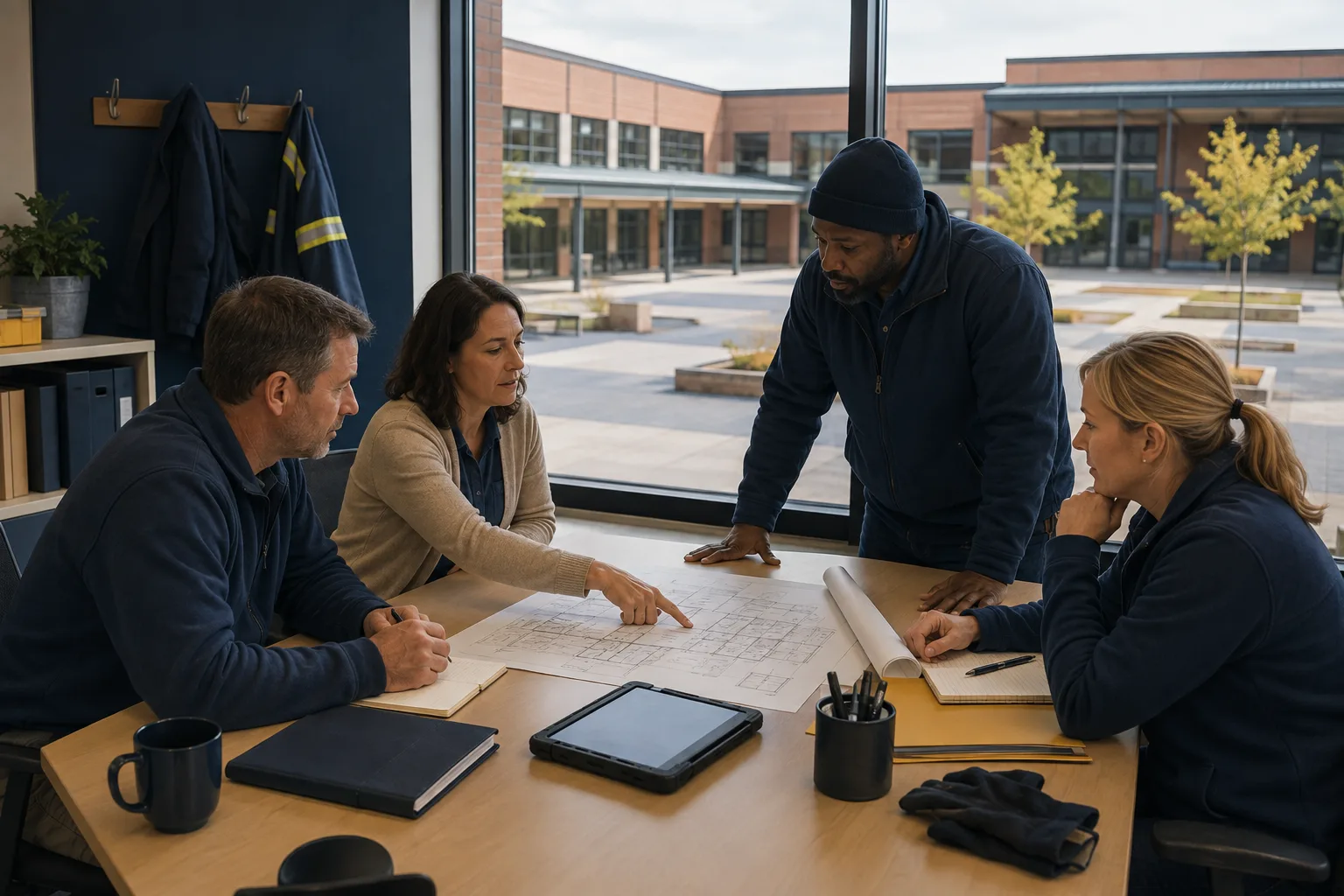

Related Resources


About This Guide

This comprehensive facility maintenance guide provides facility managers, building owners, and operations professionals with strategic frameworks and practical guidance for developing and implementing effective maintenance programs. The information presented reflects industry best practices, regulatory standards, and proven approaches from successful facility operations across multiple industries.

For questions about implementing facility maintenance strategies or to learn more about maintenance management solutions, contact our facilities management experts.

Last Updated: October 2025