Introduction
In the hospitality industry, maintenance isn't just about keeping the lights on—it's about creating flawless guest experiences while protecting your investment. A single malfunctioning air conditioner, a leaking pipe, or an out-of-service elevator can trigger negative reviews, lost revenue, and tarnished reputation in an industry where online ratings determine success.
What is Hotel Maintenance and Why It Matters
Hotel Maintenance vs. Other Property Types
Hospitality maintenance differs significantly from standard commercial property management:
- 24/7 Operations: Maintenance must occur without disrupting guest experiences
- Guest-Facing Standards: Aesthetic appearance matters as much as functionality
- Rapid Response Requirements: Issues must be resolved immediately to prevent negative reviews
- High-Touch Assets: HVAC systems, plumbing, and fixtures experience extreme daily use
- Regulatory Complexity: Hotels face stringent health, safety, and accessibility requirements
- Service Integration: Maintenance coordinates with housekeeping, front desk, food service, and management
Types of Hotel Maintenance
Effective hotel maintenance management requires understanding and balancing four distinct maintenance approaches, each serving specific purposes in your overall strategy.
1. Reactive Maintenance (Run-to-Failure)
Reactive maintenance addresses issues after equipment fails or problems occur. While sometimes unavoidable, this approach should represent the smallest portion of your maintenance activities.
When Reactive Maintenance is Appropriate:
- Low-cost, non-critical items (light bulbs, minor fixtures)
- End-of-life equipment scheduled for replacement
- Unpredictable failure events despite preventive measures
2. Preventive Maintenance (Scheduled)
Preventive maintenance for hotels involves scheduled inspections, servicing, and replacements based on time intervals or usage metrics. This forms the foundation of professional hospitality maintenance programs.
Key Preventive Maintenance Activities:
- Monthly HVAC filter replacements and system inspections
- Quarterly elevator servicing and safety tests
- Annual boiler inspections and water heater flushing
- Regular testing of fire safety systems and emergency lighting
- Scheduled deep cleaning and servicing of kitchen equipment
- Systematic inspection of guest room components
3. Predictive Maintenance (Condition-Based)
Predictive maintenance uses data, sensors, and monitoring tools to identify potential failures before they occur, optimizing maintenance timing based on actual equipment condition rather than fixed schedules.
Predictive Maintenance Technologies for Hotels:
- Thermal imaging for electrical systems and HVAC components
- Vibration analysis for motors, pumps, and HVAC equipment
- Smart sensors monitoring temperature, pressure, and performance
- Energy management systems tracking consumption patterns
- Water leak detection systems providing early warnings
- Elevator performance monitoring and diagnostics
4. Corrective Maintenance (Proactive Improvements)
Corrective maintenance involves planned modifications and upgrades that address root causes, improve performance, or enhance reliability beyond simple repairs.
Examples in Hotel Settings:
- Upgrading outdated HVAC controls to smart thermostats
- Replacing low-efficiency equipment with energy-star alternatives
- Retrofitting plumbing fixtures with water-saving models
- Installing LED lighting throughout the property
- Upgrading to commercial-grade equipment in high-use areas
Strategic Value:
- Reduces recurring problems and maintenance calls
- Improves operational efficiency and guest comfort
- Decreases long-term operational costs
- Enhances property value and competitive positioning
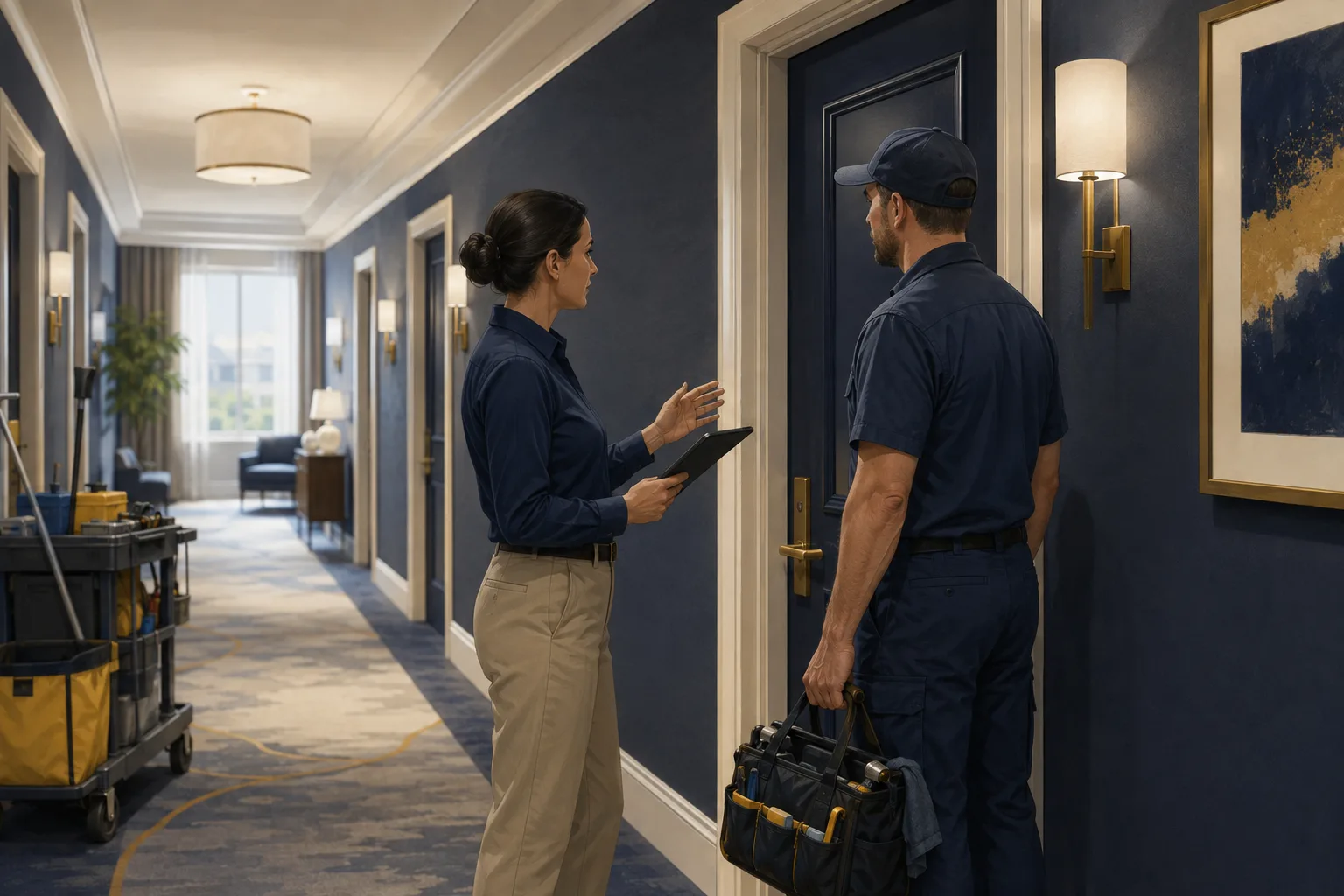
AI-generated editorial illustration; not a customer photograph or product screenshot.
Critical Hotel Maintenance Areas
Hotels contain diverse systems and spaces requiring specialized maintenance knowledge and protocols. Understanding each area's unique requirements ensures comprehensive coverage.
Guest Rooms: The Front Line of Maintenance
Guest rooms receive the most scrutiny and directly impact reviews and repeat business. Maintenance must ensure perfect functionality and appearance for every single room, every single day.
Daily Guest Room Maintenance (Coordinated with Housekeeping):
- Visual inspection during cleaning service
- Testing of all lights and electrical outlets
- Verification of HVAC operation and temperature control
- Checking plumbing fixtures for leaks or issues
- Assessing furniture condition and stability
- Testing remote controls, phones, and electronics
- Inspecting windows, doors, and locks
Weekly Guest Room Tasks:
- Deep cleaning of HVAC vents and grilles
- Testing of safety features (smoke detectors, locks)
- Inspection of caulking and grout in bathrooms
- Assessment of paint, wallpaper, and surfaces
- Checking under beds and behind furniture
- Testing blackout curtains and window treatments
Monthly Guest Room Maintenance:
- HVAC filter replacement and system check
- Detailed furniture and fixture inspection
- Touch-up painting and minor repairs
- Deep cleaning of carpets and upholstery
- Testing all electronic devices and connectivity
- Inspection of ceiling tiles and fixtures
Quarterly and Annual Tasks:
- Professional carpet cleaning or replacement evaluation
- Mattress rotation or replacement assessment
- Complete repainting or touch-up program
- Deep cleaning of drapes and window treatments
- Comprehensive furniture refurbishment or replacement
- Full electrical and plumbing system inspection
Common Areas and Public Spaces
Lobbies, hallways, conference rooms, fitness centers, and other public areas create first impressions and serve as high-traffic zones requiring constant attention.
Lobby and Reception Areas:
- Multiple daily cleaning and inspection rounds
- Immediate response to spills, damage, or issues
- Weekly detailed cleaning of all surfaces
- Monthly inspection of furniture and fixtures
- Regular assessment of flooring condition
- Seasonal decoration installation and removal
Hallways and Corridors:
- Daily inspection and spot cleaning
- Weekly vacuuming and surface maintenance
- Monthly light bulb replacement program
- Quarterly carpet deep cleaning
- Regular inspection of emergency lighting and exit signs
- Ongoing assessment of paint and wall covering condition
Conference and Event Spaces:
- Post-event inspection and reset
- Weekly detailed cleaning and setup verification
- Monthly testing of AV equipment and systems
- Quarterly inspection of movable walls and partitions
- Regular maintenance of lighting and temperature controls
- Ongoing furniture condition assessment
Fitness Centers and Recreational Areas:
- Daily equipment inspection and cleaning
- Weekly detailed sanitization and safety checks
- Monthly equipment servicing and calibration
- Quarterly professional equipment maintenance
- Regular inspection of flooring and mirrors
- Ongoing assessment of ventilation and climate control
Back-of-House and Staff Areas
Kitchen and Food Service Areas:
- Daily cleaning and inspection of all equipment
- Weekly deep cleaning of hoods, filters, and ventilation
- Monthly professional cleaning of refrigeration coils
- Quarterly inspection of gas lines and connections
- Regular calibration of thermometers and temperature controls
- Ongoing assessment of flooring and drainage systems
- Annual professional hood cleaning and fire suppression inspection
Laundry Facilities:
- Daily inspection of washers, dryers, and folders
- Weekly cleaning of lint traps and ventilation
- Monthly inspection of hoses, connections, and seals
- Quarterly professional servicing of equipment
- Regular testing of water temperature and quality
- Ongoing assessment of electrical systems and safety
Storage and Utility Areas:
- Weekly inspection and organization
- Monthly pest control and sanitation
- Quarterly assessment of shelving and storage systems
- Regular inspection of electrical panels and systems
- Ongoing monitoring of water heaters and mechanical equipment
- Annual comprehensive safety and compliance review
Building Systems and Infrastructure
HVAC Systems:
- Daily: Monitor building automation systems and respond to temperature complaints
- Weekly: Inspect equipment rooms and check for unusual sounds or conditions
- Monthly: Replace air filters, inspect belts and pulleys, check refrigerant levels
- Quarterly: Professional system inspection, cleaning of coils and condensers
- Annually: Comprehensive tune-up, calibration, efficiency testing, duct cleaning
- Predictive: Monitor energy consumption, track runtime hours, thermal imaging inspections
Plumbing Systems:
- Daily: Monitor water pressure, respond to leaks or clogs immediately
- Weekly: Inspect visible pipes, drains, and fixtures for signs of issues
- Monthly: Test water temperature consistency, inspect water heaters
- Quarterly: Professional inspection of main lines, backflow preventers, pumps
- Annually: Water heater flushing, comprehensive pipe inspection, fixture replacement program
- Predictive: Smart leak detection systems, water consumption monitoring
Electrical Systems:
Electrical issues create safety hazards, operational disruptions, and potential liability concerns requiring systematic preventive maintenance.
- Monthly: Inspect electrical panels, test emergency lighting and exit signs
- Quarterly: Thermal imaging inspection of panels and connections
- Annually: Professional electrical system inspection and testing
- As-Needed: Immediate response to flickering lights, tripped breakers, or power issues
Elevator Systems:
Elevator downtime frustrates guests and creates accessibility issues, particularly problematic for hotels with limited mobility guests.
- Daily: Visual and operational inspection of all elevator cars
- Monthly: Professional inspection and servicing by licensed technician
- Quarterly: Comprehensive safety testing and certification
- Annually: Load testing, governor testing, full system evaluation
- Predictive: Remote monitoring systems tracking performance metrics
Pool and Spa Systems:
Recreational water facilities require daily attention for safety, health compliance, and guest satisfaction.
- Multiple Daily: Water testing, chemical balancing, visual inspection
- Daily: Cleaning, filter backwashing, equipment operation verification
- Weekly: Detailed cleaning, tile and grout scrubbing, equipment inspection
- Monthly: Professional water testing, filter cleaning, equipment servicing
- Quarterly: Drain and deep clean (if required), comprehensive equipment inspection
- Annually: Resurfacing assessment, equipment replacement planning, safety audit
Fire Safety and Life Safety Systems:
Compliance with fire codes and life safety regulations is non-negotiable, with inspections required by law and insurance policies.
- Monthly: Test fire alarm system, inspect fire extinguishers, check emergency lighting
- Quarterly: Professional fire alarm testing and inspection
- Annually: Sprinkler system inspection, fire pump testing, emergency evacuation drill
- As-Required: Third-party inspection and certification per local codes
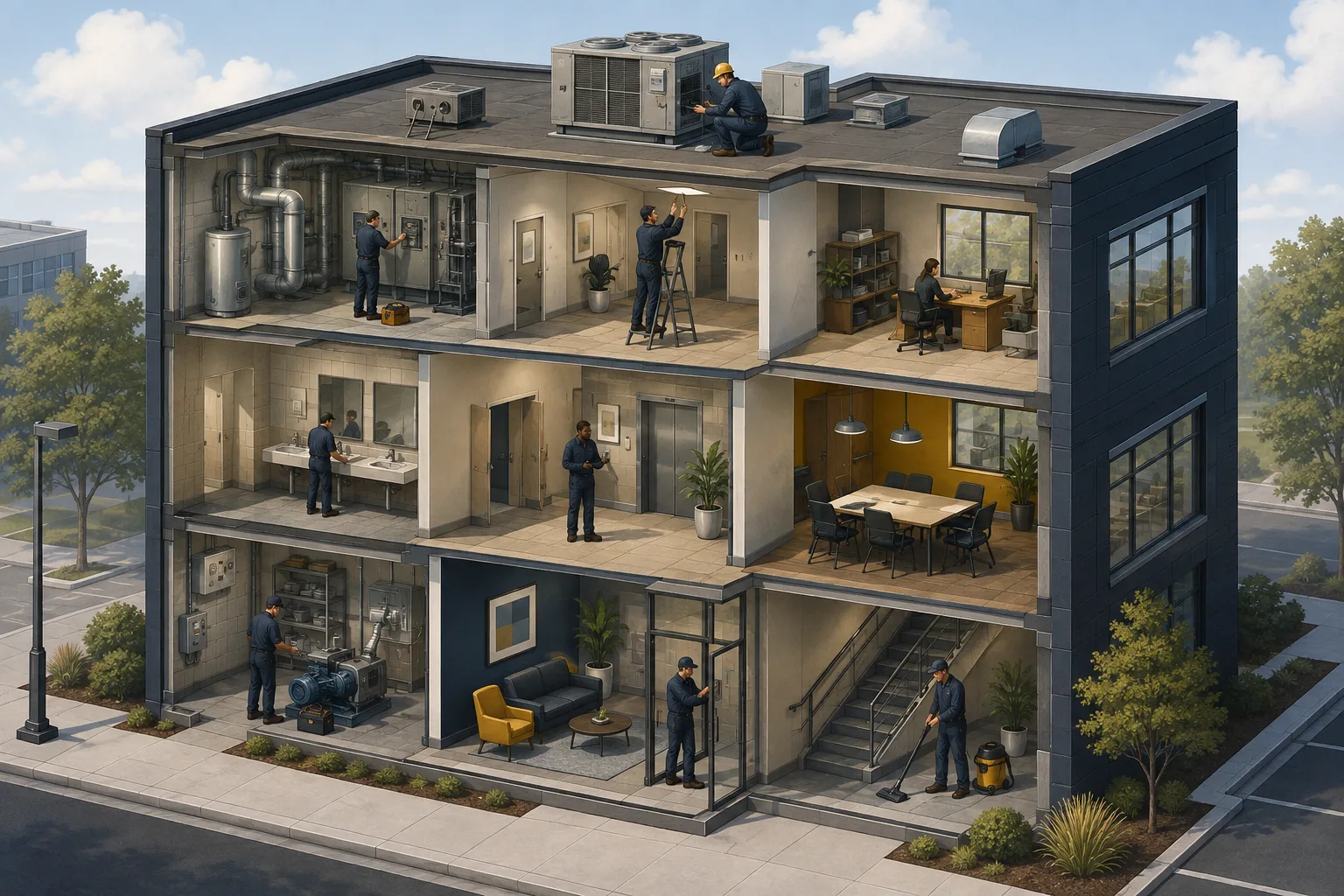
AI-generated editorial illustration; not a customer photograph or product screenshot.
Hotel Maintenance Checklist and Schedules
Implementing structured checklists ensures consistent execution across shifts, staff members, and departments. These templates provide starting points for customization to your property's specific needs.
Weekly Hotel Maintenance Checklist
| Task | Frequency | Department |
|---|---|---|
| Test emergency generator under load | Weekly | Maintenance |
| Inspect roof drains and gutters | Weekly | Maintenance |
| Clean and inspect kitchen exhaust hoods | Weekly | Maintenance/Kitchen |
| Test sump pumps and drainage systems | Weekly | Maintenance |
| Inspect laundry equipment operation | Weekly | Maintenance/Laundry |
| Deep clean pool filters and equipment room | Weekly | Maintenance |
| Test emergency lighting and exit signs | Weekly | Maintenance |
| Inspect fire extinguishers (location, pressure, access) | Weekly | Maintenance |
| Walk-through of all meeting rooms and event spaces | Weekly | Maintenance |
| Grease kitchen equipment as scheduled | Weekly | Maintenance |
| Inspect and clean HVAC condensate drains | Weekly | Maintenance |
| Test backflow prevention devices | Weekly | Maintenance |
Quarterly Hotel Maintenance Schedule
| Quarter | Major Tasks |
|---|---|
| Q1 (Jan-Mar) | - Comprehensive HVAC system inspection and tune-up- Professional window cleaning (interior and exterior)- Parking lot seal coating and striping (if weather permits)- Deep cleaning of all carpets in public areas- Inspection and servicing of irrigation systems- Comprehensive electrical safety inspection |
| Q2 (Apr-Jun) | - Roof inspection and minor repairs- Exterior painting touch-up program- Professional carpet cleaning in guest rooms (rotate sections)- Deep cleaning of exterior surfaces and pressure washing- Inspection and servicing of cooling towers- Pool deck deep cleaning and repairs |
| Q3 (Jul-Sep) | - Comprehensive HVAC system inspection for heating season- Inspection of weather stripping and seals- Professional duct cleaning (rotate sections)- Inspection and repair of exterior lighting- Deep cleaning of kitchen equipment and hood systems- Landscape renovation projects |
| Q4 (Oct-Dec) | - Boiler inspection and servicing- Winterization procedures for outdoor systems- Professional holiday lighting installation- Comprehensive plumbing inspection- Deep cleaning and inspection of all meeting spaces- Year-end equipment assessment and replacement planning |
Annual Hotel Maintenance Calendar
| Task | Recommended Month | Critical Notes |
|---|---|---|
| Complete fire safety system certification | January | Required by code and insurance |
| Elevator annual inspection and certification | January | State-required certification |
| Pool drain, deep clean, and resurface assessment | February (low season) | Minimize guest impact |
| Parking lot major repairs and resurfacing | March/April | Weather-dependent |
| HVAC duct cleaning (full property) | April/May | Before cooling season |
| Roof comprehensive inspection and repairs | May/June | After winter weather |
| Exterior building inspection and repairs | June/July | Optimal weather conditions |
| Kitchen equipment professional deep service | August (if applicable) | Coordinate with F&B schedule |
| Boiler inspection and certification | September | Before heating season |
| Emergency generator comprehensive service | October | Before winter demands |
| Holiday decorating infrastructure inspection | November | Before installation |
| Budget planning and capital expenditure review | November/December | Annual planning cycle |
Hotel Maintenance Best Practices
Implementing industry-practices transforms maintenance from a cost center into a strategic operational advantage that enhances guest satisfaction and protects your investment.
1. Establish a Preventive Maintenance Culture
Create Ownership and Accountability:
- Assign specific systems or areas to individual technicians
- Implement peer review and quality assurance processes
- Develop pride in maintenance quality through recognition programs
- Cross-train staff to ensure coverage and knowledge sharing
2. Integrate Maintenance with Guest Experience
Coordinate with Front-of-House Operations:
- Real-time communication between maintenance and front desk
- Pre-arrival room checks for VIP and loyalty guests
- Scheduled maintenance during check-out/check-in windows
- Guest notification protocols for planned maintenance
Minimize Guest Disruption:
- Quiet hours enforcement for maintenance activities (typically 10 PM - 7 AM)
- Professional appearance and behavior standards for staff
- Quick-response protocols for guest-reported issues (15-30 minute targets)
- Compensation guidelines for maintenance-related inconveniences
Turn Maintenance into Service Excellence:
- Proactive room upgrades when maintenance issues arise
- Guest communication about improvements and renovations
- Visible quality improvements that guests notice and appreciate
- Leveraging maintenance excellence in marketing and reputation management
3. Implement Predictive and Condition-Based Strategies
Leverage Technology and Data:
- Install smart sensors on critical equipment (HVAC, boilers, pumps)
- Monitor energy consumption patterns for anomaly detection
- Track equipment runtime hours and maintenance histories
- Use thermal imaging for electrical and HVAC inspections
Build Predictive Capabilities:
- Maintain detailed equipment logs and failure histories
- Identify patterns in maintenance requests and failures
- Develop custom preventive schedules based on actual conditions
- Adjust maintenance frequency based on performance data
4. Standardize Procedures and Documentation
Create Comprehensive Standard Operating Procedures:
- Detailed checklists for every maintenance task
- Step-by-step instructions with photos or videos
- Safety protocols and PPE requirements
- Quality standards and inspection criteria
Maintain Meticulous Records:
- Complete work order documentation for every task
- Equipment maintenance histories with dates and details
- Parts inventory and usage tracking
- Vendor service records and warranties
- Inspection reports and certifications
- Before/after photos for major projects
5. Optimize Parts Inventory Management
Balance Availability and Investment:
- Identify critical spare parts based on failure impact
- Maintain adequate stock of high-use consumables
- Establish relationships with local suppliers for emergency needs
- Track parts usage and costs for budget planning
Organize for Efficiency:
- Logical storage system with clear labeling
- Minimum/maximum stock levels for automatic reordering
- Regular inventory audits and obsolete part removal
- Mobile apps or systems for parts location and availability
6. Develop Vendor and Contractor Relationships
Strategic Vendor Management:
- Establish service agreements with qualified contractors for specialized systems
- Negotiate preventive maintenance contracts with clear SLAs
- Maintain approved vendor lists with contact information
- Regular vendor performance evaluations
Emergency Response Partnerships:
- 24/7 emergency contact protocols with key vendors
- Pre-negotiated emergency service rates
- Priority service agreements for critical systems
- Backup vendors for critical services
7. Prioritize Safety and Compliance
Maintain Regulatory Compliance:
- Track all required inspections and certifications
- Schedule inspections well before deadlines
- Maintain organized documentation for audits
- Stay informed about regulation changes
Emphasize Safety Culture:
- Regular safety training for all maintenance staff
- Lockout/tagout procedures for equipment service
- Proper PPE requirements and enforcement
- Incident reporting and investigation protocols
- Hazardous material handling and storage procedures
8. Invest in Staff Development
Build Technical Competence:
- Ongoing training on new equipment and technologies
- Manufacturer training and certifications
- Cross-training on multiple systems and disciplines
- Industry certifications and professional development
Develop Soft Skills:
- Customer service training for guest interactions
- Communication skills for coordinating with departments
- Problem-solving and critical thinking development
- Time management and prioritization skills
9. Use Data for Continuous Improvement
Track Key Performance Indicators:
- Work order completion time (average and by priority)
- Preventive vs. reactive maintenance ratio
- Equipment downtime hours and revenue impact
- Maintenance cost per available room
- Energy consumption per occupied room
- Guest satisfaction scores related to maintenance
Conduct Regular Reviews:
- Weekly maintenance team meetings to review performance
- Monthly analysis of work order trends and patterns
- Quarterly equipment performance and replacement planning
- Annual comprehensive program evaluation and budget planning
10. Plan for Capital Improvements
ROI-Focused Investment:
- Prioritize improvements with energy savings or efficiency gains
- Calculate payback periods for major equipment upgrades
- Consider guest impact and satisfaction improvements
- Evaluate financing options for major capital projects
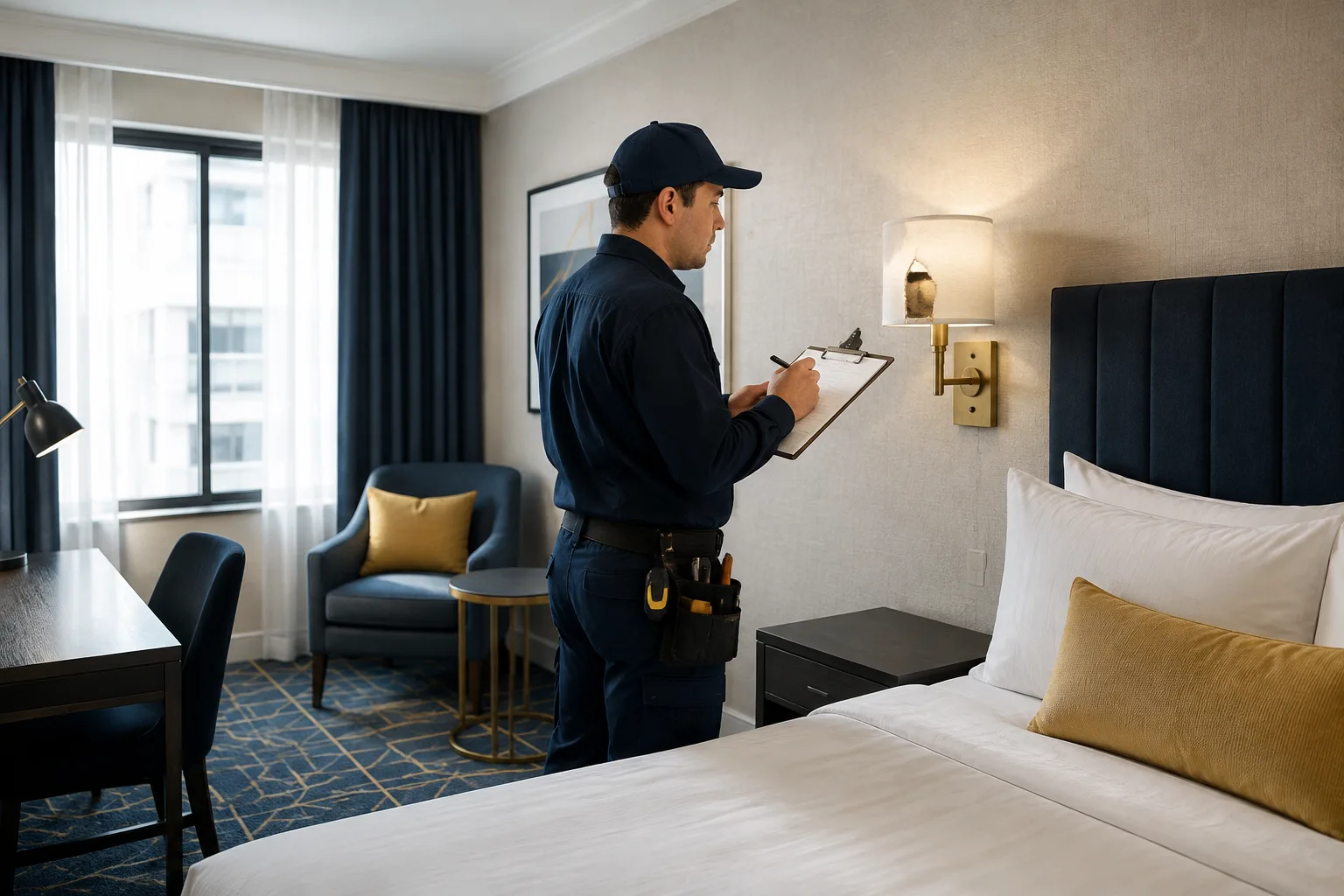
AI-generated editorial illustration; not a customer photograph or product screenshot.
Hotel Maintenance Software and Technology
Modern hotel maintenance management relies on specialized software platforms that coordinate work orders, preventive schedules, parts inventory, and compliance documentation across 24/7 operations.
Why Hotels Need Specialized Maintenance Software
Traditional Limitations:
- Paper-based work orders get lost, delayed, or illegible
- Preventive maintenance schedules tracked in spreadsheets get missed
- No real-time visibility into maintenance status for front desk
- Equipment histories scattered across filing cabinets
- No data analytics for identifying trends or optimizing programs
- Difficulty coordinating between shifts and departments
Essential Features for Hotel Maintenance Software
Work Order Management:
- Multi-channel work order submission (guest services, staff, automated triggers)
- Priority-based assignment and routing to qualified technicians
- Real-time status updates visible to front desk and management
- Mobile apps for technician communication and completion
- Photo documentation and detailed notes
- Guest-facing work order tracking for transparency
Preventive Maintenance Scheduling:
- Automated preventive maintenance work order generation
- Customizable schedules based on time, usage, or conditions
- Task templates with detailed checklists and procedures
- Compliance tracking for required inspections and certifications
- Calendar views and capacity planning tools
- Automatic rescheduling when tasks are missed or delayed
Asset and Equipment Management:
- Comprehensive equipment inventory with specifications
- Complete maintenance histories for every asset
- Warranty tracking and expiration alerts
- Parts associations and requirements
- Equipment runtime tracking and predictive maintenance triggers
- Replacement planning and capital budgeting tools
Parts and Inventory Management:
- Real-time inventory levels with automatic reorder points
- Parts usage tracking by asset and work order
- Vendor management and purchasing workflows
- Barcode scanning for receiving and issuing
- Cost tracking and budget management
- Mobile access to inventory locations
Analytics and Reporting:
- Work order metrics (completion time, backlog, priorities)
- Preventive maintenance compliance rates
- Equipment downtime and reliability statistics
- Cost analysis by department, asset type, or category
- Labor hour tracking and productivity metrics
- Customizable dashboards and scheduled reports
Integration Capabilities:
- Property Management System (PMS) integration for room status
- Building Automation System (BAS) integration for equipment monitoring
- Energy management system connections
- Guest services platforms for seamless work order creation
- Accounting system integration for cost tracking
- Mobile device management and communication platforms
Hospitality-Specific Features:
- Guest room inspection workflows
- Housekeeping coordination and communication
- Guest notification protocols and templates
- Multi-property management for hotel chains
- Brand standards compliance tracking
- Guest satisfaction impact analysis
Implementing Hotel Maintenance Software Successfully
Phase 4: Launch and Optimization (Ongoing)
- Execute property-wide launch with support available
- Monitor adoption and address resistance or confusion
- Conduct follow-up training sessions as needed
- Analyze initial data and identify improvement opportunities
- Optimize workflows based on real-world usage
- Expand usage to advanced features and capabilities
Critical Success Factors:
- Executive sponsorship and visible management support
- Dedicated implementation project manager
- Involvement of actual system users in configuration
- Comprehensive training for all user groups
- Quick wins and visible improvements early on
- Ongoing support and continuous improvement mindset
Return on Investment for Hotel Maintenance Software
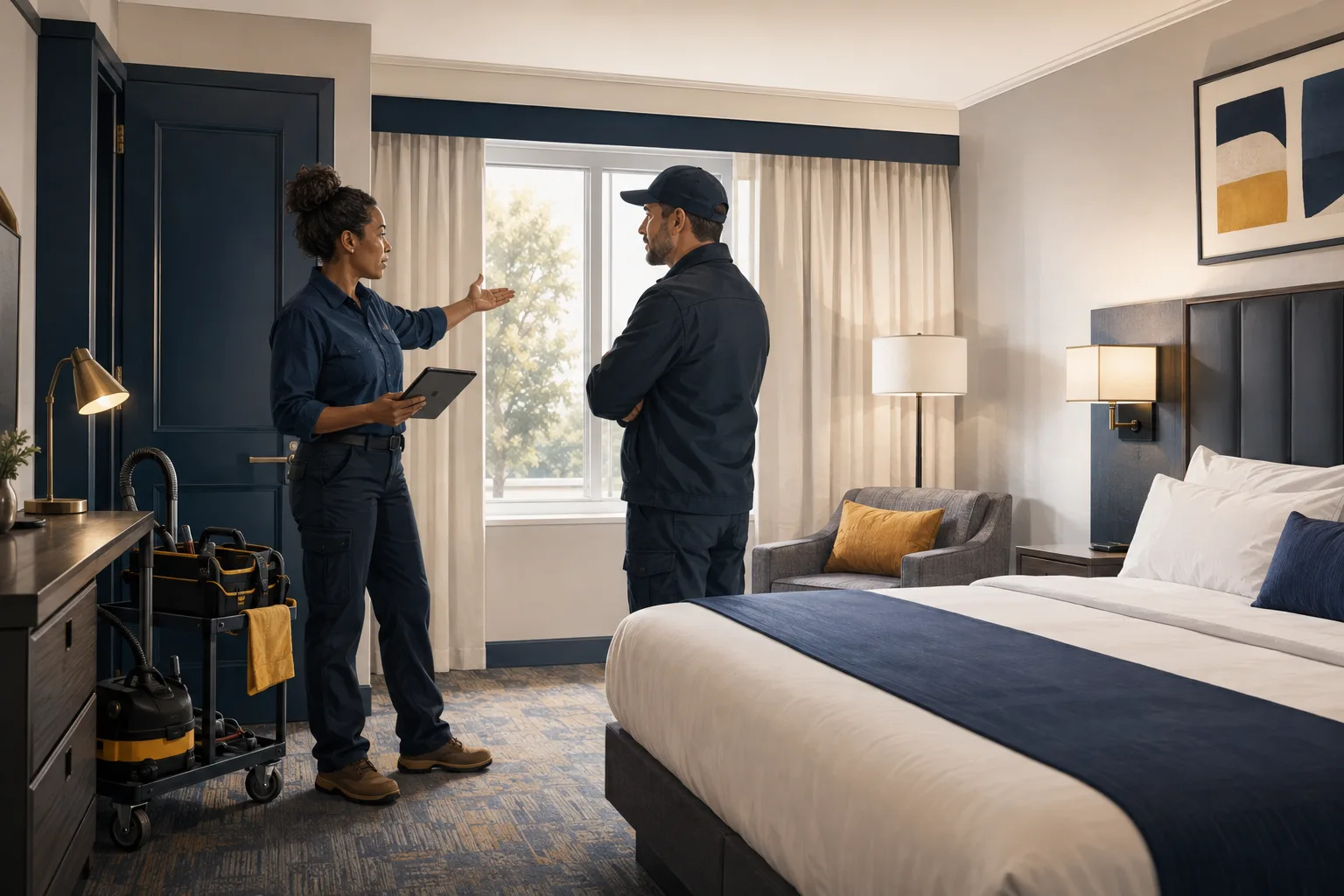
AI-generated editorial illustration; not a customer photograph or product screenshot.
Compliance and Safety Requirements for Hotels
Hotels face extensive regulatory requirements related to building codes, health and safety standards, accessibility laws, and industry-specific regulations. Non-compliance creates legal liability, insurance issues, and potential closure.
Fire Safety and Life Safety Compliance
Fire Alarm Systems:
- Monthly testing and inspection logs required
- Quarterly professional inspection and testing
- Annual third-party certification in most jurisdictions
- Immediate repair of any deficiencies
- Documentation retained for inspection
Fire Sprinkler Systems:
- Quarterly visual inspection of all components
- Annual inspection and testing by certified professional
- Five-year internal pipe inspection
- Documentation and tagging requirements
- Immediate repair of any issues
Fire Extinguishers:
- Monthly visual inspection and documentation
- Annual professional servicing and tagging
- Hydrostatic testing per manufacturer requirements
- Proper mounting, signage, and accessibility
- Staff training on locations and usage
Emergency Lighting and Exit Signs:
- Monthly 30-second functional test
- Annual 90-minute battery discharge test
- Documentation of all testing
- Immediate replacement of failed units
- Compliance with illumination requirements
Emergency Evacuation Plans:
- Posted evacuation maps in all guest rooms and public areas
- Annual staff training and evacuation drills
- Emergency procedure documentation
- Coordination with local fire department
- Regular updates to reflect property changes
Health Department and Food Service Compliance
Kitchen Equipment and Facilities:
- Daily temperature logs for refrigeration and hot holding
- Weekly cleaning logs for exhaust hoods and filters
- Monthly professional hood cleaning (often quarterly minimum required)
- Annual fire suppression system inspection
- Compliance with three-compartment sink requirements
- Proper storage and labeling of chemicals and food
Pool and Spa Regulations:
- Multiple daily water quality testing and chemical balancing
- Detailed logs maintained for health department inspection
- Weekly shock treatment and super-chlorination
- Monthly comprehensive water testing
- Annual drain and deep clean (varies by jurisdiction)
- Compliance with signage, depth markers, and safety equipment
- Lifeguard or attendant requirements (varies by location)
- Emergency action plan and staff training
ADA and Accessibility Compliance
Public Area Accessibility:
- Accessible parking spaces with proper signage and markings
- Accessible routes to all public areas
- Compliant ramps, elevators, and lifts
- Accessible restrooms with proper fixtures and clearances
- Service animal policies and staff training
- Regular assessment and maintenance of accessibility features
Employee Safety Programs:
- Written safety program and policies
- Hazard communication program and chemical labeling (SDS)
- Lockout/tagout procedures for equipment maintenance
- Personal protective equipment requirements
- Bloodborne pathogen training for housekeeping and maintenance
- Emergency action plans and evacuation procedures
Environmental and Energy Compliance
Energy Codes and Standards:
- Compliance with ASHRAE 90.1 or local energy codes
- Energy efficiency requirements for equipment replacements
- Lighting power density limits
- HVAC efficiency standards
- Building envelope requirements
Environmental Regulations:
- Proper refrigerant management and documentation
- Asbestos management (if present in older properties)
- Lead paint disclosure and management (if applicable)
- Hazardous waste disposal procedures
- Water conservation and reuse regulations (varies by location)
Maintaining Compliance Documentation
Essential Documentation Systems:
- Centralized maintenance log tracking all required inspections
- Digital photos and reports for all compliance activities
- Third-party certification and inspection reports organized and accessible
- Equipment maintenance histories demonstrating preventive care
- Staff training records with dates, topics, and attendees
- Vendor qualifications and insurance certificates
Audit Preparation:
- Quarterly internal compliance audits
- Annual comprehensive compliance review
- Organized documentation ready for inspector access
- Staff preparation and protocol review
- Rapid response process for identified deficiencies
Cost Considerations and ROI of Hotel Maintenance
Understanding maintenance costs as an investment rather than an expense shifts perspective and enables data-driven decision making that protects both guest satisfaction and bottom-line performance.
Calculating Maintenance ROI for Specific Investments
Example 1: HVAC Preventive Maintenance Program
Example 2: Predictive Maintenance Technology Implementation
Example 3: Maintenance Management Software
Building the Business Case for Maintenance Investment
Present Data-Driven Proposals:
- Current state analysis with costs of reactive approach
- Proposed investment with specific initiatives and costs
- Projected returns across multiple benefit categories
- Payback period and ongoing ROI calculations
- Risk mitigation and compliance benefits
- Guest satisfaction and reputation improvements
Align with Strategic Objectives:
- Connect maintenance excellence to occupancy and ADR targets
- Demonstrate impact on guest satisfaction scores and reviews
- Show contribution to sustainability and ESG goals
- Highlight competitive positioning and brand standards
- Emphasize risk mitigation for ownership and leadership
Start with Quick Wins:
- Implement high-ROI initiatives first (often software and preventive programs)
- Track and communicate early successes
- Build credibility for larger investments
- Create momentum and cultural buy-in
AI-generated editorial illustration; not a customer photograph or product screenshot.
Common Hotel Maintenance Challenges and Solutions
Even well-managed hotels face recurring maintenance challenges. Understanding common obstacles and solutions helps anticipate problems and implement effective strategies.
Challenge 1: Balancing Guest Experience with Maintenance Needs
The Problem: Hotels operate 24/7 with guests expecting undisturbed stays, yet maintenance requires access to rooms and creates noise, disruptions, and visual impacts.
Solutions:
- Strategic Scheduling: Perform noisy or disruptive work during lowest occupancy periods (typically Tuesday-Thursday, 10 AM - 4 PM)
- Guest Communication: Proactive notification of planned maintenance with apologies and compensation offers
- Room Status Coordination: Integrate maintenance management with PMS to identify vacant, clean, and upcoming check-out rooms for priority maintenance
- After-Hours Protocols: Establish quiet hours (10 PM - 7 AM) with exceptions only for emergency repairs
- Upgrade Opportunities: Offer room upgrades when maintenance issues require guest relocation
- Preventive Focus: Catch issues during vacant periods before guests encounter problems
Challenge 2: Staffing and Skills Gaps
The Problem: Hotels struggle to attract, retain, and develop skilled maintenance technicians, particularly for 24/7 coverage, specialized systems, and competitive wages.
Solutions:
- Competitive Compensation: Research market rates and offer competitive wages and benefits
- Career Development: Create advancement paths from entry-level to senior technician to facilities manager
- Training Investment: Provide ongoing technical training, certifications, and manufacturer programs
- Cross-Training: Develop multi-skilled technicians who can handle diverse systems
- Vendor Partnerships: Establish service agreements for specialized systems (elevators, HVAC, pool)
- Technology Leverage: Use maintenance software to guide less-experienced technicians with detailed procedures
- Contractor Relationships: Maintain on-call relationships with contractors for specialized work and peak demands
- Work Environment: Foster positive culture, provide quality tools and equipment, recognize excellence
Challenge 3: Aging Equipment and Deferred Maintenance
The Problem: Budget constraints, ownership transitions, or management changes often lead to deferred maintenance that compounds over time, creating escalating failure rates and costs.
Solutions:
- Comprehensive Assessment: Conduct property condition assessment to document deferred maintenance and equipment condition
- Prioritization Matrix: Rank issues by safety risk, guest impact, regulatory requirements, and financial consequences
- Multi-Year Capital Plan: Develop realistic 5-10 year replacement schedule with annual budgets
- ROI Justification: Calculate payback periods for efficiency upgrades and preventive investments
- Creative Financing: Explore energy service company (ESCO) agreements, equipment leasing, or property improvement plans (PIPs)
- Preventive Triage: Implement intensive preventive maintenance on aging equipment to extend life until replacement
- Partial Upgrades: Phase improvements by floor, wing, or system to spread costs
- Brand Standard Leverage: Use franchise requirements to justify necessary capital investments
Challenge 4: Coordination Across Multiple Departments
The Problem: Maintenance depends on coordination with housekeeping, front desk, food service, engineering, and management, yet communication gaps create delays, conflicts, and guest impacts.
Solutions:
- Integrated Software Platform: Implement maintenance management system with multi-department access and visibility
- Daily Stand-Up Meetings: Brief 15-minute cross-functional meetings to coordinate priorities and schedules
- Clear Communication Protocols: Establish work order submission processes, priority definitions, and status update requirements
- Room Status Integration: Sync maintenance system with PMS for real-time room status and guest information
- Shared KPIs: Create metrics that span departments (guest satisfaction, work order completion time)
- Joint Training: Cross-train departments on each other's challenges and priorities
- Escalation Procedures: Define clear escalation paths for urgent issues and conflicts
Challenge 5: Emergency Maintenance Response
The Problem: 24/7 operations create inevitable emergencies (pipe bursts, HVAC failures, elevator outages) requiring immediate response regardless of timing, staffing, or cost.
Solutions:
- On-Call Rotations: Establish fair, compensated on-call schedules with clear coverage
- Emergency Response Procedures: Document step-by-step protocols for common emergencies
- Vendor Relationships: Maintain 24/7 emergency contact relationships with critical service providers
- Parts Inventory: Stock essential parts for critical systems and common failures
- Preventive Focus: Reduce emergencies by identifying and addressing issues before failure
- Monitoring Systems: Install sensors and alarms for early warning of potential issues
- Staff Training: Ensure multiple technicians can handle common emergencies
- Guest Service Recovery: Empower staff with compensation authority and service recovery protocols
Challenge 6: Compliance Tracking and Documentation
The Problem: Hotels face dozens of required inspections, certifications, and documentation requirements that vary by location, with penalties for non-compliance.
Solutions:
- Compliance Calendar: Create comprehensive calendar of all required inspections with lead time alerts
- Automated Scheduling: Use maintenance software to auto-generate required inspection work orders
- Vendor Management: Track vendor certifications, insurance, and scheduled service dates
- Digital Documentation: Store all certifications, inspection reports, and documentation digitally with backups
- Audit Preparation: Conduct quarterly internal audits to verify compliance before external inspections
- Regulatory Monitoring: Assign responsibility for tracking regulation changes and new requirements
- Training Documentation: Maintain detailed records of staff safety training and certifications
Challenge 7: Budget Constraints and Cost Pressures
The Problem: Maintenance often faces budget cuts during economic downturns or ownership pressure for short-term profitability, creating long-term costs and risks.
Solutions:
- Data-Driven Advocacy: Track and communicate maintenance costs, ROI, and guest impact metrics
- Preventive ROI: Calculate and present the cost savings from preventive vs. reactive approaches
- Energy Efficiency: Identify maintenance activities that reduce utility costs (HVAC tuning, LED upgrades)
- Risk Quantification: Present legal, safety, and reputation risks of inadequate maintenance
- Phased Implementation: Propose phased approaches that spread costs while maintaining progress
- Partnership with Revenue: Connect maintenance excellence to ADR, occupancy, and positive reviews
- Ownership Education: Help ownership understand that maintenance protects their asset value
Challenge 8: Technology Adoption and Integration
The Problem: Maintenance departments often lag in technology adoption, relying on paper-based systems, radios, and tribal knowledge rather than modern platforms.
Solutions:
- Start with Quick Wins: Implement mobile work order apps before comprehensive CMMS platforms
- User-Friendly Selection: Choose intuitive, hospitality-focused platforms rather than complex industrial systems
- Champion Identification: Identify tech-savvy staff members as champions and early adopters
- Comprehensive Training: Provide hands-on training, ongoing support, and patience with learning curves
- Integration Planning: Ensure new systems integrate with existing PMS, BAS, and accounting platforms
- Change Management: Address resistance through involvement, communication, and visible leadership support
- Measure and Communicate: Track improvements and celebrate wins from technology adoption
Hotel Maintenance FAQ
How often should hotel rooms be inspected for maintenance issues?
Hotel rooms should undergo daily visual inspections during housekeeping cleaning, with housekeeping staff reporting any maintenance issues immediately through work order systems. More detailed preventive maintenance inspections should occur weekly on a rotating schedule, ensuring every room receives thorough inspection monthly. High-occupancy rooms, suites, and VIP accommodations benefit from more frequent detailed inspections (weekly). Upon guest checkout, rooms should receive enhanced inspection before being returned to available inventory. This multi-layered approach catches issues early while minimizing guest disruption.
What is included in hotel preventive maintenance?
Hotel preventive maintenance includes scheduled inspections, servicing, and replacements designed to prevent failures before they occur. Key activities include: monthly HVAC filter replacements and system checks; quarterly elevator inspections and servicing; regular testing and certification of fire safety systems; scheduled plumbing inspections and water heater maintenance; systematic guest room component inspections; kitchen equipment cleaning and calibration; pool and spa water quality management; building envelope inspections; electrical system testing; and landscape and grounds maintenance. Comprehensive programs also include predictive technologies like thermal imaging, vibration analysis, and performance monitoring for critical equipment.
What maintenance software do hotels use?
Hotels use specialized Computerized Maintenance Management Systems (CMMS) designed for hospitality operations. Leading platforms include hotel-specific solutions that integrate with Property Management Systems (PMS), Building Automation Systems (BAS), and guest services platforms. Essential features include mobile work order management for technician efficiency, preventive maintenance scheduling with automatic generation, asset and equipment tracking with complete histories, parts inventory management, compliance tracking and documentation, multi-property management capabilities, and comprehensive analytics and reporting. Many hotels also use building automation systems for HVAC and energy management, integrated with maintenance platforms for predictive capabilities.
How do hotels manage emergency maintenance?
Hotels manage emergency maintenance through established on-call rotation schedules ensuring 24/7 technician availability, documented emergency response procedures for common scenarios (pipe bursts, power failures, HVAC outages), pre-established relationships with emergency service vendors, maintained inventory of critical spare parts, and empowered staff with guest service recovery protocols. Effective systems include priority-based work order classification, rapid communication between front desk and maintenance, guest notification and relocation procedures, and follow-up processes to identify root causes and prevent recurrence. Most hotels target 15-30 minute response times for emergency guest-impacting issues.
What is the difference between hotel maintenance and facilities management?
Hotel maintenance focuses specifically on preserving, repairing, and servicing physical assets, equipment, and building systems. Facilities management encompasses broader responsibilities including maintenance, space planning, energy management, sustainability initiatives, capital project management, vendor and contractor management, health and safety compliance, emergency preparedness, and strategic facility planning. In smaller hotels, these functions often overlap with one person or team handling both. Larger properties typically separate facilities management (strategic, planning-focused) from maintenance operations (execution-focused). Both work together to ensure safe, functional, efficient, and guest-ready hotel environments while protecting asset value and controlling costs.
AI-generated editorial illustration; not a customer photograph or product screenshot.
Conclusion: Building Maintenance Excellence in Hospitality
Hotel maintenance has evolved from a behind-the-scenes cost center to a strategic operational function that directly impacts guest satisfaction, online reputation, revenue performance, and long-term asset value. In an industry where a single negative review can cost thousands in lost bookings and where operational expenses directly affect profitability, excellence in maintenance management isn't optional—it's essential for competitive success.
Key Takeaways for Hotel Maintenance Success
3. Integrate Maintenance with Guest Experience Maintenance quality directly influences guest satisfaction, online reviews, repeat bookings, and pricing power. Properties that coordinate maintenance with housekeeping, front desk, and guest services—using integrated technology and communication protocols—create seamless experiences where issues are prevented or resolved before guests notice. The connection between maintenance excellence and revenue performance is undeniable.
4. Build Comprehensive, Hospitality-Specific Programs Generic facility maintenance approaches don't address hotels' unique challenges: 24/7 operations, high-touch guest environments, regulatory complexity, and the need for rapid response. Successful programs include guest room inspection protocols, common area appearance standards, specialized knowledge of hospitality systems (pools, commercial kitchens, high-capacity HVAC), and service recovery integration.
5. Invest in People and Partnerships Technology and processes only work with skilled, motivated people executing them. Investing in competitive compensation, ongoing training, career development, and positive culture attracts and retains talented technicians. Simultaneously, strategic vendor partnerships for specialized systems (elevators, HVAC, pools) provide expertise and capacity beyond in-house capabilities.
6. Use Data for Continuous Improvement Leading hotels track key performance indicators (work order completion time, preventive compliance, maintenance cost per room, equipment downtime, guest satisfaction impacts) and use data analytics to identify trends, optimize programs, and drive continuous improvement. This data also builds business cases for capital investments and demonstrates maintenance's contribution to overall hotel performance.
7. Plan Strategically for Capital Improvements Maintenance excellence includes not just preserving existing assets but strategically upgrading and improving them. Comprehensive asset management with condition assessments, lifecycle planning, and multi-year capital budgets ensures timely equipment replacement, energy efficiency upgrades, and guest experience enhancements that maintain competitive positioning.
Download Your Free Hotel Maintenance Checklist Template
Get started immediately with our comprehensive, customizable Hotel Maintenance Checklist Template covering daily, weekly, monthly, quarterly, and annual tasks across guest rooms, common areas, building systems, and compliance requirements. This professionally-designed template provides the foundation for building your preventive maintenance program.
Hotel maintenance excellence isn't achieved overnight, but the journey begins with commitment to preventive strategies, investment in enabling technology, and focus on the undeniable connection between maintenance quality and guest satisfaction. Properties that embrace comprehensive maintenance management protect their most valuable assets—both physical property and guest relationships—while positioning themselves for long-term operational and financial success.
In hospitality, where every detail matters and every guest interaction counts, maintenance excellence isn't just about keeping the lights on. It's about creating flawless experiences, protecting brand reputation, and building sustainable competitive advantage in an industry where excellence is expected and mediocrity is immediately noticed, reviewed, and avoided.
The hotels that thrive in today's competitive environment are those that recognize maintenance not as a cost to minimize but as an investment that pays dividends in guest satisfaction, operational efficiency, risk mitigation, and long-term asset value. The question isn't whether you can afford to invest in maintenance excellence—it's whether you can afford not to.