Introduction
Quick Answer: The key difference between preventive and predictive maintenance is timing and data usage. Preventive maintenance performs scheduled maintenance at fixed intervals (time-based or usage-based) regardless of equipment condition, while predictive maintenance uses real-time condition monitoring data from sensors and analytics to perform maintenance only when needed.
Choosing between preventive vs predictive maintenance is one of the most critical decisions maintenance managers and facility leaders face. This choice impacts equipment reliability, operational costs, downtime frequency, and overall maintenance efficiency. The wrong strategy can lead to either unnecessary maintenance expenses or unexpected equipment failures.
This guide is designed for maintenance managers, facility managers, plant managers, reliability engineers, and decision-makers evaluating maintenance strategies for their organizations. Whether you're running a manufacturing facility, managing commercial buildings, or overseeing critical infrastructure, understanding the preventive and predictive maintenance comparison will help you optimize your maintenance operations.
In this comprehensive comparison, we'll examine both approaches side-by-side, analyzing costs, effectiveness, implementation requirements, and providing a clear decision framework to determine which strategy—or combination of both—works best for your specific needs.
Preventive Maintenance Overview
Preventive maintenance is a proactive maintenance strategy that performs scheduled maintenance tasks at predetermined intervals, regardless of the current condition of the equipment. The goal is to prevent failures before they occur through regular inspections, adjustments, cleaning, lubrication, and parts replacement.
How Preventive Maintenance Works
The maintenance schedule is typically created based on:
- Equipment manufacturer recommendations
- Historical failure data
- Industry best practices
- Regulatory compliance requirements
- Organization's risk tolerance
Key Characteristics
Preventive maintenance programs share several defining characteristics:
Scheduled approach: All maintenance activities follow fixed schedules regardless of actual equipment condition. A pump scheduled for maintenance every six months receives that maintenance even if it's operating perfectly.
Predictable planning: Because schedules are predetermined, maintenance teams can plan labor, parts inventory, and downtime windows well in advance. This predictability simplifies resource allocation and budgeting.
Lower technology requirements: Preventive maintenance doesn't require sophisticated monitoring technology. A calendar, maintenance checklists, and a CMMS (Computerized Maintenance Management System) are sufficient for most programs.
Reactive to time, not condition: The trigger for maintenance is time passage or usage accumulation, not actual equipment condition or performance degradation.
Examples of Preventive Maintenance
Time-based preventive maintenance:
- Monthly inspection of safety equipment
- Quarterly HVAC system servicing
- Annual boiler inspections
- Weekly cleaning of production equipment
- Biannual replacement of filters
[Link to: Preventive Maintenance Complete Guide]

AI-generated editorial illustration; not a customer photograph or product screenshot.
Predictive Maintenance Overview
Predictive maintenance is a condition-based maintenance strategy that uses real-time monitoring, data analytics, and machine learning to predict when equipment will fail, allowing maintenance to be performed precisely when needed—not too early, not too late.
How Predictive Maintenance Works
Predictive maintenance continuously monitors equipment condition through sensors that collect data on vibration, temperature, pressure, oil quality, electrical current, acoustics, and other performance indicators. This data is analyzed using algorithms and machine learning models to identify patterns indicating impending failure.
When the system detects anomalies or deteriorating conditions that suggest failure is approaching, it triggers a maintenance work order. This allows maintenance teams to schedule intervention during planned downtime, order necessary parts, and address the issue before it causes unplanned failure.
Technologies Used in Predictive Maintenance
Predictive maintenance relies on several interconnected technologies:
IoT sensors: Internet of Things devices continuously collect equipment data, including vibration sensors, thermal cameras, acoustic monitors, and pressure transducers.
Data analytics platforms: Cloud-based or on-premise software processes vast amounts of sensor data, applying statistical analysis and pattern recognition to identify anomalies.
Machine learning and AI: Advanced algorithms learn normal equipment behavior and detect deviations that indicate developing problems. These systems improve accuracy over time as they process more data.
CMMS integration: Predictive systems integrate with maintenance management software to automatically generate work orders when intervention is needed.
Edge computing: Processing data at or near the equipment location enables real-time analysis and immediate alerts for critical conditions.
Key Characteristics
Condition-driven: Maintenance occurs based on actual equipment condition, not arbitrary schedules. If equipment is healthy, no maintenance is performed.
Data-intensive: Predictive programs generate enormous amounts of data—a single manufacturing plant might collect millions of data points daily. This requires robust data infrastructure and analytical capabilities.
Precision timing: Maintenance is performed in the optimal window—early enough to prevent failure but late enough to maximize component life. This eliminates both premature part replacement and unexpected failures.
Continuous monitoring: Unlike preventive maintenance's periodic inspections, predictive systems monitor equipment 24/7, catching developing issues immediately.
Examples of Predictive Maintenance Techniques
Vibration analysis: Monitoring vibration patterns in rotating equipment (motors, pumps, turbines) to detect bearing wear, imbalance, misalignment, or looseness.
Oil analysis: Testing lubricating oil for metal particles, viscosity changes, and contamination to predict component wear before failure occurs.
Thermography (infrared scanning): Using thermal imaging cameras to detect overheating in electrical connections, motors, and mechanical components.
Ultrasonic testing: Detecting high-frequency sounds indicating compressed air leaks, steam leaks, bearing defects, or electrical arcing.
Motor circuit analysis: Monitoring electrical current and voltage patterns to predict motor and electrical system failures.
[Link to: Predictive Maintenance Guide]
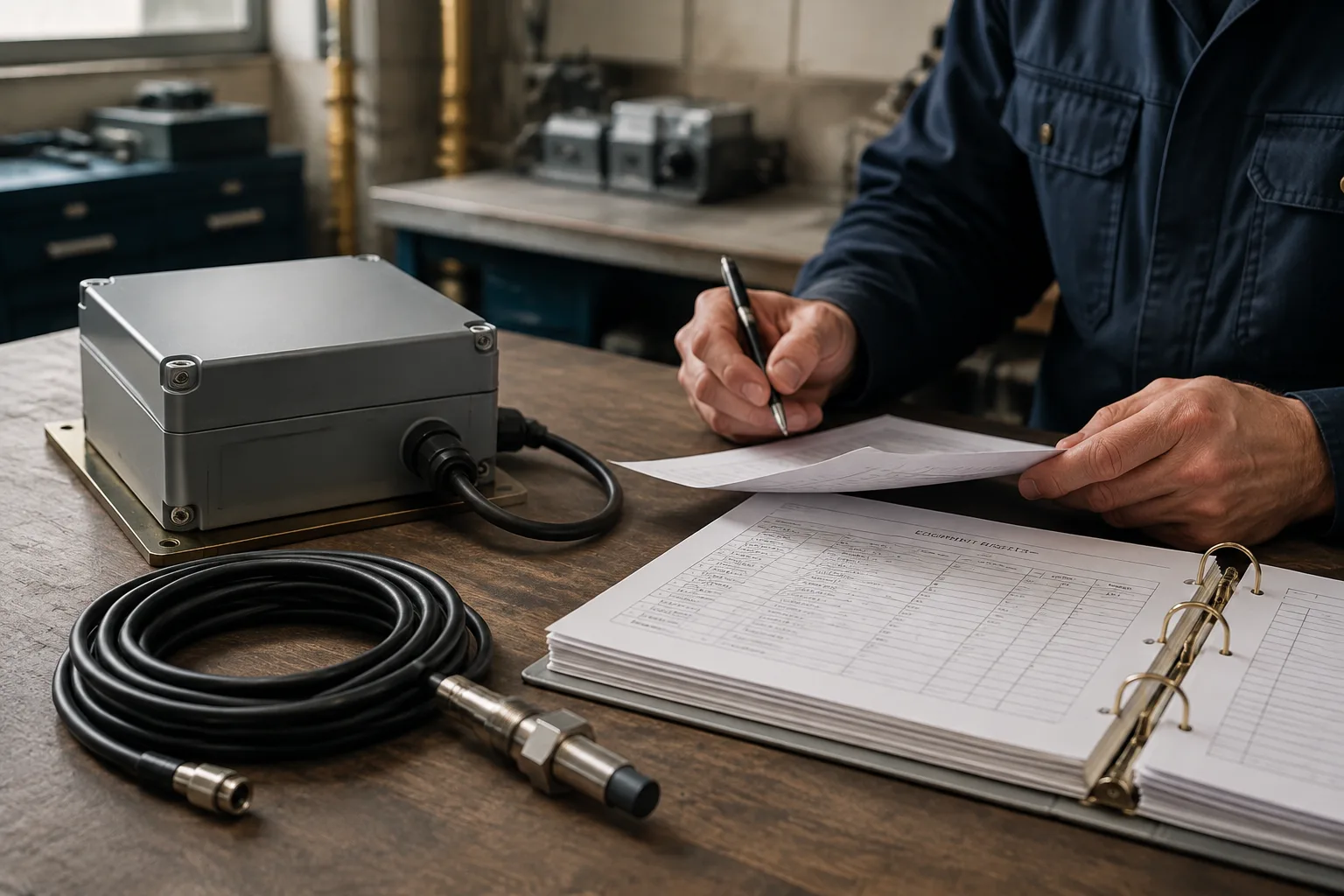
AI-generated editorial illustration; not a customer photograph or product screenshot.
Key Differences: Preventive vs Predictive Maintenance
Detailed Explanation of Key Differences
1. Maintenance Approach and Philosophy
The fundamental difference between preventive and predictive maintenance lies in their approach. Preventive maintenance assumes that equipment deteriorates predictably over time, making scheduled interventions effective. It follows the philosophy "maintain it before it breaks."
Predictive maintenance operates on the principle that equipment condition varies based on operating conditions, and real-time monitoring provides more accurate maintenance timing. Its philosophy is "maintain it exactly when needed, not before, not after."
2. Data Usage and Requirements
Preventive maintenance requires minimal data—primarily maintenance schedules, completion records, and basic equipment history. A spreadsheet or simple CMMS can manage most preventive programs effectively.
Predictive maintenance, in contrast, depends on massive amounts of real-time data. A single monitored asset might generate thousands of data points hourly. This data must be collected, transmitted, stored, processed, and analyzed continuously. Organizations need robust data infrastructure, including cloud storage, analytical platforms, and visualization tools.
3. Technology Investment
4. Maintenance Precision and Over-Maintenance
Predictive maintenance eliminates most over-maintenance by intervening only when condition data indicates genuine need. This extends component life, reduces parts consumption, and optimizes labor utilization.
5. Skill Requirements and Staffing
Preventive maintenance programs can be executed by conventional maintenance technicians following checklists and procedures. Planning and scheduling requires organizational skills but not advanced technical expertise.
Predictive maintenance demands specialized skills: reliability engineers who understand condition monitoring techniques, data analysts who can interpret sensor data and algorithm outputs, and technicians trained in advanced diagnostic tools. Many organizations struggle to find personnel with these combined skills.
6. Implementation Complexity and Timeline
7. Failure Prevention Effectiveness
Cost Comparison: Preventive vs Predictive Maintenance
Cost analysis is critical when evaluating predictive vs preventive maintenance strategies. The cost structure differs significantly between approaches.
Ongoing Cost Comparison
While predictive maintenance has higher software costs, it significantly reduces labor and parts expenses through optimized maintenance timing.
Total Cost of Ownership Comparison (5-Year Analysis)
The crossover point where predictive maintenance becomes more cost-effective is typically around 50-75 monitored assets, though this varies based on asset criticality and failure costs.
Effectiveness Comparison
Beyond costs, organizations must compare the actual effectiveness of preventive vs predictive maintenance in achieving key maintenance objectives.
Downtime Reduction Performance
The difference between preventive and predictive maintenance effectiveness for downtime reduction is substantial, particularly for continuous process industries where unplanned downtime is most costly.
Maintenance Efficiency Metrics
The predictive vs preventive maintenance comparison clearly shows predictive programs achieve higher maintenance efficiency across all key metrics, though at the cost of higher implementation complexity.

AI-generated editorial illustration; not a customer photograph or product screenshot.
When to Use Preventive Maintenance
Preventive maintenance remains the optimal choice for many organizations and specific scenarios. Understanding when preventive maintenance is the right strategy helps avoid over-investing in unnecessary predictive technology.
Ideal Asset Types for Preventive Maintenance
Standard, non-critical equipment:
- Office HVAC systems
- Lighting systems
- Standard conveyor systems
- Non-production vehicles
- General facility infrastructure
Equipment with predictable wear patterns:
- Filters and belts (wear consistently over time)
- Basic motors and pumps
- Fluid systems requiring scheduled fluid changes
- Safety equipment with regulatory inspection requirements
Organization Size and Maturity
Preventive maintenance is often the right starting point for:
Organizations new to structured maintenance:
- Companies transitioning from reactive maintenance
- Facilities building maintenance maturity
- Organizations developing maintenance culture
- Teams learning foundational maintenance practices
Industry Examples Where Preventive Excels
Commercial real estate: Building management for office complexes, retail centers, and commercial properties typically relies on preventive maintenance. Equipment criticality is moderate, failure costs are manageable, and scheduled maintenance aligns well with tenant needs.
Small manufacturing: Job shops and small manufacturers with diverse, lower-volume equipment find preventive maintenance provides excellent failure prevention without excessive technology investment.
Hospitality: Hotels and resorts use preventive maintenance for HVAC, plumbing, and facility systems. Service interruptions are unacceptable, but equipment values and failure costs don't justify predictive investment.
Fleet maintenance: Small to medium vehicle fleets (under 100 vehicles) effectively use preventive maintenance based on mileage and time intervals without needing predictive sensors on every vehicle.
Decision Criteria Summary
[Link to: Maintenance Strategies]
When to Use Predictive Maintenance
Predictive maintenance delivers exceptional value in specific scenarios where its higher costs and complexity are justified by significant returns.
Critical Asset Scenarios
Mission-critical equipment: Predictive maintenance is essential for assets where unexpected failure creates catastrophic consequences:
- Primary production equipment in continuous processes
- Data center cooling systems
- Hospital emergency power systems
- Refinery critical path equipment
- Transportation systems (railways, elevators)
Safety-critical systems:
- Gas compression equipment
- High-pressure systems
- Aircraft components
- Chemical processing equipment
- Power generation turbines
Technology Readiness Requirements
Organizations should implement predictive maintenance when they have:
IT infrastructure:
- Network connectivity throughout facilities
- Cloud storage or on-premise data infrastructure
- Integration capabilities between systems
- Cybersecurity measures for IoT devices
Data capabilities:
- Staff with data analysis skills
- CMMS or EAM system already in place
- Comfort with technology adoption
- Commitment to digital transformation
Maintenance maturity:
- Preventive maintenance program already established
- Maintenance history and data collection practices
- Reliability engineering expertise available or accessible
- Culture supporting data-driven decisions
Industry Examples Where Predictive Excels
Oil and gas: Refineries and processing facilities use extensive predictive maintenance for critical rotating equipment, pumps, compressors, and heat exchangers where safety and environmental risks make failure prevention paramount.
Power generation: Utilities employ predictive maintenance for turbines, generators, and transmission equipment where reliability directly impacts thousands or millions of customers.
Aviation: Aircraft maintenance increasingly uses predictive maintenance for engines, auxiliary power units, and flight control systems where safety and operational reliability are absolute requirements.
Data centers: Mission-critical cooling, power, and infrastructure systems use predictive maintenance to prevent downtime that could impact thousands of customers and cost millions in service level agreement penalties.
Decision Criteria Summary

AI-generated editorial illustration; not a customer photograph or product screenshot.
Can You Use Both? The Hybrid Approach
The most effective maintenance programs often combine preventive and predictive maintenance rather than choosing one exclusively. This hybrid approach optimizes maintenance effectiveness while controlling costs.
Hybrid Strategy Benefits
A combined preventive and predictive maintenance approach provides:
Cost optimization: Use expensive predictive technology only where ROI justifies it, while using cost-effective preventive maintenance for lower-criticality assets.
Risk management: Apply predictive monitoring to high-risk, critical assets while using preventive maintenance for standard equipment.
Gradual implementation: Start with preventive maintenance foundation, then progressively add predictive capabilities as budgets, skills, and infrastructure mature.
Maximum effectiveness: Achieve optimal failure prevention by matching maintenance strategy to asset characteristics rather than forcing one approach across all equipment.
How to Combine Preventive and Predictive Maintenance
1. Asset Criticality Segmentation
Divide equipment into tiers based on criticality:
Tier 4 - Run-to-Failure (Reactive):
- Extremely low-cost equipment
- Redundant systems with spares
- Allow reactive maintenance when cost-justified
Phased Implementation Approach
Phase 1: Establish Preventive Foundation (Months 1-6)
- Implement basic preventive maintenance program
- Create maintenance schedules for all equipment
- Establish CMMS system
- Train staff on preventive procedures
- Build maintenance culture
Phase 2: Identify Predictive Candidates (Months 4-8)
- Analyze failure costs and downtime impacts
- Identify critical assets justifying predictive investment
- Calculate ROI for predictive implementation
- Develop predictive strategy and budget
Phase 3: Pilot Predictive Program (Months 9-15)
- Start predictive monitoring on 5-10 critical assets
- Collect baseline data and train algorithms
- Train staff on new technologies
- Validate ROI and refine approach
Phase 4: Scale Predictive Coverage (Months 16-36)
- Expand predictive monitoring based on pilot results
- Progressively add critical assets to predictive program
- Maintain preventive maintenance for appropriate assets
- Continuously optimize both strategies
Risk-Based Decision Matrix
Use this matrix to determine which maintenance approach fits each asset:
Asset Criticality × Failure Cost Matrix:
This risk-based approach ensures maintenance investment aligns with business impact, avoiding both under-maintenance and over-investment in unnecessary technology.
Real-World Hybrid Example

AI-generated editorial illustration; not a customer photograph or product screenshot.
Making Your Decision: Preventive vs Predictive Maintenance
Choosing between preventive vs predictive maintenance—or implementing a hybrid approach—requires systematic evaluation of your organization's specific circumstances.
Decision Framework
Use this step-by-step framework to make your decision:
Step 1: Assess Current State
- Document current maintenance approach
- Calculate current maintenance costs
- Measure current downtime and failure rates
- Inventory critical assets and their values
- Evaluate maintenance team capabilities
Step 2: Analyze Asset Portfolio
- Categorize all assets by criticality
- Calculate failure costs for each critical asset
- Determine downtime costs per hour
- Identify single-point-of-failure equipment
- Assess safety and environmental risks
Step 3: Evaluate Organizational Readiness
- Review available budget for maintenance improvement
- Assess IT infrastructure and data capabilities
- Evaluate staff skills and training needs
- Determine maintenance maturity level
- Consider timeline constraints and expectations
Step 4: Calculate ROI Scenarios
- Model costs and benefits of preventive approach
- Model costs and benefits of predictive approach
- Compare payback periods
- Project 3-year and 5-year total cost of ownership
- Factor in risk reduction value
Step 5: Develop Implementation Plan
- Choose optimal strategy for your situation
- Create phased implementation roadmap
- Define success metrics and KPIs
- Establish budget and resource requirements
- Set realistic timeline expectations
Assessment Questions
Answer these questions to clarify your optimal maintenance strategy:
Technical Considerations:
- How many critical assets do we have? (Under 50 suggests preventive; over 75 enables predictive)
- What is our IT infrastructure maturity? (Limited infrastructure favors preventive)
- Do we have reliability engineering expertise? (No expertise favors preventive)
- What is our maintenance maturity level? (Low maturity should start preventive)
Operational Considerations:
- What is our downtime tolerance? (Very low tolerance may require predictive)
- Are failures safety or environmentally critical? (High risks justify predictive)
- Can we schedule maintenance windows? (Yes enables preventive; limited windows favor predictive)
- How predictable are our equipment wear patterns? (Predictable favors preventive; variable favors predictive)
Implementation Roadmap
Months 1-2: Planning
- Inventory all equipment
- Create maintenance task lists
- Establish maintenance schedules
- Select CMMS if needed
Months 3-4: Implementation
- Train maintenance staff
- Launch preventive program
- Begin executing scheduled tasks
- Track compliance and results
Months 5-6: Optimization
- Analyze initial results
- Adjust schedules based on data
- Refine procedures
- Calculate baseline metrics for future comparison
Months 1-3: Planning and Design
- Complete asset criticality analysis
- Select monitoring technologies
- Design data architecture
- Choose analytics platform
Months 4-9: Infrastructure
- Install sensors and connectivity
- Implement data platforms
- Integrate with CMMS
- Begin baseline data collection
Months 10-15: Pilot and Training
- Launch pilot on 5-10 assets
- Train staff on new systems
- Validate algorithms and alerts
- Refine approaches
Months 16-24: Full Deployment
- Scale to all critical assets
- Optimize analytics and thresholds
- Establish mature processes
- Measure ROI and benefits
Starting Point Recommendations
Frequently Asked Questions (FAQ)
Can you do both preventive and predictive maintenance?
Yes, using both preventive and predictive maintenance together is an excellent strategy called a hybrid approach. Most effective maintenance programs combine both strategies, using predictive maintenance for critical, high-value assets where the investment is justified, while using preventive maintenance for standard equipment where scheduled maintenance is sufficient. For example, you might use predictive monitoring on your most critical 30 production assets while maintaining preventive schedules for 150 supporting assets. This approach optimizes costs by investing in expensive predictive technology only where ROI justifies it, while still maintaining structured maintenance across all equipment.
How do I know which maintenance strategy to use?

AI-generated editorial illustration; not a customer photograph or product screenshot.
Conclusion
The decision between preventive vs predictive maintenance fundamentally shapes your maintenance program's effectiveness, costs, and operational impact. As this comprehensive comparison demonstrates, both strategies offer significant advantages over reactive "run-to-failure" approaches, but they serve different organizational needs and contexts.
The difference between preventive and predictive maintenance isn't simply a matter of technology—it's about matching maintenance strategy to organizational needs, asset characteristics, and business objectives. Many successful maintenance programs recognize this and implement hybrid approaches, applying predictive monitoring where justified by criticality and ROI while maintaining cost-effective preventive schedules for standard equipment.
Whether you choose preventive maintenance, predictive maintenance, or a strategic combination of both, moving beyond reactive maintenance to proactive strategies will significantly improve equipment reliability, reduce costs, and enhance operational performance. Start with honest assessment of your current state, carefully evaluate your asset portfolio and organizational capabilities, and select the approach that best aligns with your specific circumstances. As your maintenance maturity grows and circumstances evolve, your strategy can evolve as well—beginning with preventive and progressively adding predictive capabilities as budgets, infrastructure, and expertise develop.
The right maintenance strategy isn't the most sophisticated or the most popular—it's the one that delivers maximum value for your specific organization, assets, and objectives.
[Link to: Preventive Maintenance Complete Guide] [Link to: Predictive Maintenance Guide] [Link to: Maintenance Strategies]
Target Keywords Naturally Integrated:
- Preventive vs predictive maintenance (primary - 15 instances)
- Predictive vs preventive maintenance (primary - 8 instances)
- Difference between preventive and predictive maintenance (5 instances)
- Preventive and predictive maintenance comparison (4 instances)
- When to use preventive vs predictive (3 instances)
- Plus 20+ semantic variations and long-tail keywords
Schema Recommendations:
- Article schema
- FAQ schema (5 questions)
- ComparisonTable schema (main comparison table)
- HowTo schema (decision framework section)