For maintenance managers and operations directors facing mounting pressure to reduce costs while improving reliability, proactive maintenance represents a fundamental shift from firefighting to strategic asset management. This comprehensive guide explores what proactive maintenance is, how it differs from reactive and preventive approaches, the technologies that enable it, and how to build a successful proactive maintenance strategy that delivers measurable ROI.
What Is Proactive Maintenance?
Proactive maintenance is a comprehensive asset management philosophy that goes beyond simply preventing failures—it seeks to understand why failures occur and eliminate their root causes entirely. Rather than accepting that equipment will eventually fail and planning accordingly, proactive maintenance takes an aggressive stance toward reliability improvement through continuous analysis, optimization, and cultural transformation.
At its core, proactive maintenance encompasses several key elements:
Predictive Analysis: Using condition monitoring technologies, data analytics, and trending to identify developing problems before they cause failures. This includes vibration analysis, thermography, oil analysis, ultrasonic testing, and other diagnostic techniques that reveal equipment health in real-time.
Root Cause Analysis: When failures do occur, proactive maintenance demands thorough investigation to understand not just what failed, but why it failed. This systematic analysis prevents recurrence by addressing underlying causes rather than symptoms.
Continuous Improvement: Proactive maintenance is never "done." It requires ongoing refinement of processes, procedures, and practices based on performance data and lessons learned. This creates a culture of excellence where reliability constantly improves.
Strategic Planning: Rather than reacting to immediate demands, proactive maintenance aligns asset management with business objectives, optimizes resource allocation, and makes data-driven decisions about maintenance investments.
Preventive Foundation: Proactive strategies build upon preventive maintenance schedules but add layers of intelligence, analysis, and optimization that preventive maintenance alone cannot provide.
The proactive approach recognizes that every maintenance dollar should be invested strategically—not spent reactively on emergency repairs that could have been prevented with better planning and insight.
The Proactive Maintenance Philosophy: A Mindset Shift
Transitioning to proactive maintenance requires more than new procedures—it demands a fundamental cultural shift in how organizations think about equipment reliability and maintenance's role in business success.
From Cost Center to Value Creator
Traditional reactive maintenance treats the maintenance department as a necessary expense that responds to breakdowns. Proactive maintenance reframes maintenance as a strategic function that creates value through:
- Uptime optimization that enables production schedules and revenue generation
- Asset life extension that defers capital expenditures and maximizes ROI on equipment investments
- Quality improvement through stable, well-maintained equipment that produces consistent output
- Safety enhancement by eliminating hazardous failure conditions before they occur
- Energy efficiency from properly maintained equipment operating at peak performance
From Reactive Firefighting to Strategic Planning
The proactive mindset prioritizes planning over panic. Instead of celebrating heroic overnight repairs, proactive organizations celebrate the failures that never happened because they were prevented through good planning. This shift requires:
- Data-driven decision making rather than intuition or habit
- Long-term thinking that values reliability over short-term cost cutting
- Cross-functional collaboration between maintenance, operations, engineering, and management
- Continuous learning from both successes and failures
- Investment in enablers like technology, training, and processes that support proactive work
Ownership and Accountability
Proactive maintenance cultures foster ownership at all levels. Operators take responsibility for basic equipment care and early problem detection. Technicians own their assigned assets and take pride in their reliability. Managers measure success by what didn't break rather than how quickly they responded when things did break.
This cultural foundation is what separates truly proactive organizations from those that simply implement predictive technologies without changing the underlying mindset.
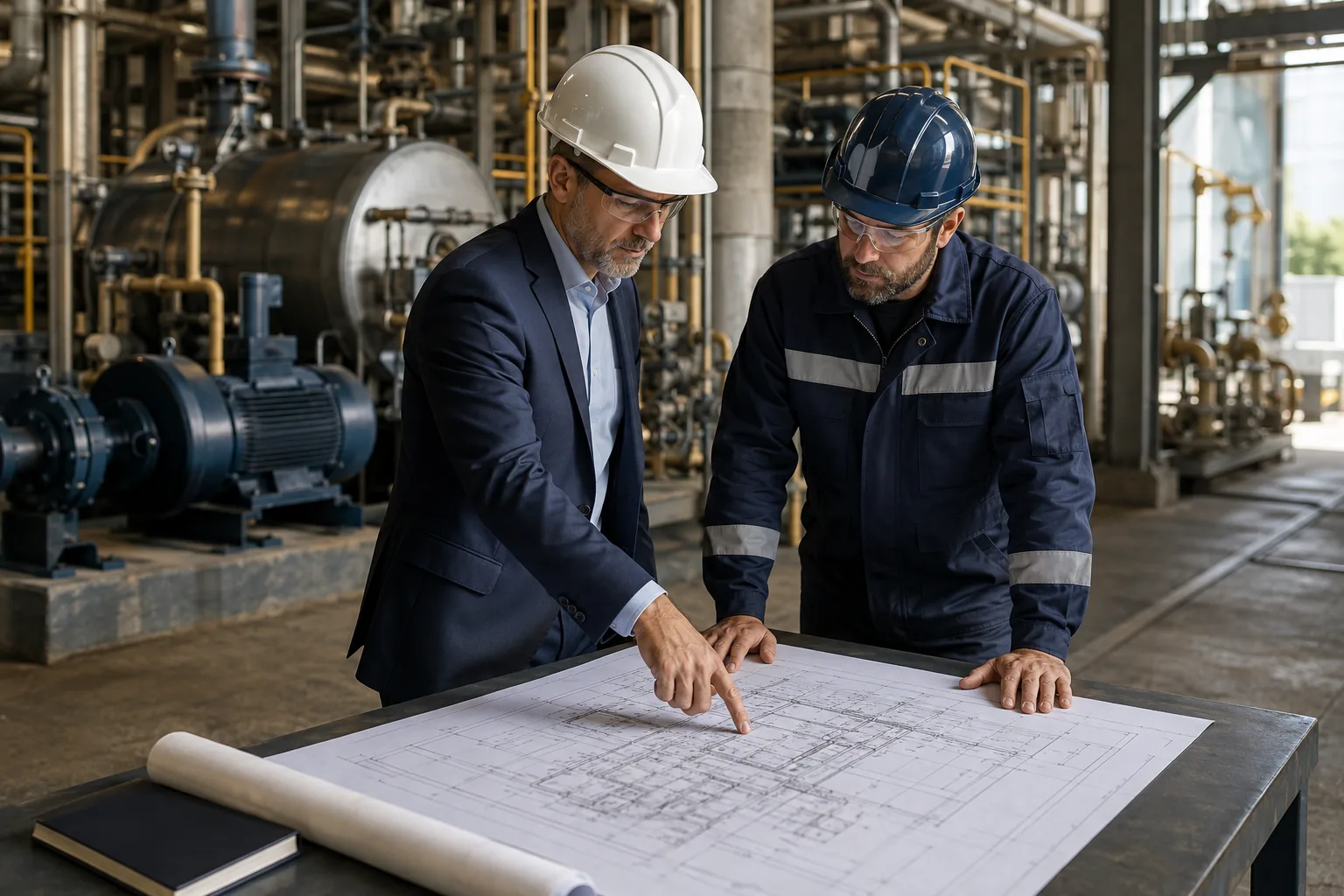
AI-generated editorial illustration; not a customer photograph or product screenshot.
Types of Proactive Maintenance
Preventive Maintenance (Time-Based and Usage-Based)
Preventive maintenance forms the foundation of any proactive strategy. By performing routine inspections, lubrication, adjustments, and component replacements on a scheduled basis, preventive maintenance prevents many common failure modes before they occur.
Time-based preventive maintenance performs tasks at fixed calendar intervals (weekly, monthly, quarterly, annually) regardless of actual equipment condition. This works well for:
- Equipment with predictable wear patterns
- Tasks that must be performed regularly (cleaning, lubrication, filter changes)
- Assets where the cost of inspection exceeds the cost of replacement parts
- Safety-critical systems requiring regular verification
Usage-based preventive maintenance triggers tasks based on operational metrics like hours run, cycles completed, or units produced. This approach better aligns maintenance with actual equipment wear and is ideal for:
- Production equipment with variable utilization
- Mobile assets like vehicles and construction equipment
- Systems where runtime directly correlates with wear
- High-value assets where condition-based triggers optimize part life
While preventive maintenance is proactive compared to reactive approaches, it has limitations. It can lead to over-maintenance (replacing parts before necessary) or under-maintenance (scheduled intervals don't catch developing problems). This is where predictive maintenance adds critical value.
Predictive Maintenance (Condition-Based)
Predictive maintenance takes proactive strategies to the next level by making maintenance decisions based on actual equipment condition rather than elapsed time or usage. Through continuous or periodic monitoring, predictive maintenance identifies developing problems early—often weeks or months before they would cause failure.
Condition monitoring technologies include:
- Vibration analysis detects bearing wear, misalignment, imbalance, and mechanical looseness in rotating equipment
- Thermography uses infrared imaging to identify electrical hotspots, insulation breakdown, and heat transfer problems
- Oil analysis reveals wear particles, contamination, and lubricant degradation in hydraulic and lubrication systems
- Ultrasonic testing detects air leaks, electrical arcing, bearing defects, and steam trap failures
- Motor circuit analysis identifies electrical and mechanical problems in motor-driven systems
- Acoustic emission monitors structural integrity in pressure vessels, tanks, and piping
Reliability-Centered Maintenance (RCM)
Reliability-centered maintenance is a systematic approach to determining the most effective maintenance strategy for each asset based on its function, failure modes, and business consequences. Rather than applying the same maintenance approach to all equipment, RCM analyzes:
- Asset functions and performance standards
- Functional failures and their causes
- Failure modes and their effects
- Failure consequences (safety, environmental, operational, economic)
- Proactive tasks that can prevent failures
- Default actions when no effective proactive task exists
RCM methodology ensures maintenance resources are focused where they deliver the greatest value. Critical assets receive intensive proactive attention while non-critical equipment may be allowed to run to failure if that's the most economical approach. This optimization prevents both over-maintenance and under-maintenance.
Total Productive Maintenance (TPM)
Total productive maintenance expands the proactive philosophy beyond the maintenance department to engage operators, engineering, management, and administrative functions in equipment reliability. TPM's eight pillars include:
- Autonomous maintenance - operators perform basic maintenance tasks
- Planned maintenance - scheduled preventive and predictive work
- Quality maintenance - defect prevention through equipment care
- Focused improvement - cross-functional problem solving
- Early equipment management - designing maintainability into new assets
- Training and development - building maintenance competencies
- Safety, health, and environment - zero accidents through prevention
- Administrative TPM - supporting office processes
TPM's strength lies in creating organization-wide ownership of equipment reliability. When operators take responsibility for cleaning, lubrication, inspection, and minor adjustments, professional maintenance technicians can focus on more complex preventive and predictive work that maximizes asset performance.
Proactive vs Reactive Maintenance: A Strategic Comparison
The difference between proactive and reactive maintenance represents one of the most significant strategic choices organizations make about asset management. Understanding these differences helps justify the investment required to transition toward proactive approaches.
Cost Comparison
Reactive maintenance may appear cheaper initially—there's no investment in planning, scheduling, condition monitoring, or preventive tasks. However, the true costs include:
- Emergency labor at premium rates (overtime, call-in, contractor premiums)
- Expedited parts with rush shipping charges and supplier premiums
- Collateral damage when failures cascade to connected systems
- Downtime costs from unplanned production losses
- Safety incidents from hazardous failure conditions
- Quality impacts from degraded equipment performance before failure
- Shortened asset life from operating equipment in deteriorated conditions
Downtime Impact
Unplanned downtime from reactive maintenance creates cascading problems throughout operations:
- Production schedules are disrupted, causing missed customer commitments
- Maintenance resources are diverted from planned work to emergency repairs
- Operators and production staff wait idle during repairs
- Quality suffers as rushed repairs may not fully restore equipment capability
- Work-in-process inventory may be scrapped if temperature, pressure, or other parameters aren't maintained
Planned downtime from proactive approaches allows:
- Scheduling during low-demand periods to minimize production impact
- Staging parts, tools, and resources in advance for efficient work execution
- Coordinating maintenance with operations to minimize disruption
- Performing multiple tasks simultaneously when equipment is already down
- Testing and verification before returning to service
Strategic Differences
Beyond cost and downtime, the reactive versus proactive choice shapes organizational capability:
Reactive maintenance creates a culture of firefighting where maintenance technicians are constantly responding to emergencies. This environment leads to:
- High stress and burnout among maintenance staff
- Difficulty attracting and retaining skilled technicians
- Limited time for training, improvement, or preventive work
- Adversarial relationships between maintenance and operations
- Senior management viewing maintenance as a necessary evil rather than strategic function
Proactive maintenance enables strategic asset management where maintenance is integrated into business planning. This creates:
- Professional work environment that attracts skilled technicians
- Cross-functional collaboration focused on reliability
- Data-driven continuous improvement culture
- Maintenance recognized as value creator and strategic partner
- Competitive advantage through superior reliability and uptime
When Reactive Maintenance Is Appropriate
While proactive approaches are superior for most assets, reactive maintenance remains the optimal strategy in specific situations:
- Non-critical equipment where failure has minimal operational, safety, or financial consequences
- Redundant systems with backup capacity that allows continued operation during repairs
- Assets near end-of-life scheduled for replacement where proactive investment cannot be recovered
- Low-cost equipment where proactive maintenance costs exceed replacement costs
- Failure modes that cannot be predicted or prevented economically
The key is making reactive choices strategically through criticality analysis rather than allowing reactive maintenance to be the default approach.

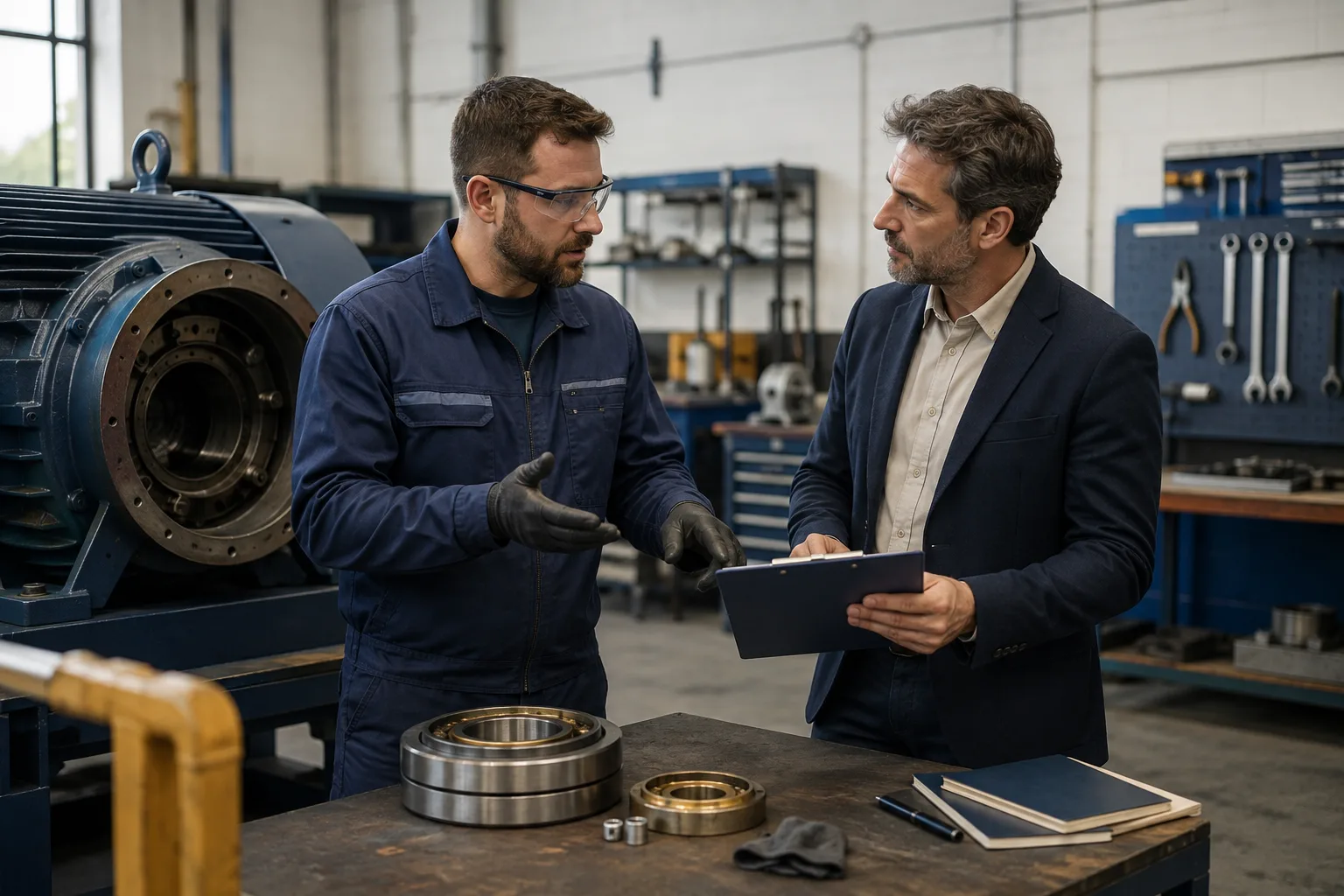
AI-generated editorial illustration; not a customer photograph or product screenshot.
Proactive vs Preventive Maintenance: Understanding the Relationship
The terms "proactive maintenance" and "preventive maintenance" are often used interchangeably, but they represent different scopes and philosophies. Understanding this relationship helps clarify what truly proactive approaches entail.
Preventive Maintenance as Foundation
Preventive maintenance is a specific strategy focused on performing routine tasks at scheduled intervals to prevent failures. These tasks include:
- Routine inspections and adjustments
- Lubrication and filter changes
- Cleaning and minor repairs
- Scheduled component replacements
- System testing and verification
Preventive maintenance is proactive in the sense that it occurs before failures happen, but it operates on predetermined schedules rather than actual equipment condition. This can lead to:
- Over-maintenance: Replacing parts that still have useful life remaining
- Under-maintenance: Missing developing problems between scheduled tasks
- Static approach: Schedules don't adapt based on equipment performance or changing conditions
Proactive Maintenance as Evolution
Proactive maintenance encompasses preventive maintenance but extends far beyond it through:
Condition-Based Decision Making: Rather than relying solely on elapsed time or usage, proactive strategies use predictive technologies to assess actual equipment condition and time maintenance optimally.
Root Cause Analysis: When failures occur despite preventive efforts, proactive organizations investigate why and modify their approach to prevent recurrence. Preventive maintenance often accepts a baseline level of failures as inevitable.
Continuous Optimization: Proactive strategies constantly refine preventive schedules based on failure data, condition monitoring trends, and reliability analysis. Preventive programs may continue performing tasks long after they've become unnecessary or ineffective.
Holistic Approach: Proactive maintenance integrates predictive technologies, reliability analysis, operator involvement, design improvements, and cultural change. Preventive maintenance focuses primarily on scheduled task execution.
Business Integration: Proactive strategies align maintenance with business objectives and demonstrate value through reliability metrics and cost reduction. Preventive maintenance may operate as an isolated maintenance department activity.
The Proactive Continuum
Most organizations evolve through stages rather than instantly achieving proactive excellence:
- Reactive Stage: Mostly firefighting with minimal preventive work
- Preventive Foundation: Scheduled maintenance established but limited optimization
- Predictive Enhancement: Condition monitoring added to identify problems early
- Proactive Integration: Root cause analysis, continuous improvement, and optimization implemented
- Reliability Excellence: Proactive culture embedded throughout organization
Preventive maintenance is a critical step on this journey, but the full benefits of proactive approaches require moving beyond basic scheduling to embrace data-driven optimization, failure elimination, and continuous improvement.
Benefits of Proactive Maintenance
Organizations that successfully implement proactive maintenance strategies realize substantial, measurable benefits across multiple dimensions:
This translates directly to:
- More production time available to meet customer demands
- Fewer missed shipments and late penalties
- Higher equipment utilization and throughput
- Reduced need for overtime production to recover from downtime
- Better ability to meet production schedules and commitments
Proactive maintenance significantly extends equipment life by:
- Preventing catastrophic failures that cause irreparable damage
- Maintaining optimal operating conditions (lubrication, alignment, balance)
- Identifying and correcting degradation before it accelerates
- Operating equipment within design parameters rather than pushing to failure
- Protecting assets from contamination, corrosion, and wear
Improved Safety Performance
Proactive maintenance creates safer work environments by:
- Eliminating hazardous failure conditions before they occur
- Conducting maintenance under controlled conditions rather than emergency situations
- Identifying safety risks through regular inspections and condition monitoring
- Ensuring safety systems (guards, interlocks, emergency stops) function properly
- Reducing pressure to rush repairs under dangerous conditions
Better Resource Planning and Utilization
Proactive approaches enable superior resource management:
Labor Planning: Maintenance work can be scheduled efficiently, balancing workload across crews and avoiding overtime spikes. Technicians spend more time on value-adding preventive and predictive work rather than reactive firefighting.
Parts Management: Predictable maintenance needs allow optimal inventory management—ordering parts at the best price with appropriate lead times rather than expediting at premium costs.
Budget Accuracy: Planned maintenance costs are more predictable than reactive spending, improving budget forecasting and financial management.
Contractor Coordination: External specialists (vibration analysts, infrared thermographers, NDT inspectors) can be scheduled efficiently rather than called in emergencies.
Higher Overall Productivity and Quality
Beyond direct maintenance benefits, proactive strategies improve operational performance:
- Consistent output quality from well-maintained equipment operating within specifications
- Reduced scrap and rework from stable, capable processes
- Higher throughput from eliminating bottlenecks caused by unreliable equipment
- Energy efficiency from properly maintained systems (motors, compressed air, HVAC)
- Process optimization enabled by reliable equipment that supports improvement initiatives
Competitive Advantage
Organizations with proactive maintenance capabilities gain strategic advantages:
- Superior reliability supports shorter lead times and more responsive customer service
- Lower costs enable competitive pricing or higher margins
- Consistent quality builds customer loyalty and brand reputation
- Higher uptime enables capacity growth without capital investment
- Improved sustainability through reduced waste, energy efficiency, and extended asset life
Key Components of a Proactive Maintenance Strategy
Asset Criticality Analysis
Not all equipment deserves equal maintenance attention. Asset criticality analysis determines which assets warrant intensive proactive approaches versus those that can be maintained reactively or minimally.
Criticality assessment evaluates each asset across multiple dimensions:
- Safety impact: Could failure injure personnel or cause environmental release?
- Production impact: What percentage of capacity is lost if this asset fails?
- Repair complexity: How long and difficult would repairs be?
- Cost impact: What are the direct and indirect costs of failure?
- Redundancy: Are backup systems available, or is this a single point of failure?
- Regulatory requirements: Are there compliance mandates for this equipment?
Assets are typically classified into categories:
- Critical: Intensive proactive maintenance with predictive monitoring, frequent inspections, and optimized preventive schedules
- Important: Standard proactive approach with condition monitoring and preventive maintenance
- Low priority: Basic preventive maintenance or run-to-failure strategy
This criticality-based approach ensures maintenance resources are allocated where they deliver maximum value.
Failure Mode and Effects Analysis (FMEA)
FMEA systematically identifies how equipment can fail, the consequences of those failures, and the most effective prevention strategies. For each asset, FMEA considers:
- Potential failure modes: What could go wrong? (bearing failure, seal leak, motor burnout, etc.)
- Failure causes: What causes each failure mode? (lack of lubrication, contamination, overload, etc.)
- Failure effects: What happens when this failure occurs? (production stop, safety hazard, quality impact, etc.)
- Detection methods: How would we know this failure is developing? (vibration increase, temperature rise, oil contamination, etc.)
- Prevention strategies: What maintenance tasks can prevent this failure? (lubrication, alignment, filtration, etc.)
This analysis ensures proactive maintenance programs address the actual failure modes that threaten equipment reliability rather than generic maintenance tasks that may not prevent the most common or consequential failures.
Condition Monitoring and Diagnostics
The technical foundation of proactive maintenance is the ability to assess equipment condition and detect developing problems early. This requires:
Monitoring Technology Selection: Based on asset types and failure modes, select appropriate condition monitoring technologies:
- Vibration monitoring for rotating equipment
- Thermography for electrical and thermal systems
- Oil analysis for hydraulic and lubrication systems
- Ultrasonic testing for compressed air, steam, and electrical systems
- Motor circuit analysis for motor-driven equipment
- Process parameter monitoring (temperature, pressure, flow, power consumption)
Monitoring Frequency: Determine optimal monitoring intervals based on criticality and failure progression rates:
- Continuous online monitoring for critical assets
- Monthly or quarterly periodic monitoring for important equipment
- Annual or biennial testing for low-priority assets
Analysis Expertise: Build internal capability or partner with specialists who can interpret monitoring data and provide actionable recommendations.
Baseline and Trending: Establish baseline readings for equipment in good condition, then trend parameters over time to identify deterioration patterns and predict failure timing.
Root Cause Analysis (RCA)
When failures occur despite proactive efforts, thorough root cause analysis prevents recurrence. Effective RCA:
Goes beyond symptoms: Rather than accepting that "the bearing failed," RCA investigates why the bearing failed (misalignment, inadequate lubrication, contamination, overload, etc.).
Identifies underlying causes: RCA continues asking "why" until systemic or root causes are uncovered (inadequate lubrication might trace to missing PM task, wrong lubricant specification, or contaminated oil supply).
Implements corrective actions: Based on root causes, RCA generates specific actions that prevent recurrence (modify PM procedures, change lubricant, install filtration, provide training, etc.).
Verifies effectiveness: After implementing corrective actions, RCA follows up to confirm the failure mode has been eliminated.
Common RCA methodologies include 5-Whys analysis, fishbone diagrams, fault tree analysis, and formal RCA protocols like PROACT or Kepner-Tregoe.
Preventive Maintenance Optimization
Proactive strategies continuously refine preventive maintenance schedules based on actual reliability data:
Frequency optimization: Adjust PM intervals based on failure rates and condition monitoring trends. If a quarterly task never finds problems, extend to semi-annual. If monthly inspections frequently find developing issues, increase frequency.
Task optimization: Eliminate tasks that don't prevent failures or detect problems. Add tasks that address failure modes revealed through analysis. Refine procedures to improve effectiveness.
Timing optimization: Schedule PMs to coincide with planned downtime, coordinate with production schedules, and group tasks efficiently.
This optimization prevents the common problem of preventive maintenance programs that accumulate tasks over time without ever removing ineffective or unnecessary work.
Cross-Functional Collaboration
Proactive maintenance succeeds only with active participation across the organization:
Operations partnership: Operators provide early problem detection through routine equipment monitoring and participate in autonomous maintenance tasks (cleaning, lubrication, inspections).
Engineering collaboration: Engineers address chronic reliability problems through design improvements, specification changes, and equipment modifications that eliminate failure modes.
Supply chain integration: Procurement teams support proactive maintenance through predictable parts availability, vendor managed inventory for critical consumables, and supplier partnerships for technical support.
Leadership commitment: Senior management provides resources, removes barriers, measures reliability performance, and reinforces the cultural shift toward proactive approaches.
Continuous Improvement Process
AI-generated editorial illustration; not a customer photograph or product screenshot.
Building a Proactive Maintenance Strategy: Implementation Framework
Phase 1: Assessment and Baseline (Months 1-2)
Criticality Assessment:
- Categorize all equipment by criticality using multi-factor analysis
- Identify critical assets requiring intensive proactive attention
- Determine appropriate maintenance strategies for each criticality level
Gap Analysis:
- Compare current capabilities against proactive maintenance requirements
- Identify gaps in skills, technology, processes, and culture
- Prioritize improvement areas based on potential impact
Phase 2: Foundation Building (Months 3-6)
Technology Implementation:
- Select and implement computerized maintenance management system (CMMS) if not already in place
- Configure asset hierarchy, preventive maintenance schedules, and work order processes
- Deploy initial condition monitoring technologies for critical assets
- Integrate monitoring systems with CMMS for automated work order generation
Process Development:
- Design preventive maintenance program with tasks based on FMEA and manufacturer recommendations
- Create standard operating procedures for condition monitoring, inspections, and common repairs
- Establish planning and scheduling processes to coordinate maintenance work
- Develop root cause analysis procedures and failure documentation protocols
Team Training:
- Train maintenance technicians on condition monitoring technologies and interpretation
- Educate operators on autonomous maintenance responsibilities and early problem detection
- Develop planning and scheduling skills within maintenance organization
- Provide RCA training to key personnel
Quick Wins:
- Implement high-impact preventive tasks for critical equipment
- Address "low-hanging fruit" reliability problems with known solutions
- Deploy condition monitoring on assets with chronic failure patterns
- Demonstrate early successes to build momentum and support
Phase 3: Proactive Program Deployment (Months 7-12)
Expanded Implementation:
- Roll out preventive maintenance program across all critical and important assets
- Deploy condition monitoring programs systematically based on equipment type and criticality
- Establish planning/scheduling discipline with work planned in advance and scheduled efficiently
- Implement operator involvement through daily inspections and autonomous maintenance
Data Collection and Analysis:
- Capture detailed failure data including causes, effects, and corrective actions
- Trend condition monitoring parameters to establish baselines and identify degradation patterns
- Track maintenance KPIs and review monthly for trends and improvement opportunities
- Conduct RCA on significant failures and implement corrective actions
Optimization Begins:
- Adjust PM frequencies based on initial data and failure patterns
- Refine condition monitoring routes and frequencies
- Modify tasks that prove ineffective or miss developing problems
- Address reliability gaps revealed through data analysis
Cultural Reinforcement:
- Recognize teams and individuals demonstrating proactive behaviors
- Share success stories of prevented failures and reliability improvements
- Address resistance and clarify expectations for new working methods
- Engage leadership in reliability reviews and improvement planning
Phase 4: Optimization and Maturity (Months 13-24)
Continuous Refinement:
- Systematically optimize PM programs using reliability data and condition monitoring trends
- Eliminate ineffective tasks and add new tasks addressing identified failure modes
- Refine criticality classifications as operating experience accumulates
- Expand predictive technologies to additional asset classes showing potential ROI
Advanced Analytics:
- Implement predictive analytics to forecast failure timing and optimize intervention windows
- Trend multiple parameters to identify complex degradation patterns
- Develop reliability models that predict remaining useful life
- Use data to optimize inventory levels and parts standardization
Embedded Culture:
- Proactive thinking becomes standard across maintenance and operations
- Cross-functional collaboration on reliability is routine
- Continuous improvement of reliability is expected and measured
- Maintenance recognized as strategic contributor to business success
Performance Validation:
- Measure improvements against baseline: downtime reduction, cost savings, asset life extension
- Calculate ROI on proactive maintenance investments
- Benchmark performance against industry standards
- Communicate business value delivered through improved reliability
Common Implementation Challenges and Solutions
Challenge: Lack of Time "We're too busy fighting fires to implement proactive maintenance."
Challenge: Insufficient Skills "Our technicians don't have condition monitoring or analysis expertise."
Solution: Combine targeted training with external partnerships. Vibration analysts, thermographers, and oil analysis labs can provide services and knowledge transfer until internal capabilities develop. Focus initial training on equipment most familiar to technicians.
Challenge: Technology Costs "We can't afford expensive monitoring systems and CMMS software."
Solution: Start with cost-effective technologies and prioritize critical assets. Basic vibration pens, infrared cameras, and cloud-based CMMS platforms are increasingly affordable. Calculate ROI based on preventing just one or two major failures to justify initial investments.
Challenge: Organizational Resistance "Operations won't give us equipment access for preventive work."
Challenge: Sustaining Momentum "We started strong but slipped back into reactive mode."
Solution: This requires leadership commitment and measurement discipline. Regular reliability reviews with metrics tracking, celebration of proactive successes, and accountability for maintaining proactive work ratios keep programs on track.

AI-generated editorial illustration; not a customer photograph or product screenshot.
Proactive Maintenance Best Practices
2. Leverage Technology Strategically
Technology enables proactive maintenance but doesn't create it. Invest in CMMS systems that support planning, scheduling, and performance tracking. Deploy condition monitoring where it can provide early warning of failures that have significant consequences. Avoid technology for technology's sake—ensure every tool addresses specific reliability needs.
3. Build Data-Driven Culture
Proactive maintenance requires decisions based on data rather than intuition. Capture failure information completely, trend condition monitoring parameters consistently, and review performance metrics regularly. Use data to identify problems, validate solutions, and demonstrate value.
4. Engage Operators as Partners
Operators are the first line of defense in equipment reliability. They interact with assets daily and can detect developing problems early if they know what to look for. Implement operator care programs that assign ownership, provide training, and create accountability for basic maintenance tasks and early problem reporting.
6. Close the Loop with Root Cause Analysis
Every failure is an opportunity to improve if learning is captured. Conduct RCA on significant failures, implement corrective actions addressing root causes, and verify effectiveness. Share lessons learned across the organization to prevent similar failures on similar equipment.
7. Optimize Continuously
Preventive maintenance programs accumulate ineffective tasks over time if not optimized. Systematically review PM effectiveness—eliminate tasks that never find problems, adjust frequencies based on reliability data, and add tasks addressing failure modes that weren't prevented.
8. Measure and Communicate Value
Proactive maintenance requires sustained investment and commitment. Measuring reliability improvements, cost reductions, and safety benefits provides the business case for continued support. Communicate successes broadly to maintain organizational commitment.
9. Invest in People Development
Technology and processes matter, but skilled, engaged people make proactive maintenance successful. Provide training in condition monitoring, root cause analysis, and reliability concepts. Create career paths that reward reliability expertise. Recognize and celebrate proactive behaviors.
10. Align with Business Objectives
Maintenance exists to support business success, not as an end unto itself. Understand how reliability impacts business goals (customer service, cost competitiveness, safety, sustainability) and align proactive maintenance priorities accordingly. Speak the language of business value in leadership discussions.
Technologies Enabling Proactive Maintenance
Computerized Maintenance Management Systems (CMMS)
CMMS software is the foundational technology for proactive maintenance, providing the platform to:
Plan and Schedule Work:
- Create preventive maintenance schedules based on time, usage, or condition triggers
- Generate work orders automatically with detailed procedures, parts lists, and safety requirements
- Schedule work efficiently to balance workload and coordinate with production
- Track work completion and capture actual labor, parts, and downtime
Manage Assets:
- Maintain complete asset hierarchies with equipment specifications, locations, and relationships
- Track asset history including failures, repairs, and modifications
- Store documentation like manuals, drawings, and procedures linked to specific assets
- Monitor asset performance metrics and costs over time
Control Inventory:
- Manage parts inventory with min/max levels, reorder points, and vendor information
- Link parts to assets and work orders for accurate consumption tracking
- Automate parts replenishment and support vendor-managed inventory
- Track inventory costs and optimize stock levels based on usage patterns
Analyze Performance:
- Generate reports on maintenance KPIs, work completion, costs, and reliability
- Trend failure patterns and identify chronic reliability problems
- Calculate metrics like MTBF, MTTR, availability, and OEE
- Support data-driven continuous improvement initiatives
Condition Monitoring Technologies
Condition monitoring provides the "eyes and ears" that enable predictive maintenance:
Vibration Analysis: Vibration monitoring detects mechanical problems in rotating equipment (motors, pumps, fans, compressors, gearboxes) including:
- Bearing wear and defects
- Misalignment between coupled equipment
- Imbalance from wear or buildup
- Mechanical looseness
- Gear wear and tooth damage
Portable vibration analyzers allow periodic route-based monitoring, while permanently mounted sensors provide continuous surveillance of critical assets.
Infrared Thermography: Thermal imaging identifies temperature anomalies that indicate:
- Electrical hotspots from loose connections, overloaded circuits, or insulation breakdown
- Mechanical friction from bearing wear or misalignment
- Insulation deficiencies in buildings and processes
- Heat exchanger fouling or flow blockages
- Steam trap failures
Handheld infrared cameras enable periodic thermographic surveys, while fixed thermal cameras monitor critical electrical equipment continuously.
Oil Analysis: Periodic sampling and laboratory analysis of lubricating oil reveals:
- Wear particles indicating component degradation (bearing, gear, cylinder wear)
- Contamination from water, coolant, fuel, or dirt ingress
- Lubricant degradation from oxidation, thermal breakdown, or depletion of additives
- Incorrect lubricant selection or mixing
Oil analysis programs typically sample monthly or quarterly with trending to identify developing problems.
Ultrasonic Testing: Ultrasonic sensors detect high-frequency sounds indicating:
- Compressed air and gas leaks (saving energy costs)
- Electrical arcing and corona in high voltage equipment
- Bearing defects in early stages before vibration detection
- Steam trap failures (blowing steam or plugged)
- Valve leakage
Portable ultrasonic detectors support route-based surveys, while fixed sensors can monitor critical electrical assets continuously.
Motor Circuit Analysis (MCA): MCA evaluates electrical and mechanical condition of motor systems through:
- Insulation resistance testing
- Current signature analysis
- Power quality measurement
- Rotor bar and winding testing
This non-invasive testing identifies motor problems before they cause failures without requiring disassembly.
Process Parameter Monitoring: Many developing problems reveal themselves through changes in normal operating parameters:
- Temperature trends indicating heat exchanger fouling or cooling problems
- Pressure changes signaling filter plugging or pump degradation
- Flow variations from valve wear or pump efficiency loss
- Power consumption increases from mechanical loading or electrical problems
Modern control systems and IoT sensors make this data readily available for trending and analysis.
Internet of Things (IoT) and Connectivity
IoT technologies connect condition monitoring sensors, process instruments, and equipment controllers to centralized platforms that:
- Collect data continuously from distributed assets
- Transmit data wirelessly from difficult-to-access locations
- Enable remote monitoring of assets across multiple facilities
- Support cloud-based analytics and dashboards accessible anywhere
- Provide mobile alerts when parameters exceed thresholds
The declining cost of sensors, wireless connectivity, and cloud computing makes comprehensive asset monitoring increasingly feasible even for smaller organizations.
Predictive Analytics and Machine Learning
Advanced analytics enhance human analysis by:
- Detecting complex patterns across multiple parameters that humans might miss
- Predicting time-to-failure based on degradation trends
- Identifying optimal maintenance intervention timing
- Recommending maintenance actions based on similar failure patterns
- Continuously learning and improving predictions as more data accumulates
While human expertise remains essential for root cause analysis and corrective action development, machine learning augments capabilities and scales analysis across large asset populations.
Augmented Reality (AR) and Mobile Tools
Mobile and AR technologies enhance technician effectiveness by:
- Providing work order information, procedures, and asset history on mobile devices in the field
- Overlaying maintenance instructions and diagnostic information onto equipment views
- Enabling remote expert assistance through AR-enabled video collaboration
- Simplifying data capture through photos, videos, and voice notes linked directly to work orders
- Improving accuracy through barcode/QR code scanning for asset and parts identification
Technology Selection Matrix
| Technology | Primary Application | Investment Level | Critical Assets | Important Assets | Low Priority Assets |
|---|---|---|---|---|---|
| CMMS Software | All assets - planning, scheduling, tracking | Medium (software, implementation) | Essential | Essential | Essential |
| Vibration Monitoring | Rotating equipment (motors, pumps, fans, gearboxes) | Medium-High | Continuous/frequent periodic | Periodic | Not typically |
| Thermography | Electrical systems, mechanical equipment | Low-Medium (camera cost) | Quarterly-annual | Annual-biennial | Not typically |
| Oil Analysis | Equipment with lubrication systems | Low (sampling and lab costs) | Monthly-quarterly | Quarterly-annual | Not typically |
| Ultrasonic Testing | Compressed air, electrical, bearings, steam systems | Low-Medium (detector cost) | Quarterly-annual | Annual | Not typically |
| IoT/Remote Monitoring | Distributed or remote assets | Medium (sensors, connectivity, platform) | High value for remote/distributed critical assets | Selective | Rarely |
| Predictive Analytics | Large asset populations with complex patterns | Medium-High (platform, data integration) | High value | Selective | No |

AI-generated editorial illustration; not a customer photograph or product screenshot.
Measuring Proactive Maintenance Success: Key Performance Indicators
Lagging Indicators (Measure Results)
Mean Time Between Failures (MTBF): Average operating time between failures for equipment. Increasing MTBF indicates improving reliability. Measure by equipment type or overall facility.
Maintenance Cost per Unit Produced: Total maintenance cost divided by production volume. This normalizes cost comparisons across different production periods.
Financial Metrics
Maintenance Cost per Asset: Total maintenance cost divided by number of assets. Track trends over time and compare proactive vs. reactive assets.
Downtime Cost Avoided: Calculate value of downtime prevented through proactive interventions. Multiply prevented downtime hours by production value per hour.
Reactive Cost Premium: Additional cost of emergency work compared to planned work. Measure overtime premiums, expedited parts costs, and collateral damage.
Return on Maintenance Investment (ROMI): Value delivered (downtime prevented, extended asset life, reduced costs) divided by maintenance investment. Target: 3:1 or greater.
Benchmarking Performance
Transitioning from Reactive to Proactive Culture
The technical elements of proactive maintenance—CMMS software, condition monitoring, preventive schedules—are relatively straightforward to implement. The greater challenge is transforming organizational culture from reactive firefighting to proactive reliability management.
Understanding Cultural Barriers
Several cultural factors resist proactive approaches:
Hero Culture: Organizations that celebrate technicians who work all night fixing emergencies unintentionally reinforce reactive behavior. Recognition systems must shift to celebrate prevented failures and reliability improvements rather than heroic repairs.
Short-Term Thinking: Proactive maintenance requires upfront investment for future benefits. Organizations under quarterly earnings pressure or cost-cutting mandates may struggle to prioritize long-term reliability over immediate expense reduction.
Functional Silos: When maintenance, operations, engineering, and management work independently rather than collaboratively, proactive approaches struggle. Reliability improvement requires cross-functional teamwork.
Comfort with Status Quo: "We've always done it this way" thinking resists change even when current approaches are clearly suboptimal. Reactive maintenance is familiar even if ineffective.
Lack of Maintenance Respect: In organizations where maintenance is viewed as a necessary evil rather than strategic function, securing resources and support for proactive initiatives is challenging.
Change Management Strategies
Successful cultural transformation requires deliberate change management:
Leadership Commitment: Proactive transformation must be led from the top with visible executive sponsorship. Leaders need to articulate why this change matters, provide necessary resources, remove barriers, and hold people accountable for new behaviors.
Compelling Vision: Paint a clear picture of the future state—reliable equipment, planned work, skilled technicians working in professional environment, business results enabled by reliability. Make the vision attractive enough to motivate change.
Data-Driven Business Case: Calculate the cost of reactive maintenance and the benefits of proactive approaches in financial terms that resonate with leadership. Show downtime costs, reactive premiums, lost production, and safety incidents that will be reduced.
Communication and Involvement: Engage maintenance technicians, operators, and support staff in the transformation. Explain why change is happening, listen to concerns, incorporate feedback, and create ownership through participation.
Training and Capability Building: Provide the knowledge and skills required for new approaches. Technicians need condition monitoring training, planners need scheduling skills, operators need autonomous maintenance understanding.
Measurement and Accountability: Track metrics that reinforce proactive behaviors (PM compliance, proactive work percentage, MTBF) and review them regularly. Make reliability performance part of individual and team goals.
Recognition and Reinforcement: Celebrate proactive successes—prevented failures, reliability improvements, optimization achievements. Share success stories broadly and recognize individuals and teams demonstrating desired behaviors.
The Maintenance Maturity Journey
Most organizations progress through predictable stages:
Stage 1 - Reactive: Maintenance responds to breakdowns with minimal planning. Most work is emergency reactive. No systematic preventive or predictive programs. High costs, poor reliability, maintenance seen as necessary evil.
Stage 2 - Preventive Foundation: Basic preventive maintenance program established with scheduled tasks. CMMS implemented for work order management. Still significant reactive work but beginning to prevent some failures. Maintenance gaining credibility.
Progress through these stages is rarely linear—organizations may advance in some areas while lagging in others. The key is maintaining forward momentum and not regressing when challenges arise.

AI-generated editorial illustration; not a customer photograph or product screenshot.
Common Proactive Maintenance Challenges and Solutions
Challenge: Insufficient Equipment Access
Problem: Operations resists shutting down equipment for preventive maintenance, especially when it's currently running fine. "Don't touch what's working" mentality limits proactive work opportunities.
Solutions:
- Quantify downtime costs of unplanned failures vs. planned maintenance windows
- Use condition monitoring to demonstrate developing problems requiring intervention
- Schedule preventive work during planned production downtime (changeovers, weekends, off-shifts)
- Implement operator-led autonomous maintenance that doesn't require equipment shutdown
- Start with most unreliable equipment where operations feels the most pain
Challenge: Data Overload Without Insight
Problem: Condition monitoring generates massive amounts of data, but limited analysis capability means problems are missed or maintenance resources overwhelmed with false alarms.
Solutions:
- Focus monitoring on truly critical assets rather than trying to monitor everything
- Establish clear alarm thresholds and escalation criteria
- Partner with external specialists who can provide expertise during capability development
- Implement analytics platforms that filter noise and highlight actionable issues
- Train internal staff systematically to build analysis capability over time
Challenge: Preventive Maintenance Task Creep
Problem: Preventive maintenance programs accumulate tasks over time without removing ineffective work. PM schedules become burdensome, consuming resources without corresponding reliability improvement.
Solutions:
- Conduct annual PM optimization reviews using reliability data
- Eliminate tasks that never find problems or prevent failures
- Adjust frequencies based on actual failure patterns and condition monitoring trends
- Challenge every task: "What failure mode does this prevent?" If unclear, investigate or eliminate
- Use RCA findings to add targeted tasks addressing actual failure modes
Challenge: Skill Gaps
Problem: Maintenance technicians lack expertise in condition monitoring technologies, data analysis, or root cause investigation. This limits program effectiveness and creates dependence on external resources.
Solutions:
- Provide structured training programs in vibration analysis, thermography, oil analysis interpretation
- Cross-train technicians so multiple people can perform critical monitoring and analysis
- Start with equipment families technicians know well to build confidence
- Partner with technology vendors and service providers who offer training
- Recognize and reward skill development to encourage learning
Challenge: Poor Planning and Scheduling Discipline
Problem: Even with proactive intent, poor planning means technicians lack parts, tools, or information to complete work efficiently. Weak scheduling results in reactive interruptions and incomplete preventive work.
Solutions:
- Designate dedicated planner role (can be part-time for smaller organizations)
- Establish planning standards: parts identified, procedures available, estimated hours
- Implement weekly scheduling process coordinating with operations
- Protect scheduled preventive work from non-emergency interruptions
- Measure and review planning effectiveness (rework rates, PM compliance, schedule breaks)
Challenge: Reactive Relapse Under Pressure
Problem: During production crunches or budget pressures, organizations defer preventive work and cut condition monitoring to focus on immediate production demands. This short-term thinking undermines proactive programs and leads back to reactive cycles.
Solutions:
- Establish minimum acceptable proactive work levels (PM compliance, monitoring frequency) that cannot be deferred
- Track and communicate reliability degradation when proactive work is deferred
- Use data to show that deferred maintenance creates worse problems later
- Build equipment reliability into production planning so scheduled maintenance is protected
- Secure leadership commitment to maintaining proactive work even during challenging periods
FAQ: Proactive Maintenance
What are examples of proactive maintenance?
Proactive maintenance examples include: vibration monitoring of rotating equipment to detect bearing wear before failure; thermal imaging surveys to identify electrical hotspots; oil analysis to reveal contamination or component wear; scheduled preventive inspections and lubrication; operator-performed daily equipment checks; root cause analysis of failures to prevent recurrence; predictive analytics that forecast when components will need replacement; and continuous optimization of maintenance schedules based on reliability data. These activities share a common goal: identifying and addressing problems before they cause unplanned failures.
What technology is needed for proactive maintenance?
Essential proactive maintenance technologies include: CMMS (Computerized Maintenance Management System) software for planning, scheduling, and performance tracking; condition monitoring tools like vibration analyzers for rotating equipment, infrared cameras for thermal imaging, oil analysis for lubrication systems, and ultrasonic detectors for leaks and electrical issues; IoT sensors and connectivity for remote monitoring and data collection; mobile devices for field data capture and work order management; and analytics platforms for trending data and predicting failures. Technology selection should be based on asset types, criticality, failure modes, and budget, starting with critical assets and cost-effective tools before expanding to more advanced systems.
Can small organizations implement proactive maintenance?
Yes, proactive maintenance is achievable for organizations of all sizes. Small organizations should focus on critical assets first, use cost-effective technologies (cloud-based CMMS, handheld vibration pens, affordable infrared cameras), partner with external specialists to supplement limited internal resources, start with basic preventive programs before adding predictive technologies, leverage operator involvement to extend maintenance capacity, and scale programs gradually as ROI is demonstrated. Even basic proactive approaches—scheduled preventive maintenance, simple condition monitoring, and failure analysis—deliver substantial benefits compared to reactive strategies. Start small, prove value, then expand.
What industries benefit most from proactive maintenance?
All asset-intensive industries benefit from proactive maintenance, but organizations with high downtime costs, safety-critical equipment, or continuous processes see the greatest ROI. Key industries include manufacturing (automotive, food processing, pharmaceuticals, chemicals), utilities (power generation, water/wastewater, oil and gas), healthcare (hospitals with critical medical equipment), transportation (aviation, rail, fleet management), facilities management (commercial real estate, data centers), and process industries (mining, pulp and paper, refining). Any organization where equipment reliability significantly impacts operations, costs, safety, or customer service should implement proactive maintenance strategies.