What is Property Maintenance?
Comprehensive Definition
Property maintenance includes both planned and unplanned activities across all building systems and components. This spans mechanical systems like HVAC and plumbing, structural elements including roofs and foundations, cosmetic features such as paint and landscaping, and safety systems like fire alarms and security equipment. The scope extends from minor tasks like changing light bulbs to major projects like roof replacement, encompassing everything necessary to keep a property operational and appealing.
Scope of Property Maintenance
The scope of property maintenance varies significantly based on property type, size, age, and use. A residential property maintenance program might focus on tenant comfort, basic safety, and curb appeal, while commercial property maintenance often requires more complex systems management, stricter regulatory compliance, and consideration of business operations.
Key areas within the scope of property maintenance include:
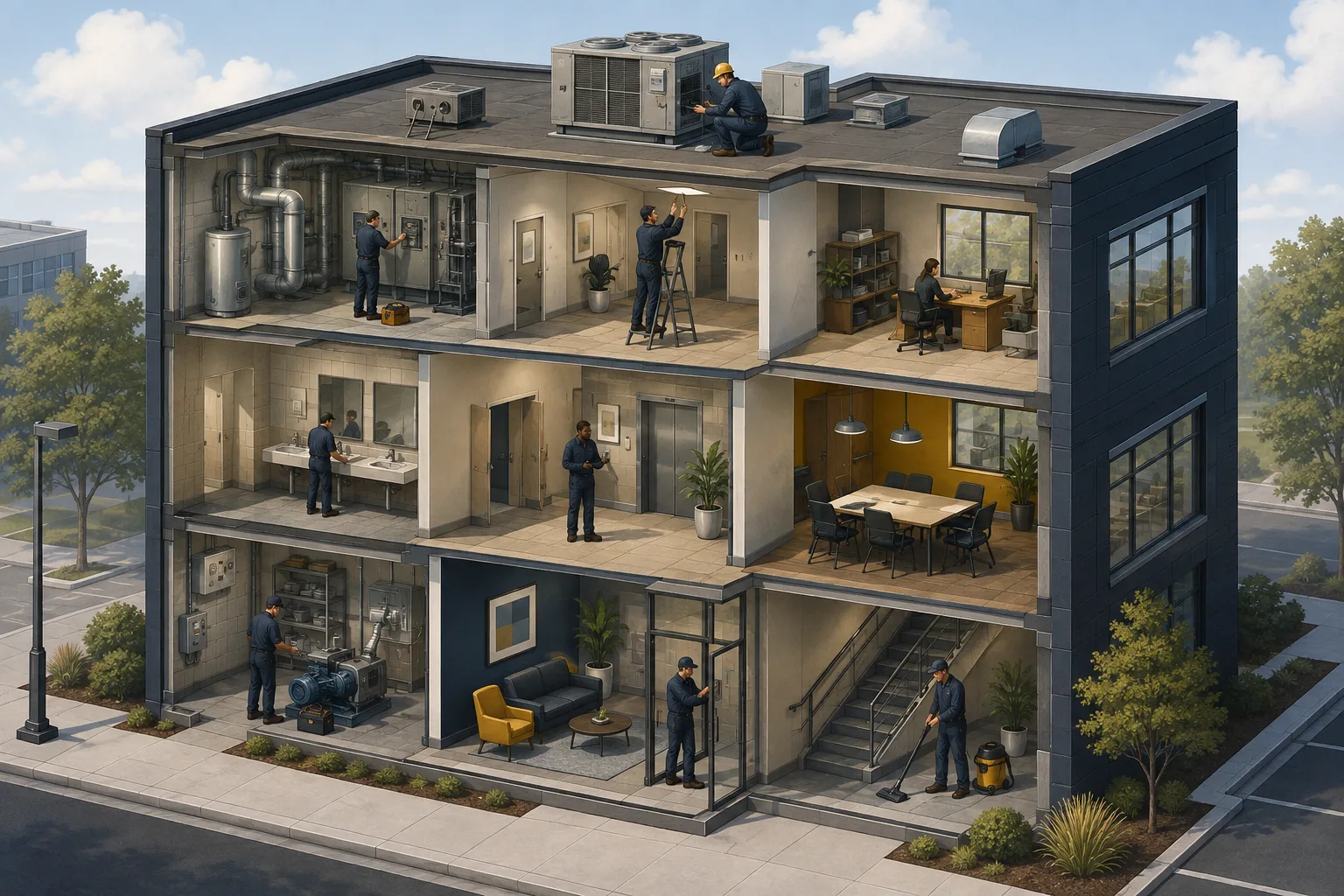
Building Systems: HVAC, plumbing, electrical, fire protection, security systems, elevators, and other mechanical equipment requiring regular inspection, servicing, and repair.
Structural Components: Roofs, foundations, walls, windows, doors, parking structures, and other elements that protect the building envelope and provide structural integrity.
Interior Spaces: Flooring, walls, ceilings, fixtures, appliances, lighting, and finishes that define the usable space and affect occupant experience.
Exterior Areas: Landscaping, parking lots, sidewalks, fencing, signage, lighting, and other outdoor features that contribute to property appearance and functionality.
Common Areas: Lobbies, hallways, stairwells, elevators, laundry facilities, fitness centers, and other shared spaces requiring regular attention.
Property Maintenance vs Facility Management
Facility management encompasses a broader mandate that includes property maintenance but extends to space planning, workplace experience, vendor management, strategic planning, budgeting, and aligning the physical environment with organizational goals. Facility managers oversee property maintenance as one component of their responsibilities, but they also consider how spaces serve business objectives, support productivity, and contribute to organizational success.
For property managers, understanding this distinction helps clarify responsibilities and expectations, especially when working with tenants who have their own facility management teams.
Types of Properties Covered
Property maintenance principles apply across all real estate categories, though specific requirements vary:
Residential Properties: Single-family homes, multi-family apartments, condominiums, townhomes, and student housing require maintenance focused on tenant comfort, safety, and livability.
Commercial Properties: Office buildings, retail centers, shopping malls, and mixed-use developments need maintenance supporting business operations, customer experience, and regulatory compliance.
Industrial Properties: Warehouses, manufacturing facilities, and distribution centers require specialized maintenance for heavy-duty systems, loading docks, and large-scale infrastructure.
Specialized Properties: Healthcare facilities, educational institutions, hospitality properties, and senior living communities have unique maintenance requirements driven by their specific use cases and regulatory environments.
Responsibilities
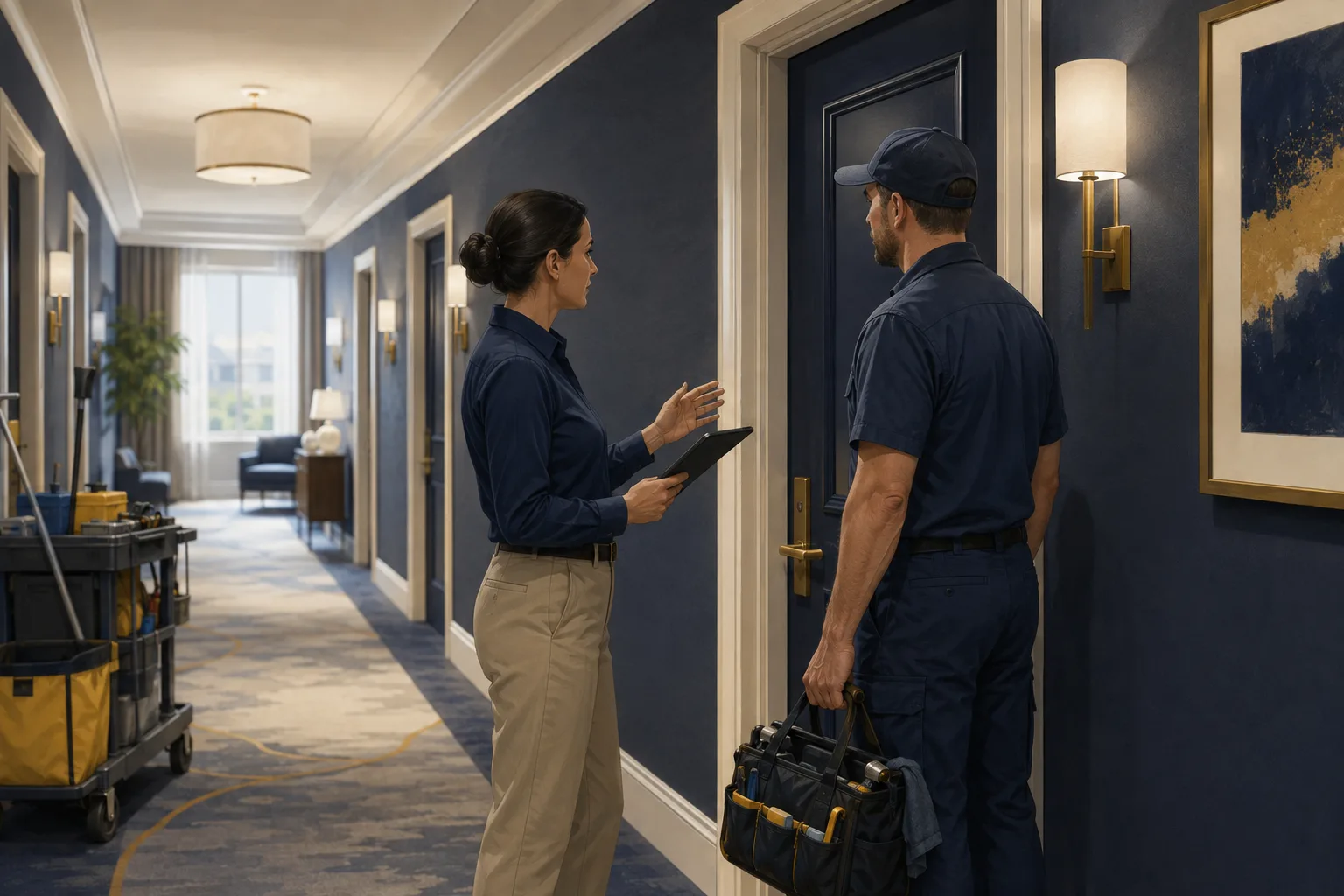
Property maintenance responsibilities typically fall to property owners, property managers, or contracted maintenance providers. In residential settings, landlords bear legal responsibility for maintaining habitable conditions, even when delegating tasks to property managers or contractors. Commercial leases often divide maintenance responsibilities between landlords and tenants, with specific obligations outlined in lease agreements.
Regardless of who performs the work, ultimate responsibility for property maintenance rests with the property owner, making it essential to implement systems ensuring all maintenance tasks are completed properly and on schedule.
AI-generated editorial illustration; not a customer photograph or product screenshot.
Types of Property Maintenance
Understanding the different types of property maintenance helps property managers develop comprehensive strategies that address all maintenance needs. Each type serves specific purposes and requires different approaches to planning, budgeting, and execution.
Preventive Maintenance
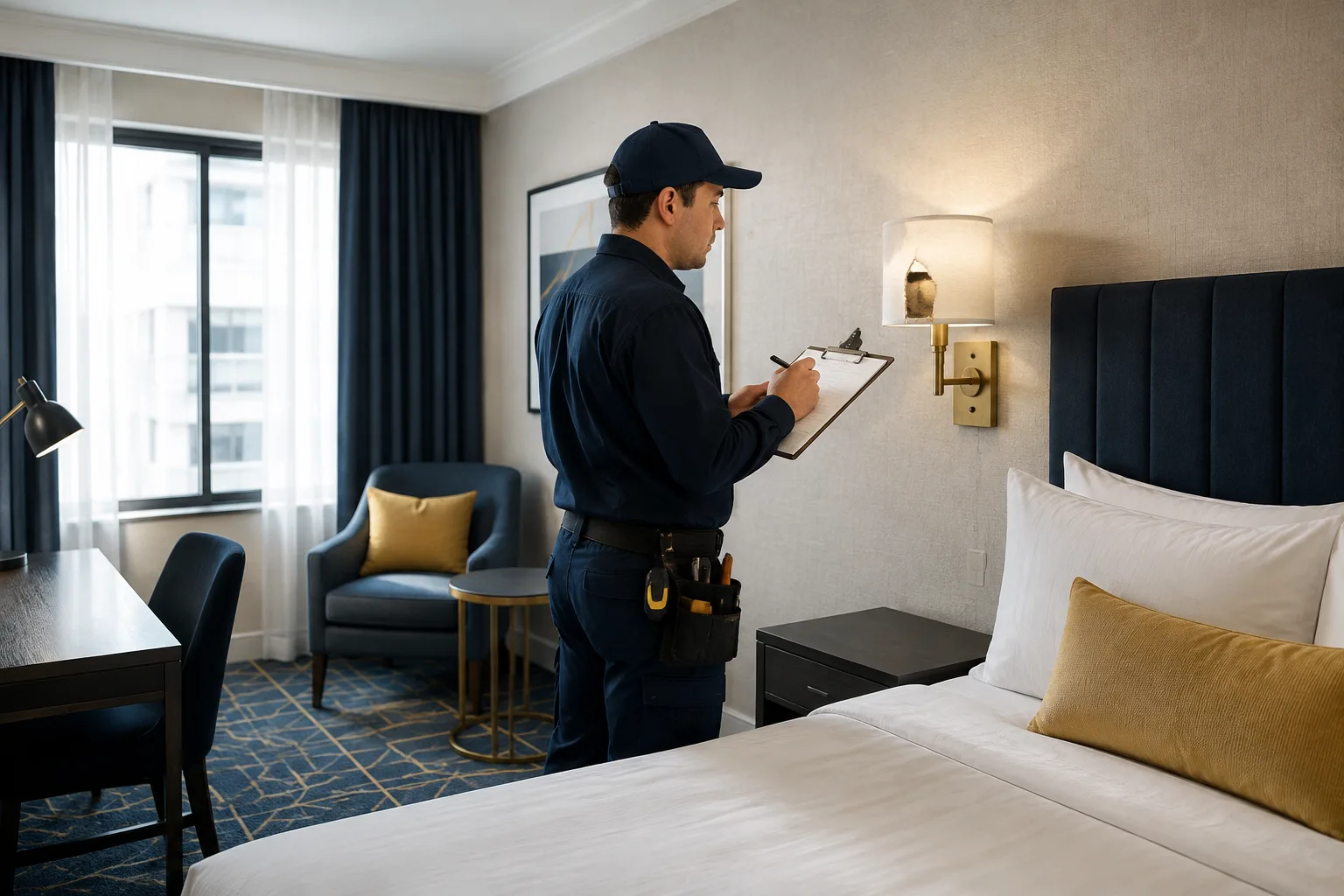
Regular Inspections: Systematic property walk-throughs identify potential issues before they escalate. Monthly inspections might check for leaks, pest activity, safety hazards, and general wear. Quarterly inspections often involve more detailed assessments of HVAC systems, roofing, plumbing, and electrical systems.
Routine Servicing: Scheduled maintenance tasks keep systems operating efficiently. HVAC filters changed monthly, gutters cleaned twice annually, HVAC systems serviced seasonally, and fire extinguishers inspected annually are examples of routine servicing that prevents breakdowns.
Examples of Preventive Maintenance:
- HVAC system tune-ups before heating and cooling seasons
- Roof inspections and minor repairs preventing major leaks
- Drain cleaning preventing clogs and backups
- Landscape trimming preventing overgrowth and drainage issues
- Parking lot seal coating extending pavement life
- Window and door weatherstripping preventing air infiltration
- Water heater flushing preventing sediment buildup
- Smoke detector testing ensuring life safety systems function
Corrective Maintenance
Corrective maintenance addresses identified problems through repairs, replacements, or adjustments. Unlike preventive maintenance's scheduled approach, corrective maintenance responds to specific issues discovered during inspections, reported by tenants, or identified through system monitoring.
Repairs and Fixes: These actions restore functionality to failed or malfunctioning systems. The distinction between corrective and emergency maintenance lies in urgency—corrective maintenance addresses problems that don't pose immediate safety risks or prevent property use.
Examples of Corrective Maintenance:
- Repairing a dripping faucet that wastes water but doesn't flood
- Replacing burned-out light fixtures in common areas
- Fixing a malfunctioning thermostat in an unoccupied unit
- Repairing a parking lot pothole before it worsens
- Addressing peeling paint identified during routine inspection
- Replacing a noisy ceiling fan in a tenant's unit
- Fixing a stuck window that won't open properly
- Repairing a loose handrail before it becomes dangerous
Effective property maintenance programs balance preventive and corrective maintenance. While preventive maintenance reduces the overall volume of corrective work needed, some repairs remain inevitable. The goal is catching and addressing issues while they're still minor, manageable, and affordable.
Emergency Maintenance
Emergency maintenance addresses urgent situations threatening safety, causing significant property damage, or making the property uninhabitable. These situations demand immediate response regardless of time, day, or cost.
After-Hours Issues: Emergencies don't respect business hours. Water line bursts at 2 AM require immediate attention to prevent extensive water damage. Heating system failures during winter nights pose health risks requiring urgent response. Successful property maintenance programs include 24/7 emergency response protocols.
Urgent Repairs: These situations require rapid mobilization of resources and often involve temporary solutions followed by permanent repairs. The initial goal is stabilizing the situation, protecting property and people, then implementing lasting fixes.
Examples of Emergency Maintenance:
- Major water leaks or pipe bursts flooding units
- Complete HVAC failures during extreme weather
- Electrical failures creating fire hazards or safety risks
- Gas leaks requiring immediate utility shutoff
- Roof damage during storms allowing water intrusion
- Broken door locks compromising security
- Elevator entrapments requiring rescue
- Sewage backups creating health hazards
Smart property managers establish relationships with reliable emergency service providers before crises occur, negotiate after-hours rates in advance, and maintain emergency contact lists accessible to all relevant personnel.
Cosmetic Maintenance
Cosmetic maintenance enhances property appearance and appeal without addressing functional systems. While sometimes viewed as optional, cosmetic maintenance significantly impacts tenant satisfaction, property values, and competitive positioning.
Painting and Refinishing: Fresh paint transforms spaces, covers wear, and protects surfaces. Exterior painting protects building materials from weather while improving curb appeal. Interior painting between tenants makes units feel new, justifying higher rents.
Landscaping and Grounds: Well-maintained grounds create positive first impressions, differentiate properties from competitors, and provide enjoyable outdoor spaces for tenants. Regular mowing, trimming, seasonal flowers, and landscape design contribute to property appeal.
Curb Appeal Enhancement: Property exteriors influence prospective tenant decisions within seconds. Clean sidewalks, well-maintained entrances, attractive signage, proper lighting, and tidy common areas communicate professionalism and care.
Examples of Cosmetic Maintenance:
- Repainting building exteriors on 5-7 year cycles
- Refreshing unit interiors between tenants
- Installing seasonal landscaping and decorations
- Power washing building exteriors, sidewalks, and parking areas
- Replacing outdated light fixtures with modern alternatives
- Updating common area furniture and decor
- Installing new signage reflecting brand standards
- Adding decorative elements to lobbies and entries
AI-generated editorial illustration; not a customer photograph or product screenshot.
Residential vs Commercial Property Maintenance
While property maintenance principles apply universally, residential and commercial properties have distinct requirements affecting maintenance strategies, priorities, and execution.
Key Differences
Scale and Complexity: Commercial properties typically feature larger, more complex building systems. A residential HVAC system might serve a single unit or small building. Commercial systems often include multiple zones, sophisticated controls, and industrial-grade equipment requiring specialized expertise.
Occupancy Patterns: Residential properties experience relatively consistent use patterns. Commercial properties vary dramatically—office buildings see heavy weekday use but sit nearly empty weekends, retail properties experience peak shopping hours, and industrial facilities might operate 24/7.
Tenant Expectations: Residential tenants expect comfortable, safe housing with prompt attention to maintenance issues. Commercial tenants need maintenance supporting business operations—downtime costs money, making rapid response critical. Commercial tenants often have higher expectations for service quality and communication.
Regulatory Requirements: Both property types face regulations, but commercial properties typically navigate more extensive requirements. Building codes for commercial properties are more stringent. ADA compliance requirements affect commercial properties differently. Many commercial properties must meet industry-specific regulations—healthcare, food service, and manufacturing facilities face particularly strict standards.
Specific Requirements
Commercial Property Maintenance emphasizes:
- Business continuity minimizing disruption to tenant operations
- System reliability supporting technology and equipment needs
- Life safety compliance meeting strict fire, egress, and emergency requirements
- Energy efficiency reducing operating costs for landlords and tenants
- Preventive maintenance scheduled around business hours when possible
- Documentation for tenant billing, capital planning, and compliance verification
Compliance Considerations
Residential properties must maintain habitability—providing essential services like heat, hot water, and structural integrity. State and local housing codes define minimum standards. Failure to maintain habitability can result in rent withholding, legal action, or housing authority intervention.
Commercial properties face broader compliance requirements. Building codes addressing fire safety, structural integrity, accessibility, and life safety systems apply. Environmental regulations govern hazardous materials, waste disposal, and emissions. Industry-specific requirements affect properties housing healthcare, food service, childcare, or manufacturing operations.
Smart property managers maintain comprehensive compliance documentation, schedule regular inspections, and work with qualified professionals ensuring all maintenance meets applicable standards.
Scale and Complexity
A single-family rental home might require one property manager overseeing all maintenance. A 50-unit apartment complex needs systematic maintenance scheduling, vendor coordination, and often dedicated maintenance staff. A 500,000 square foot office building demands sophisticated maintenance management systems, specialized teams for different systems, and detailed preventive maintenance programs.
This scaling affects maintenance approaches. Small residential properties might use individual contractors for each trade. Large commercial properties often benefit from comprehensive maintenance contracts covering multiple services. Technology adoption follows similar patterns—small properties might manage maintenance with spreadsheets while large commercial properties require dedicated property maintenance software platforms.
AI-generated editorial illustration; not a customer photograph or product screenshot.
Property Maintenance Checklist
Systematic property maintenance requires comprehensive checklists ensuring nothing is overlooked. The following framework covers essential tasks at different frequencies, adaptable to specific property types and needs.
Monthly Tasks
Monthly maintenance catches developing issues quickly and maintains property appearance:
- Inspect all HVAC filters and replace as needed
- Test smoke detectors and carbon monoxide alarms
- Check for plumbing leaks in common areas and around water heaters
- Inspect common area lighting and replace burned bulbs
- Walk property perimeter checking for hazards, damage, or maintenance needs
- Review and address tenant maintenance requests
- Inspect grounds for irrigation issues, overgrown vegetation, or damage
- Check parking areas for hazards, lighting issues, or marking needs
- Test emergency lighting and exit signs
- Inspect dumpster areas for cleanliness and proper function
- Check building exterior for damage, wear, or required repairs
- Document all findings and completed maintenance
Quarterly Tasks
Quarterly maintenance addresses items not requiring monthly attention but needing regular monitoring:
- Deep clean common areas including floors, walls, and fixtures
- Inspect roof for damage, wear, or maintenance needs
- Clean gutters and downspouts preventing water damage
- Service HVAC systems including coil cleaning and system testing
- Inspect and test fire extinguishers
- Check weatherstripping on doors and windows
- Inspect parking lot for cracks, potholes, or sealcoat needs
- Test and exercise generator systems
- Inspect stairs, railings, and balconies for safety and stability
- Check caulking and sealants around windows, doors, and penetrations
- Inspect and service irrigation systems
- Review and update maintenance documentation and records
Annual Tasks
Annual maintenance includes comprehensive inspections and major servicing:
- Comprehensive roof inspection by qualified professional
- Full HVAC system inspection and tune-up
- Water heater inspection, flushing, and testing
- Electrical panel inspection and circuit testing
- Plumbing inspection including drain testing and pipe assessment
- Chimney and fireplace inspection and cleaning
- Septic system inspection and pumping (if applicable)
- Well testing (if applicable)
- Pest control barrier treatment and comprehensive inspection
- Fire alarm and sprinkler system inspection by licensed professional
- Elevator annual inspection and certification
- Parking lot seal coating or resurfacing assessment
- Exterior painting or staining assessment
- Foundation and structural inspection
- Insurance required inspections and documentation
Seasonal Considerations
Spring Maintenance:
- Inspect roof and gutters after winter weather
- Service air conditioning before cooling season
- Check exterior for winter damage requiring repair
- Prepare irrigation systems for operation
- Power wash building exteriors and common areas
- Inspect and repair fencing and gates
- Service pool systems and prepare for swimming season
Summer Maintenance:
- Monitor and maintain air conditioning performance
- Maintain landscaping through peak growing season
- Inspect and maintain outdoor amenities heavily used in summer
- Check and maintain irrigation systems during dry periods
Fall Maintenance:
- Service heating systems before winter
- Clean gutters and downspouts before leaf season
- Prepare irrigation systems for winter
- Inspect and seal cracks before freezing weather
- Check weatherstripping and insulation
- Close and winterize pools and water features
- Trim trees and remove dead branches that could fall in storms
Winter Maintenance:
- Monitor heating system performance
- Clear snow and ice promptly
- Check for ice dams on roofs
- Monitor for pipe freeze risks in extreme cold
- Maintain emergency access and egress paths
Tenant Move-In/Move-Out
Turnover maintenance ensures units meet standards:
Move-Out Inspection:
- Document property condition with photos and checklist
- Identify damage beyond normal wear requiring tenant charges
- Create punch list of repairs and cleaning needed
Turnover Maintenance:
- Deep clean all surfaces including carpets, appliances, and fixtures
- Paint walls and touch up trim as needed
- Repair or replace damaged items
- Service or replace HVAC filters
- Test all appliances, plumbing, and electrical systems
- Replace batteries in smoke and CO detectors
- Clean or replace light fixtures
- Address any deferred maintenance issues
Move-In Inspection:
- Document property condition with tenant present
- Test all systems and demonstrate operation
- Address any immediate concerns
- Provide tenant with maintenance request procedures
Comprehensive Maintenance Checklist Table
| Frequency | Category | Task | Priority |
|---|---|---|---|
| Monthly | HVAC | Inspect and replace filters | High |
| Monthly | Safety | Test smoke/CO detectors | High |
| Monthly | Plumbing | Check for visible leaks | High |
| Monthly | Electrical | Replace burned bulbs in common areas | Medium |
| Monthly | Grounds | Inspect landscaping and irrigation | Medium |
| Monthly | Exterior | Walk property perimeter inspection | High |
| Quarterly | HVAC | Professional system servicing | High |
| Quarterly | Plumbing | Drain cleaning and maintenance | Medium |
| Quarterly | Exterior | Clean gutters and downspouts | High |
| Quarterly | Roof | Visual inspection for damage | High |
| Quarterly | Safety | Fire extinguisher inspection | High |
| Quarterly | Grounds | Tree and shrub trimming | Medium |
| Annual | HVAC | Comprehensive system inspection | High |
| Annual | Plumbing | Water heater flush and inspection | Medium |
| Annual | Electrical | Panel inspection and testing | High |
| Annual | Roof | Professional comprehensive inspection | High |
| Annual | Safety | Fire alarm system professional inspection | High |
| Annual | Structural | Foundation and structural inspection | High |
| Seasonal | HVAC | Pre-season heating/cooling preparation | High |
| Seasonal | Grounds | Irrigation winterization/spring startup | Medium |
| Seasonal | Exterior | Weather-specific preparation tasks | Medium |
| As Needed | Turnover | Unit deep clean and repairs | High |
| As Needed | Emergency | Urgent safety and habitability issues | Critical |
This table provides a framework adaptable to specific property needs. Property managers should customize based on property age, condition, climate, tenant mix, and regulatory requirements.
AI-generated editorial illustration; not a customer photograph or product screenshot.
Property Maintenance Best Practices
Implementing best practices transforms property maintenance from reactive firefighting to strategic asset management. These practices reduce costs, improve tenant satisfaction, and protect property values.
Preventive Maintenance Scheduling
Systematic preventive maintenance scheduling is the foundation of effective property management. Create detailed maintenance calendars covering all required tasks at appropriate frequencies. Use property maintenance software or spreadsheets tracking tasks, completion dates, and responsible parties.
Schedule preventive maintenance during low-impact times when possible. Perform noisy work during business hours in residential properties. In commercial buildings, coordinate with tenants to minimize business disruption. For complex systems, schedule maintenance before peak demand seasons—service HVAC before summer and winter, inspect roofs before rainy seasons.
Build flexibility into schedules accommodating unexpected issues without derailing planned maintenance. The most effective programs dedicate specific time blocks to preventive work, treating these appointments as seriously as emergency calls.
Tenant Communication
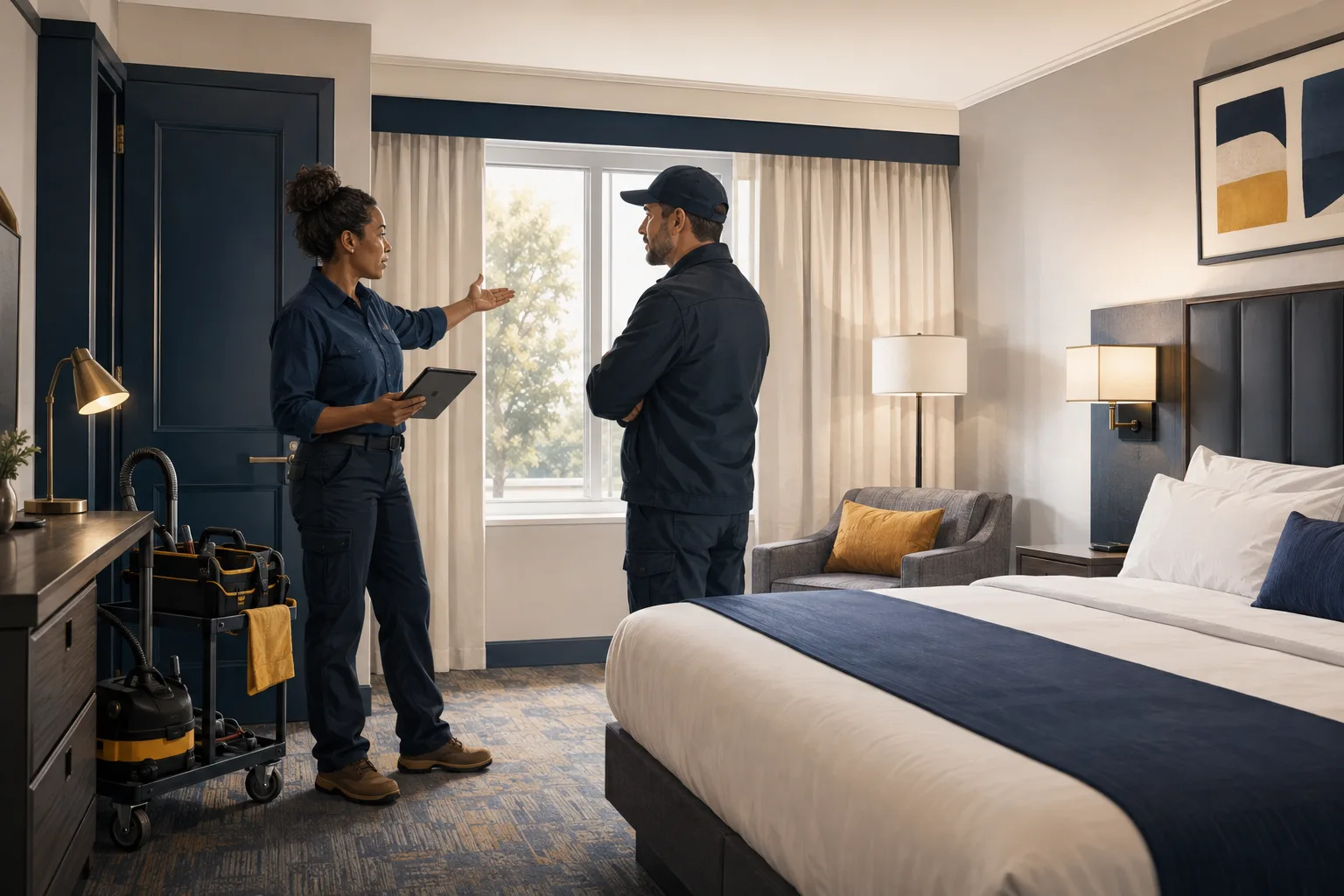
Clear, consistent communication about maintenance builds trust and satisfaction. Provide tenants with multiple ways to submit maintenance requests—phone, email, online portals, and mobile apps. Acknowledge requests promptly, setting expectations for response times.
Keep tenants informed throughout the maintenance process. Notify them when technicians will arrive, explain delays if they occur, and confirm completion. For planned maintenance affecting tenant access or comfort, provide advance notice with clear information about timing and impact.
After completing work, follow up confirming tenant satisfaction. This communication loop identifies quality issues quickly and demonstrates commitment to service. Regular updates about property-wide maintenance projects help tenants understand the value provided through their rent or fees.
Documentation and Records
Comprehensive maintenance documentation protects property owners legally, supports insurance claims, guides capital planning, and demonstrates compliance with regulations. Document every maintenance activity including routine tasks, repairs, inspections, and emergency responses.
Effective documentation includes dates, work performed, parts used, costs, contractor information, and photos when relevant. Maintain equipment service histories tracking all work on major systems. This data helps identify recurring problems, supports warranty claims, and informs replacement decisions.
Digital documentation systems enable better organization, searching, and reporting than paper files. Property maintenance software platforms centralize maintenance records, making information accessible when needed for audits, insurance claims, or sale transactions.
Vendor Management
Reliable contractor relationships are essential for effective property maintenance. Vet vendors carefully, checking licenses, insurance, references, and reputation. Establish written agreements defining scope, standards, response times, and pricing.
Maintain relationships with multiple qualified vendors for critical services ensuring backup options when primary contractors are unavailable. For specialized systems like elevators or fire protection, establish service contracts with factory-authorized providers.
Evaluate vendor performance regularly based on quality, responsiveness, pricing, and professionalism. Address issues promptly and don't hesitate to change providers who consistently underperform. Strong vendor relationships lead to priority service, better pricing, and higher quality work.
Budget Planning
Create detailed maintenance budgets based on actual property needs rather than arbitrary percentages. Review historical spending, assess property condition, and project upcoming needs. Build contingency reserves for unexpected repairs—properties always surprise us.
Track maintenance spending against budgets monthly, investigating significant variances. This monitoring identifies trends, controls costs, and supports data-driven budget adjustments. Demonstrate maintenance spending value to property owners with reporting showing how preventive investments avoid costly emergencies.
Emergency Preparedness
Despite the best preventive maintenance, emergencies occur. Preparation minimizes damage and speeds response. Develop written emergency response procedures covering common scenarios like water leaks, HVAC failures, power outages, and security breaches.
Maintain updated emergency contact lists for contractors, utility companies, and key personnel. Ensure after-hours coverage through answering services, on-call staff, or property maintenance software with emergency notification features.
Stock emergency supplies including temporary repair materials, cleanup equipment, and safety gear. Know utility shutoff locations for water, gas, and electricity. For properties with critical systems supporting vulnerable populations or businesses, consider backup power and redundant systems.
Regular emergency drills and procedure reviews keep teams prepared for actual emergencies, reducing response times and improving outcomes.
AI-generated editorial illustration; not a customer photograph or product screenshot.
Property Maintenance Software
Technology transforms property maintenance from reactive, paper-based processes to proactive, data-driven operations. Property maintenance software platforms provide tools that improve efficiency, reduce costs, and enhance service quality.
Benefits of Property Maintenance Software
Centralized Operations: Software consolidates maintenance requests, work orders, vendor information, documentation, and schedules into single platforms accessible anywhere. This centralization eliminates lost paper requests, forgotten tasks, and communication gaps.
Improved Response Times: Automated routing sends requests to appropriate personnel immediately. Mobile apps notify technicians instantly, enabling faster response. Tracking dashboards show request status at a glance, helping managers prioritize work and monitor completion.
Better Documentation: Digital systems automatically capture maintenance histories, costs, photos, and completion details. This documentation supports compliance requirements, insurance claims, and property valuations while requiring less manual effort than paper systems.
Data-Driven Decisions: Reporting features reveal maintenance trends, cost patterns, and performance metrics. This data identifies recurring problems worth addressing permanently, supports budget planning, and demonstrates maintenance program value to property owners.
Enhanced Tenant Satisfaction: Tenant portals enable 24/7 request submission, status checking, and communication. This transparency and accessibility significantly improve tenant satisfaction while reducing phone calls and administrative work.
Key Features Needed
Effective property maintenance software should include:
Work Order Management: Create, assign, track, and complete work orders digitally with automated workflows, priority settings, and deadline tracking.
Preventive Maintenance Scheduling: Automatically generate recurring maintenance tasks based on customizable schedules, sending reminders and tracking completion.
Vendor Management: Maintain vendor databases with contact information, service specialties, insurance documentation, and performance history.
Tenant Portals: Provide tenants online access to submit requests, check status, communicate with management, and access property information.
Mobile Access: Enable field technicians to receive assignments, update status, capture photos, and close work orders from smartphones or tablets.
Reporting and Analytics: Generate reports on maintenance costs, response times, completion rates, vendor performance, and system reliability.
Integration Capabilities: Connect with accounting systems, tenant screening platforms, and other property management tools avoiding duplicate data entry.
Work Order Management
Digital work order systems streamline maintenance operations from request through completion. Tenants submit requests through portals describing issues and including photos. Systems automatically route requests to appropriate personnel based on issue type, priority, and staff assignments.
Property managers review and prioritize requests, assigning them to internal staff or external contractors. Technicians receive notifications, access property details and maintenance histories, and update status as work progresses. Upon completion, systems notify tenants and managers while capturing all work details for future reference.
This systematic approach ensures nothing falls through cracks while providing transparency and accountability throughout the maintenance process.
Tenant Portals
Modern tenants expect digital convenience. Tenant portals provide 24/7 access to maintenance services without phone calls or office visits. Tenants submit detailed requests including photos showing issues. They check request status anytime, eliminating "what's happening with my request" calls. Communication flows through portals, creating documented records of all interactions.
For property managers, portals reduce administrative work while improving tenant satisfaction. Requests arrive with complete information and photos. Status updates happen automatically. Tenants feel heard and informed, leading to better relationships and higher retention.
Reporting Capabilities
Property maintenance software generates reports impossible with manual systems. Track maintenance costs by property, unit, system type, or vendor. Analyze response times and completion rates identifying service gaps. Review preventive maintenance completion ensuring nothing is missed. Evaluate vendor performance across multiple metrics.
These reports support strategic decisions about maintenance approaches, vendor relationships, budget allocations, and capital improvement timing. They demonstrate maintenance program value to property owners with concrete data showing how investments protect and enhance property performance.
For comprehensive guidance on selecting and implementing property maintenance software, see our Property Maintenance Software Guide covering platform comparisons, implementation strategies, and ROI calculations.
Cost Considerations
Understanding property maintenance costs helps property managers budget effectively and make informed decisions about maintenance strategies and improvements.
Average Property Maintenance Costs
Property maintenance costs vary significantly based on property age, size, type, location, and condition. However, general benchmarks guide budget planning:
These figures cover routine maintenance, not major capital improvements like roof replacements or HVAC system overhauls, which require separate capital reserves.
Budgeting Guidelines
Effective maintenance budgeting requires understanding your specific property's needs:
Assess Property Condition: Conduct comprehensive property assessments identifying current condition and anticipated needs. Factor approaching system lifespans into budgets.
Separate Categories: Create separate budget lines for preventive maintenance, corrective repairs, emergency reserves, landscaping, cleaning, and other maintenance categories. This granularity supports better tracking and decision-making.
Plan for Capital Improvements: While separate from maintenance budgets, capital reserves funding major system replacements are essential. Budget for eventual roof, HVAC, parking lot, and other major component replacements based on expected lifespans.
Cost-Saving Strategies
Smart property managers reduce maintenance costs without sacrificing quality:
Prioritize Preventive Maintenance: Investing in preventive maintenance reduces overall costs by preventing expensive failures and extending equipment life. This strategy provides the highest return among cost-reduction approaches.
Competitive Bidding: Obtain multiple quotes for major maintenance projects. However, don't automatically select the lowest bid—consider contractor reputation, quality, and reliability. The cheapest option often proves most expensive long-term.
Volume Discounts: Property managers with multiple properties leverage volume for better pricing. Commit to contractors for all similar work across your portfolio in exchange for reduced rates.
Seasonal Timing: Schedule non-urgent work during contractors' slow seasons when pricing is more competitive. Many contractors offer better rates during off-peak periods.
Energy Efficiency: Invest in energy-efficient equipment and systems. While initial costs may be higher, reduced utility expenses and maintenance requirements provide strong returns.
In-House Capabilities: For larger properties or portfolios, dedicated maintenance staff handling routine tasks and minor repairs costs less than contracting everything. This approach also improves response times.
Smart Technology: Building automation systems, smart thermostats, and remote monitoring detect issues early and optimize system operation, reducing costs and extending equipment life.
ROI of Preventive Maintenance
The return on investment for preventive maintenance programs is substantial and measurable:
Reduced Liability: Regular maintenance reduces slip-and-fall accidents, equipment failures causing injury, and other liability exposures, lowering insurance costs and legal risks.
AI-generated editorial illustration; not a customer photograph or product screenshot.
Frequently Asked Questions
What does property maintenance include?
Property maintenance includes preventive tasks like routine inspections and scheduled servicing, corrective maintenance addressing identified problems, emergency repairs for urgent issues, and cosmetic maintenance enhancing appearance. Specific services encompass HVAC maintenance, plumbing repairs, electrical system care, roofing and exterior maintenance, landscaping, cleaning, pest control, and seasonal services like snow removal. The scope extends from minor tasks like changing filters to major projects like system replacements, covering everything necessary to keep properties operational and appealing.
How often should property maintenance be performed?
Property maintenance frequency depends on task type and property needs. Some tasks require monthly attention—HVAC filter changes, safety equipment testing, and property walk-throughs. Quarterly tasks include deep cleaning, roof inspections, gutter cleaning, and comprehensive system checks. Annual maintenance involves professional inspections of major systems like HVAC, roofing, electrical, and plumbing. Seasonal maintenance addresses weather-specific needs before summer, winter, and storm seasons. Emergency maintenance happens as needed when urgent issues arise. Preventive maintenance scheduling should follow manufacturer recommendations for equipment, regulatory requirements, and property-specific needs based on age and condition.
Do I need property maintenance software?
Property maintenance software benefits most property managers, especially those with multiple units or properties. Software centralizes maintenance requests, work orders, vendor information, and documentation in accessible platforms. Benefits include improved response times through automated routing and mobile notifications, better documentation for compliance and decision-making, data-driven insights about maintenance trends and costs, and enhanced tenant satisfaction through self-service portals. Small-scale landlords with single properties might manage with spreadsheets, but software becomes increasingly valuable as portfolios grow. The efficiency gains, improved service quality, and better documentation typically justify software costs for properties with 5+ units or multiple locations.
Conclusion
The fundamentals remain constant whether you're managing residential apartments or commercial office buildings. Systematic preventive maintenance prevents costly emergencies and extends equipment life. Clear maintenance checklists ensure nothing is overlooked. Reliable vendor relationships provide quality service when needed. Property maintenance software streamlines operations and improves efficiency. Adequate budgeting funds necessary work without financial surprises.
The investment in comprehensive property maintenance programs yields measurable returns. Properties with strong maintenance programs retain higher values, command premium rents, attract and keep quality tenants, and experience fewer costly emergencies. The choice isn't whether to invest in property maintenance—it's whether to invest strategically through planned programs or reactively through emergency repairs. The former costs less, produces better results, and protects your most valuable assets.
Start by assessing your current maintenance approach against the best practices outlined in this guide. Identify gaps in your preventive maintenance scheduling, documentation systems, vendor relationships, or technology adoption. Implement improvements systematically, beginning with the areas offering the greatest impact for your specific property type and situation. Remember that property maintenance is an ongoing commitment, not a one-time project. The properties receiving consistent, professional maintenance attention are the properties that thrive in competitive markets while delivering strong returns for their owners.
Ready to streamline your property maintenance operations? Explore our Property Maintenance Software Guide to discover platforms that centralize work orders, automate preventive maintenance scheduling, and improve tenant satisfaction. Or learn more about implementing effective Preventive Maintenance programs that reduce costs and protect property values.